

A detailed whistleblower complaint submitted to the Public Service Commission (PSC) and seen by this writer, is calling for investigations into what the complainant describes as widespread procurement irregularities, corruption, conflict of interest, governance failures, and human resource abuses at the Nairobi Metropolitan Area Transport Authority (NaMATA).
The 29-page complaint states that more than KES 814 million in public funds may have been lost through various procurement and administrative schemes involving senior officials at the Authority.
According to the document, the principal individuals named are NaMATA Director General Eng. Francis Gitau, Head of Finance Brian Kiptoo Kipsang, and Head of Procurement Soila Shunet. The complaint urges the PSC and other oversight bodies to investigate their conduct and the management of public resources at the Authority.
Director General Allegedly Rarely Reports to Office 
The complaint alleges that NaMATA Director General Eng. Francis Gitau is rarely present at the Authority's offices and instead spends much of his time at what the whistleblower describes as a privately owned entertainment establishment.
According to the complaint, when he does report to work, his primary role is allegedly limited to signing payment vouchers and approving financial transactions.
The whistleblower argues that investigators should review attendance records, official schedules, and workplace access logs to establish the extent of his presence at the Authority and whether his conduct amounts to neglect of duty or abuse of office.
Head of Finance Accused of Chronic Absenteeism 
The complaint further alleges that Head of Finance Brian Kiptoo Kipsang is rarely present at work and only appears when financial documents require approval or payment processing.
According to the whistleblower, this alleged absenteeism has contributed to weak oversight of financial operations and procurement activities within the Authority.
The complaint calls for an examination of attendance records and official duties performed during the period under review to determine whether there was a breach of public service obligations.
Head of Procurement Also Named in Attendance Concerns 
The whistleblower similarly accuses Head of Procurement Soila Shunet of being frequently absent from the workplace and alleges that her attendance pattern mirrors that of the Director General.
According to the complaint, she primarily reports to work when procurement documents require approval or signature.
The document argues that the alleged conduct by all three senior officials may amount to neglect of duty under Public Service Commission regulations, abuse of office under Section 101 of the Penal Code, and constructive absenteeism under Section 44(4) of the Employment Act, allegations that the complainant says should be independently investigated by the relevant authorities.
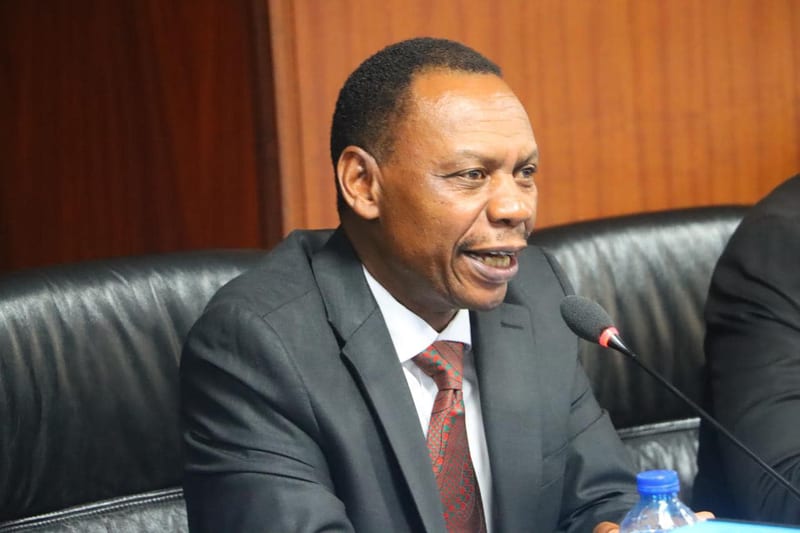
At the center of the allegations is Director General Eng. Francis Gitau, who the complainant describes as bearing ultimate responsibility as the Authority's accounting officer. The complaint links him to allegations of unexplained wealth, including ownership of a high-end entertainment property, alleged absenteeism from office, obstruction of internal audit processes, an alleged personal relationship with the Head of Procurement that may present a conflict of interest, and claims that he is above the mandatory retirement age while allegedly seeking an unlawful extension of his contract.
Alleged Procurement Irregularities Worth Hundreds of Millions 
The complaint's largest allegations concern procurement activities allegedly undertaken between 2023 and 2026.
The whistleblower claims that ICT hardware and software contracts valued at approximately KES 80.5 million were paid for despite the alleged non-delivery of goods and services. Several suppliers are named in the complaint, including Luminus Investment Ltd, Redrock Projects Ltd, and Ms. Redak Project Ltd. The complainant further alleges that free software such as Visual Studio Code and Eclipse were included as chargeable procurement items and that computer equipment was purchased at prices significantly above market rates.

Head of Procurement Soila Shunet is similarly named in the complaint and is linked to allegations involving ICT procurement, ownership or use of high-end vehicles, alleged absenteeism, and questions surrounding her qualifications at the time of appointment. The complaint also alleges that she maintained a personal relationship with the Director General that may have influenced procurement decisions
The complaint also raises concerns about office partitioning projects allegedly valued at more than KES 300 million. The whistleblower argues that similar works would ordinarily cost between KES 20 million and KES 50 million and calls for a forensic audit of all partitioning contracts undertaken during the relevant financial years.
An additional allegation concerns Non-Motorised Transport (NMT) projects, where the complainant estimates potential losses exceeding KES 400 million. The document alleges inflated pricing, unjustified contract variations, procurement irregularities, and the use of companies allegedly connected to insiders.
Together, these projects account for the majority of the KES 814 million figure cited in the complaint.

Allegations Against the Head of Finance 
The complaint also names Head of Finance Brian Kiptoo Kipsang, who is additionally described as a director of Brily Logistics Limited. According to the whistleblower, he is linked to the alleged ICT procurement irregularities, the ESAMI training claims, an alleged conflict of interest involving Brily Logistics, unexplained wealth including a reported property in Muthaiga, and allegations of chronic absenteeism. The complaint argues that investigators should examine both his official role within NaMATA and his reported private business interests to determine whether any procurement or ethics laws were violated.
Training Expenditure Under Scrutiny 
The complaint also identifies what it describes as a KES 10.67 million training fraud scheme involving multiple workshops, policy-development exercises, and professional development activities.
Among the claims is an allegation that a senior officer claimed attendance and per diem payments for an ESAMI course in Arusha, Tanzania, despite allegedly not attending the programme. The complainant further alleges that several policies and manuals for which funds were reportedly spent either do not exist or cannot be traced. These include an ICT Policy, an Alcohol and Substance Abuse Policy, a Complaint Management Manual, and a Bus Standards and Specification Policy.
The complaint additionally alleges inflated per diem payments for several officers and questions the participation of an office administrator in finance-related professional training programmes.
Companies and Contractors Named in the Complaint 
The complaint also identifies several private companies and contractors that the whistleblower believes should be subjected to forensic investigation over their alleged involvement in procurement transactions at NaMATA. These include:
Luminus Investment Ltd – Allegedly linked to ICT hardware procurement contracts that the complaint claims involved payments for equipment that was either not delivered or was significantly overpriced. 
Redrock Projects Ltd – Named in connection with alleged ICT hardware procurement irregularities and payments for equipment whose delivery and value should be independently verified. 
Ms. Redak Project Ltd – Cited in relation to software procurement contracts, with the complaint alleging payments were made for software licences and products that were either not supplied or improperly charged, including software that is freely available. 
Brily Logistics Limited – Identified in the complaint as being at the centre of an alleged conflict of interest involving the Head of Finance, who is reported to have links to the company while serving as a senior public officer. 
Various Contractors – The whistleblower calls for investigations into contractors involved in office partitioning works, Non-Motorised Transport (NMT) projects, cleaning services, security services, stationery procurement, and printer supply contracts. The complaint alleges that these contracts may have involved inflated pricing, procurement irregularities, unjustified contract variations, substandard works, or conflicts of interest.
External Audit Firm – Although not specifically named in the complaint, the whistleblower accuses the Authority's external auditors of failing to detect or report the alleged irregularities and calls for an independent review to determine whether there was negligence, professional misconduct, or possible collusion.
Alleged Conflict of Interest 
A major section of the complaint focuses on an alleged conflict of interest involving a Nairobi City County Government contract valued at approximately KES 22.8 million.
The Contract • Tender No: NCC/WDP/T/402/2024-2025 • Parties: Nairobi City County Government and M/S Brily Logistics Limited • Value: KES 22,819,241.32 
According to the whistleblower, documents linked to the contract indicate that a company identified as Brily Logistics Limited was associated with an individual who simultaneously served as Head of Finance at NaMATA, CPA Brian Kiptoo Kipsang.
The complainant argues that investigators should determine whether procurement and conflict-of-interest laws were breached.

The alleged conflict of interest, contrary to Section 10 of the Conflict of Interest Act, 2025, carries a penalty of up to KES 4 million and/or 10 years’ imprisonment, in addition to mandatory restitution of twice the benefit unlawfully gained, estimated at approximately KES 45.6 million.
Questions Over Recruitment and Qualifications 

The whistleblower further alleges that certain senior appointments may not have met the minimum qualifications required at the time of recruitment.
Specifically, the complaint questions the qualifications and experience of both the Head of Procurement and the Head of Finance when they were appointed to their respective positions.
The complaint urges investigators to review employment records and recruitment documentation to establish whether all statutory and professional requirements were satisfied.
The alleged appointment of Ms. Soila Shunet as Head of Supply Chain and Mr. Brian Kiptoo Kipsang as Head of Finance despite not meeting the prescribed qualification and experience requirements may constitute an offense under Section 41(2) of the Anti-Corruption and Economic Crimes Act (ACECA), which criminalizes deceiving a principal into believing that a person is qualified for public office, and under the legal principle of nemo dat quod non habet (“one cannot give what one does not have”), any approvals, decisions, or authorizations made by unqualified officers could be challenged as void ab initio
Human Resource and Workplace Concerns 
Beyond procurement matters, the complaint paints a picture of an institution allegedly struggling with internal governance and employee welfare issues. Among the allegations are claims that interns have been retained beyond the permissible internship period, that junior officers have been favoured over senior personnel, and that some employees have resigned due to frustration and exclusion from decision-making processes.
The whistleblower also alleges that officers perceived as outside an inner circle have had their requisitions blocked, training opportunities denied, and professional development opportunities restricted. Engineers are specifically cited as having been denied Continuing Professional Development opportunities while other officers allegedly benefited from training-related expenditures.
Another notable allegation is that employees reportedly went without salaries for April and May 2025, only receiving payment two months later. The complaint questions how salary delays occurred while significant procurement payments were allegedly being processed during the same period.
The document further claims that employees have lacked access to drinking water at the workplace since 2024, raising concerns about staff welfare and compliance with occupational safety standards.
Inflated Office Partitioning Projects Allegedly Cost Taxpayers Over KES 300 Million 
The complaint alleges that office partitioning works undertaken by NaMATA during the 2023/2024 and 2024/2025 financial years may have cost taxpayers more than KES 300 million.
According to the complainant, similar partitioning projects in the market would typically cost between KES 20 million and KES 50 million, raising concerns about possible overpricing of between KES 250 million and KES 280 million.
The whistleblower is calling for all office partitioning procurement files to be retrieved and subjected to a comprehensive forensic audit to establish whether public funds were lost through inflated contracts, procurement irregularities, or other unlawful practices.
The complaint cites possible violations of procurement laws, including inflated pricing, failure to comply with procurement regulations, and potential theft of public funds.
Questions Raised Over Ngong Road Pilot Project 
The complaint also raises concerns about a pilot transport project implemented along Ngong Road. According to the whistleblower, the project was characterized by unexplained cost escalations and contract variations that allegedly increased project expenses beyond original estimates. The complainant argues that investigators should examine the procurement records, project approvals, and variation orders to determine whether the additional costs were justified. The allegations suggest possible breaches of procurement regulations relating to inflated pricing, unjustified contract variations, and abuse of office by officials involved in the project's implementation.
KES 400 Million Non-Motorised Transport Project Under Scrutiny 
One of the largest allegations in the complaint concerns Non-Motorised Transport (NMT) projects, which the whistleblower estimates may have resulted in losses exceeding KES 400 million. The complaint claims that several NMT contracts were irregularly procured and awarded to companies allegedly linked to individuals within NaMATA. According to the allegations, the projects exhibited several warning signs, including irregular procurement procedures, inflated pricing of works and materials, unexplained contract variations, and delivery of substandard or incomplete works. The complainant argues that these projects require immediate investigation to determine whether public funds were diverted through proxy companies and improperly awarded contracts.
Cleaning and Security Services Contracts Face Fraud Allegations 
The complaint further alleges that contracts awarded for cleaning and security services may have been procured irregularly. The whistleblower is urging the Ethics and Anti-Corruption Commission (EACC) and the Public Procurement Regulatory Authority (PPRA) to obtain and review all procurement documentation related to the contracts.
Specifically, investigators are asked to verify whether competitive bidding processes were followed, compare contract prices against prevailing market rates, and establish whether any contractors had undisclosed relationships with NaMATA officials. The complaint argues that a thorough review of contractor ownership and procurement records is necessary to determine whether conflicts of interest or other procurement violations occurred.
Pension, Audit and Oversight Concerns 
The whistleblower alleges that NaMATA has not properly established or procured a pension fund administrator despite making deductions from employees. The complaint calls for an audit of pension contributions and related accounts.
The document also criticizes external auditors, alleging that they failed to detect or report the alleged irregularities identified by the complainant. The whistleblower urges the Auditor-General and professional bodies to review the quality and integrity of the audits conducted during recent financial years.
Additionally, the complaint accuses management of obstructing internal audit functions by restricting access to records and procurement files, thereby limiting oversight and accountability mechanisms.
The complaint alleges that NaMATA employees went without salaries for two consecutive months, April and May 2025, due to what the whistleblower describes as misappropriation of funds, causing significant financial hardship and distress among staff members. According to the document, salaries remained unpaid during this period even as substantial procurement-related payments were allegedly being processed, including a KES 34.66 million contract awarded to Redak Project Ltd on April 25, 2025, an invoice of KES 11.96 million paid to Luminus Investment Ltd on May 6, 2025, and a KES 22.82 million contract notification issued to Brily Logistics on May 15, 2025.
The complaint questions how employees could remain unpaid for two months while large sums continued to be committed to suppliers and contractors. Salaries were reportedly only released in June and July 2025 after the prolonged delay.
The whistleblower argues that these circumstances may constitute a failure to pay wages on time under Section 17(8) of the Employment Act, alleged misappropriation of salary funds under Section 281 of the Penal Code, and wilful failure to comply with public financial management obligations under Section 164 of the Public Finance Management Act (PFMA), all of which the complainant says warrant urgent investigation.
Lifestyle and Unexplained Wealth Allegations 
The complaint further requests lifestyle audits on several individuals, alleging the acquisition of high-value assets that the complainant argues may be inconsistent with known public-sector incomes. The allegations include claims regarding residential properties, entertainment ventures, luxury vehicles, and other assets.
The complaint argues that the alleged denial of Continuing Professional Development (CPD) opportunities to engineers while unqualified officers allegedly benefited from training-related payments may amount to discrimination under Section 5 of the Public Service Act, which requires fair and equitable treatment of public officers.
It further claims that denying engineers access to professional training could constitute sabotage of professional development under the Engineers Act, 2011, particularly where CPD is necessary for maintaining professional competence and registration.
Additionally, the complaint alleges that any payments made for training that did not occur, or to individuals who were not qualified to attend, could amount to fraudulent acquisition of public funds under Section 45(1) of the Anti-Corruption and Economic Crimes Act (ACECA), warranting investigation by the relevant oversight and anti-corruption agencies.
Director General's Retirement and Contract Extension 
Another issue raised concerns the age and tenure of the Director General. The whistleblower alleges that the Director General is above the mandatory retirement age and is seeking an extension of his contract beyond November 2026. The complaint asks authorities to verify his age, review any extension requests, and determine whether existing laws and public service regulations have been complied with.
What the Complainant Wants 
The complaint concludes with a wide-ranging list of requests directed at regulators and investigators. These include freezing assets, imposing travel restrictions, suspending senior officials, conducting lifestyle audits, verifying procurement records, reviewing training expenditures, auditing pension deductions, investigating alleged conflicts of interest, examining attendance records, and scrutinizing all major procurement projects cited in the document.
Awaiting Official Response 
As of the date of the complaint, the allegations remain claims made by the whistleblower and have not been tested in court or confirmed by investigative agencies. The PSC, EACC, Auditor-General, PPRA, and other relevant institutions would ultimately determine whether any laws were violated and whether criminal, civil, administrative, or disciplinary action is warranted.
The complaint nevertheless raises significant questions about procurement practices, governance, financial management, staff welfare, and accountability within NaMATA, matters that are likely to attract public interest should formal investigations be launched.