
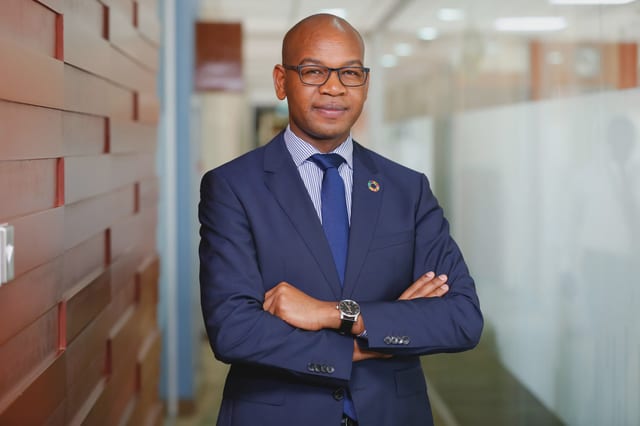
Former Standard Chartered Bank Kenya sourcing manager David Dimba has escalated a three-year public campaign against the lender, accusing it of failing to act on alleged procurement fraud, expense abuse and money laundering concerns during his time at the institution.
Dimba, who joined Standard Chartered Kenya in 2011 and later served in a procurement role, has used LinkedIn to publish documents, correspondence and claims relating to the bank’s internal operations. His account has grown into one of the most closely followed whistleblowing campaigns in Kenya’s financial sector, with more than 120,000 followers by June 2026.
At the centre of his claims are allegations that senior officials at the bank ignored or concealed procurement irregularities involving cleaning, technology and other service contracts. Dimba says he raised the issues internally before being suspended in 2020 and dismissed in 2022. The bank said his dismissal was for gross misconduct unrelated to protected disclosures, a position Dimba rejects.
One of the contracts cited by Dimba involves Tafika Cleaners Limited, a cleaning services provider which he says was awarded a contract in 2018 worth about KSh36 million before the value rose to more than KSh127 million by 2020. Dimba says the increase was driven by variation orders that were not subjected to competitive bidding. He has also alleged that one of the company’s directors was related to a Standard Chartered Kenya executive.
Dimba has also raised questions about IT procurement, claiming that three vendors paid for network optimisation work shared the same IP address and postal address. He has alleged that the vendors were paid a combined KSh410 million for work that was not delivered and that the bank’s own IT department had no knowledge of the assignments.
Another set of allegations concerns corporate credit card expenses. Dimba has published extracts he says came from the bank’s Concur expense management system, alleging that senior managers used corporate cards for personal shopping in Dubai and Johannesburg and classified the spending as client entertainment. He has cited a total figure of about KSh23 million.
The most serious allegations relate to anti-money laundering controls. Dimba says that in 2019 he flagged transactions involving a politically connected client who was allegedly moving about US$4 million through shell entities without adequate Know Your Customer checks. He says he was told the client was untouchable.
The Financial Reporting Centre opened an inquiry in 2023, according to Dimba’s public statements, but no findings have been made public.
Dimba says he first raised his concerns through internal bank channels, including the Country Head of Compliance, the Regional Head of Investigations in Dubai and the bank’s global whistleblower hotline. He says the response was not to protect him as a whistleblower, but to push him out of the institution.
He later filed a case at the Employment and Labour Relations Court in Nairobi, seeking KSh240 million in damages for wrongful dismissal, defamation and psychological harm.
The case produced a significant development in September last year when Justice Nzioki wa Makau ordered Standard Chartered Kenya to produce its full internal investigation report within 45 days. The bank sought to stay that order, but the application was denied.
The internal investigation report is now a central issue in the dispute. Dimba argues that if the report contains findings consistent with the concerns he raised, it would support his claim that the bank was aware of serious internal issues and failed to act decisively.
Former Standard Chartered Kenya CEO Joshua Oigara has also become a major focus of Dimba’s campaign. Oigara served as the bank’s chief executive between 2018 and 2021, a period Dimba says covered some of the alleged procurement and compliance failures.
Dimba argues that as CEO, Oigara chaired senior management forums where major procurement overruns and vendor decisions were reviewed. He has repeatedly called for Oigara to be investigated by the Banking Fraud Investigations Unit and for the Central Bank of Kenya to review whether he should continue holding senior positions in regulated financial institutions.
Oigara left Standard Chartered Kenya in late 2021 and was later appointed Chief Executive of Stanbic Bank Kenya and South Sudan. In March 2026, he was appointed Chief Executive and Director of Stanbic Holdings Plc. He also holds the role of Regional Chief Executive for East Africa within the Standard Bank Group.
No public investigation against Oigara has been announced, and no regulatory bar has been imposed.
Dimba has also accused regulators and enforcement agencies of failing to act on his complaints. He says he submitted material to the Central Bank of Kenya, the Banking Fraud Investigations Unit and the Directorate of Criminal Investigations, but no prosecution has followed.
In December 2023, then Central Bank Governor Kamau Thugge told the Senate Finance Committee that the matter was under review. A parliamentary report the following year found that the Banking Fraud Investigations Unit had failed to interview key witnesses and recommended that the Inspector General of Police act urgently.
By June 2026, Dimba says no file had been forwarded to the Director of Public Prosecutions.
The claims come against a wider backdrop of scrutiny of Kenya’s anti-money laundering enforcement. Kenya was grey-listed by the Financial Action Task Force in February 2024 after the global watchdog identified weaknesses in the country’s ability to investigate and prosecute money laundering offences.
Dimba has argued that the Standard Chartered Kenya matter should be treated as a test case for whether Kenya’s banking regulators and enforcement agencies are prepared to act against suspected financial misconduct inside major institutions.
Standard Chartered Kenya has denied wrongdoing. CEO Kariuki Ngari, who was appointed in March 2019 and later given wider responsibility over the bank’s Africa franchise from Nairobi, has said the allegations were investigated through independent external firms and that no evidence of fraud or money laundering was found.
A bank spokesperson has previously said confidential records were selectively taken out of context. The bank has also reserved the right to pursue Dimba for breach of confidentiality, although it has not publicly announced such action.
The dispute has also unfolded as Standard Chartered Kenya deals with the financial impact of a separate pension case involving former employees.
In September 2025, the Supreme Court dismissed the bank’s final appeal in a 16-year pension dispute and upheld a ruling requiring the bank to pay about KSh7 billion to 629 former employees who had been underpaid retirement benefits following a recalculation of pension entitlements in 1999.
The pension charge contributed to the bank’s profit after tax falling 38 percent to KSh12.4 billion in 2025 from KSh20.1 billion in 2024.
Dimba formally escalated his campaign in early June 2026 by filing what he described as a Citizen’s Petition to the Central Bank of Kenya.
In the petition, he called for the removal of the Standard Chartered Kenya board and CEO Kariuki Ngari, a forensic audit by an independent international firm covering the period from 2018 to 2021, criminal referrals against Oigara and other named former and current executives, and reforms to the Banking Act to strengthen whistleblower protections.
The petition also seeks closer scrutiny of whether the bank’s internal response to whistleblower reports was adequate and whether any officials obstructed investigations.
Dimba’s campaign has drawn attention beyond Standard Chartered Kenya. Other current and former bank employees have begun sharing workplace and governance concerns online, while banking sector insiders say lenders are increasingly aware of the risk posed by internal whistleblowers with access to records.
The case has highlighted gaps in Kenya’s whistleblower protection framework, especially for private sector employees. Dimba has argued that existing protections are weak and that employees who report suspected financial misconduct remain vulnerable to retaliation, dismissal and long court battles.
For now, the matter remains active in court, on social media and before regulators.
Standard Chartered Kenya remains one of the country’s largest banks, with total assets of KSh384.6 billion and customer deposits of KSh295.7 billion as at December 2024.
Dimba continues to publish material online, while his court case and petition before the Central Bank keep the dispute alive in formal channels.
The outcome may determine whether the matter remains a prolonged employment and reputational dispute or becomes one of Kenya’s most consequential banking governance cases.