The National Social Security Fund (NSSF) is calling a tense Annual General Meeting (AGM) on February 6, 2026, amid rising concerns over the government’s plan to tap pension savings for infrastructure projects. The virtual meeting comes at a time when President William Ruto has publicly outlined a strategy to rely on local savings instead of foreign loans, raising questions about the safety and oversight of members’ retirement funds. As Kenyans prepare to log in, many are demanding answers on how their hard-earned contributions could be risked. The debate over NSSF pension funds for projects highlights the tension between national development and safeguarding citizens’ retirement, with stakeholders pushing for strict oversight and responsible investment strategies. Plans To Use NSSF Pension Funds for Projects Raise Major Concerns The 8th NSSF AGM, to be conducted online, promises a full review of the fund’s operations, including the Managing Trustee’s report, Board of Trustees’ report, actuarial report, audited financial statements for the year ending June 30, 2025, and fund management and custodial reports. Members are urged to register in advance to attend. NSSF CEO David Korros, who launched the fund’s Corporate Strategic Plan 2023-2027, will face direct questions from members on the potential use of pension funds for government-backed projects. The meeting comes in the wake of President Ruto’s announcement that the government intends to reduce foreign borrowing and rely more on local savings, including NSSF contributions, to fund development. At a December 2 State House briefing, Ruto revealed that the NSSF has collected Ksh320 billion in savings as of December 2022, with projections of Ksh670 billion by the end of January 2026, and an estimated Ksh1 trillion by June 2027. “Our reliance on external loans, particularly from China, can be replaced by locally generated savings,” Ruto said. H3: Members Demand Transparency Over Risks Critics have warned that diverting pension funds for public infrastructure could expose members to financial risks. Pension contributions are intended to secure retirement benefits, and any government intervention in investment decisions raises fears of mismanagement. For most employees, NSSF contributions are shared equally with employers, ranging from Ksh960 to Ksh8,640 monthly depending on income. The 2025 rules capped contributions at 6% of pensionable earnings, with a maximum of Ksh4,320 per month from both employees and employers. This pooled money represents a significant portion of Kenya’s long-term savings, making transparency and oversight critical. Some proponents argue that using NSSF funds could fast-track critical development projects without accruing more debt. However, experts caution that pension funds must be safeguarded and invested prudently to protect retirees’ livelihoods. H3: AGM to Test Governance and Member Confidence The upcoming AGM is set to test both the governance of NSSF and member confidence. Attendees will have the chance to question management on fund security, investment strategies, and the potential impact of government projects on pension returns. Observers note that this virtual AGM could be one of the most contentious in recent years, with members seeking assurances that their savings will not be misused. The tension underscores a growing debate over the balance between national development and individual financial security. As the government seeks alternative funding models to curb rising foreign debt, NSSF members and civil society are pushing for stricter checks and independent oversight. The outcome of the AGM may set the tone for how Kenya handles public-private financial collaboration in the future, particularly when it involves the retirement savings of millions of citizens. The February 6 meeting promises to be a defining moment for Kenya’s pension system, as members demand clarity, accountability, and protection of their savings amid ambitious government plans to fund development projects through local contributions.
NSSF Faces Tense AGM as Government Targets Pension Funds for Projects
N
Newsroom Updated 3 min read
Primary source nyakundireportblog
Story · NSSF Faces Tense AGM as Government Targets Pension Funds for Projects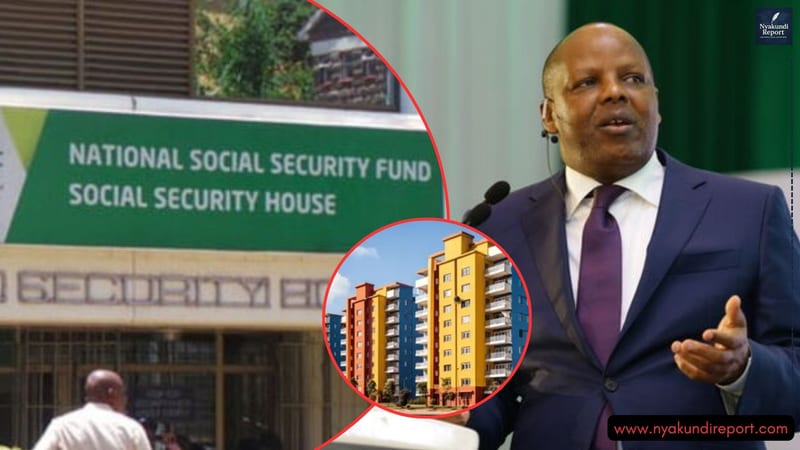
Next read
Elburgon Land Wars — How Armed Goons Are Driving Legal Landowners From Their Homes While Local Leaders Watch
25 April 2026 · 5 min read