



































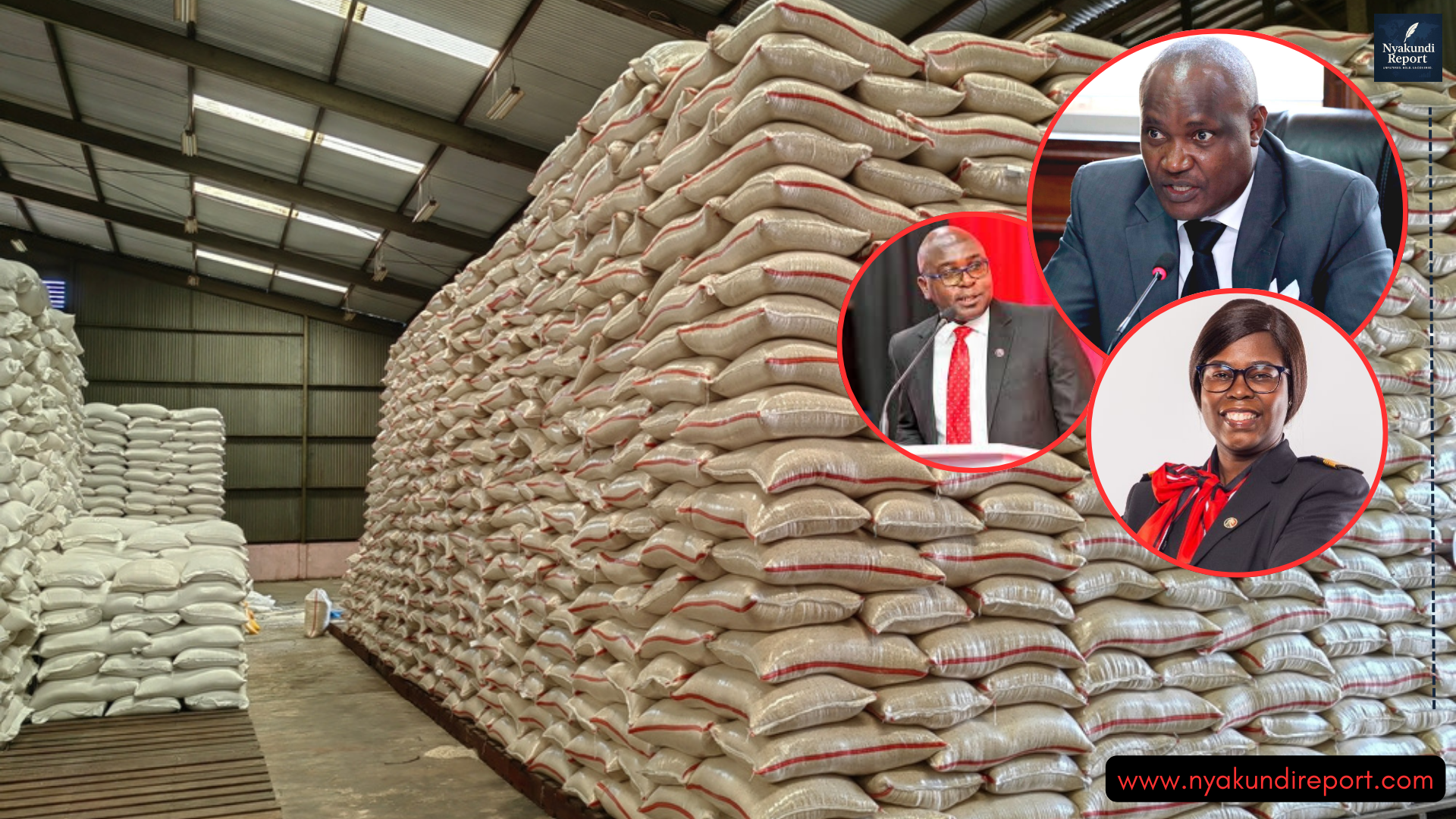
Kenya is reeling from allegations of massive corruption as Treasury Cabinet Secretary John Mbadi, KRA Commissioner Humphrey Watanga, and Border Control chief Lilian Nyawanda face accusations of facilitating Sh5.5 billion in illegal rice imports.
Court documents allege they deliberately ignored judicial orders barring rice shipments, allowing 55,000 tonnes of duty-free rice to enter the country.
Petitioners claim this brazen defiance undermines the rule of law, while legal battles intensify over the integrity of government trade and the nation’s rice supply.

How the Mbadi-Watanga Rice Import Scandal Unfolded
Court filings reveal a shocking sequence of events. In October 2025, the vessel Spica Eternity docked at the Port of Mombasa carrying 35,000 tonnes of white rice from Kandla Port, India. The cargo, exported by Olam Agri India Private Limited, was consigned to Ecoview Commodities Ltd and Njema Commodities Ltd.
Just two months later, in December 2025, IVS Crimson Creek delivered another 20,000 tonnes of white rice from Thailand, exported by Olam Thailand Limited and Golden Granary Co. Ltd, consigned to Preferred Grains Ltd. At retail prices of Sh100 per kilogram, these shipments represent a staggering Sh5.5 billion.
The scandal worsened when government officials issued a gazette notice extending rice imports until May 2026. Critics argue this move aimed to circumvent a court order by Justice Edward Muriithi, who had frozen imports pending judicial clearance. Legal experts describe this as a potential contempt of court, with serious implications for Kenya’s top officials.
Court Evidence Exposes Alleged Scheme
Petitioners, led by Kirinyaga Senator Kamau Murango and Baragwi Ward Representative David Mathenge, have submitted detailed cargo manifests and official correspondence as evidence. They claim the documents reveal a calculated attempt to bypass court authority, suggesting collusion between government officials and private importers.
The interim court orders now direct KRA to detain the disputed consignments while investigations proceed. Justice Muriithi emphasized that no further rice imports should be cleared without court approval, signaling that officials who flouted prior directives could face sanctions.
Government Defends Import Decisions
Officials defend their actions by pointing to Kenya’s severe rice shortage. National reserves stood at roughly 110,000 tonnes at the start of 2026, while projected consumption between January and June requires around 750,000 tonnes. Government representatives argue that halting imports risks food insecurity, potentially leaving the country without enough rice by the end of the month.
Yet critics question whether this rationale justifies bypassing legal safeguards. Allegations suggest that the gazette notice was a preemptive measure to protect private importers, rather than a solution to a supply gap. Civil society groups have condemned the apparent disregard for judicial oversight, warning that unchecked decisions could erode public trust in the government.
The public outrage is mounting as media reports and legal filings paint a picture of high-level officials allegedly prioritizing private profit over the rule of law. Analysts warn that the scandal could trigger broader scrutiny of Kenya’s import policies, including how high-value commodities enter the market.
The Mbadi-Watanga rice import scandal now sits at the intersection of politics, law, and national food security. As courts deliberate, Kenyans are left questioning the accountability of those entrusted with public resources. Whether justice will hold top officials accountable or whether political maneuvering will shield them remains the central question driving this ongoing crisis.