Kenya’s avocado industry is in the spotlight after a scandal worth more than Sh5.8 billion. Regulators approved thousands of tonnes of exports while a government ban was still in place. The ban was meant to protect Kenya’s image by stopping exports of immature fruit. How the ban was broken The Agriculture and Food Authority, through the Horticultural Crops Directorate (HCD), announced a closed export season. Only a small share of “second flush” avocados from specific regions should have left the country. These exports require strict farm inspections and clear proof of maturity. Kenya’s avocado industry faces a Sh5.8 billion scandal after regulators approved huge export volumes during a closed season, causing shortages, unfair competition and fresh fears over the country’s reputation in key global markets Despite this, HCD approved certificates for about 33,205 tonnes in just 12 weeks. The value stands at roughly Sh5.8 billion and accounts for up to a third of Kenya’s annual avocado exports. Industry players say these volumes cannot pass as normal exemptions. They see a clear sign of rule‑breaking and weak enforcement. Shortages, unfair competition, and market risks By the time the 2026 export season formally opened on 2 April, many orchards had already been heavily harvested. Therefore, leaving a fruit shortage for compliant exporters and packhouses. This has created an artificial scarcity in the local market, pushing up prices and squeezing smaller actors who obeyed the rules. Beyond shortages, the bigger worry is reputational damage. Kenya has been working to position itself as a reliable supplier of quality avocados. But off‑season harvesting and exports during a ban increase the risk of immature, poor‑quality fruit reaching international shelves. Buyers in key markets have previously warned that repeated quality problems could see Kenya lose shelf space to competitors such as Peru, Chile, and Colombia. Regulators under pressure The Horticultural Crops Directorate says it has compiled a list of exporters who obtained certificates and shipped fruit in breach of the ban and has promised action against them. However, officials have not publicly named the companies or specified the sanctions to be applied, fueling concerns about opacity and possible regulatory capture. Stakeholders are now demanding full disclosure of all approvals issued during the closed season, plus firm penalties. Including license suspension for rule‑breakers. They argue that without visible accountability, future bans will not be taken seriously and Kenya’s position in the global avocado market will continue to be undermined Kenya earns tens of billions of shillings from avocado exports each year. If the country allows a few players to break the rules, everyone loses farmers, exporters, and the national brand. ALSO READ: Bungoma Governor Kenneth Lusaka Fires Entire County Cabinet
Kenya’s Avocado Sector in Crisis Over Sh5 Billion Export Certificate Scandal
N
Newsroom Updated 3 min read
Primary source nyakundireportblog
Story · Kenya’s Avocado Sector in Crisis Over Sh5 Billion Export Certificate Scandal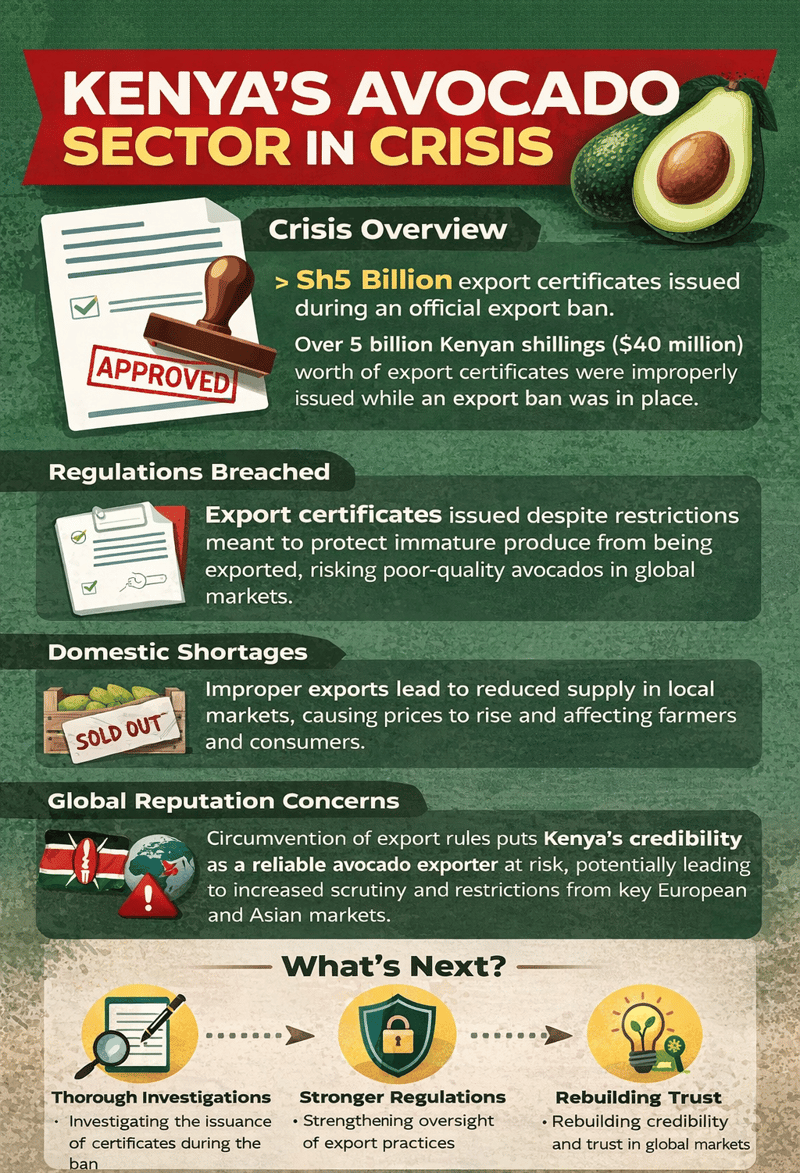
Next read
Elburgon Land Wars — How Armed Goons Are Driving Legal Landowners From Their Homes While Local Leaders Watch
25 April 2026 · 5 min read