The Kenya Aviation Workers Union has drawn a hard line. After years of stalled talks, broken promises, and failed mediation, aviation workers now say enough is enough. KAWU has issued a seven-day strike notice after salary negotiations with the government and the Kenya Civil Aviation Authority collapsed. The union accuses KCAA of unfair labour practices and systematic neglect of workers. If the standoff continues, Kenya faces a full-blown aviation shutdown. Flights could stop, airports could close, and the economy could take a direct hit. The looming KAWU strike exposes long-standing neglect of aviation workers, forcing a reckoning that will either restore fairness through dialogue or plunge Kenya’s air transport sector into costly paralysis. [PHOTO//COURTESY] KAWU Strike Exposes Deep Labour Crisis in Aviation The KAWU strike did not come out of nowhere. It followed more than a decade of unresolved grievances that workers say the government chose to ignore.
Speaking to the press on Tuesday, KAWU Secretary General Moses Ndiema said aviation workers had exhausted every legal and diplomatic channel available. He confirmed that even court-ordered mediation failed to break the deadlock.
Ndiema said some employees have worked for more than 11 years without a single salary review. He described the situation as discriminatory, demoralising, and dangerous for a sector that depends on skilled and motivated professionals.
KAWU accused KCAA of engaging in unfair labour practices. The union said the authority failed to review salaries, delayed promotions, and blocked full unionisation of eligible staff. According to KAWU, these actions violate labour laws and undermine workers’ rights.
The union warned that the KAWU strike would begin immediately after the seven-day notice expires if the government fails to act. Ndiema issued a blunt warning, saying the union would shut down all airports and ground all flights across the country.
He said aviation workers keep Kenya’s skies safe and its economy moving, yet the government treats them as disposable. KAWU insists it will no longer accept silence, delays, or empty promises. Threat of Total Airspace Shutdown The KAWU strike threatens to paralyse Kenya’s entire aviation system. The union said industrial action would affect all airports, including Jomo Kenyatta International Airport. JKIA remains Kenya’s busiest airport. It handles about 8.6 million passengers every year and serves as a critical hub for regional and international travel. Any disruption at JKIA would ripple across East Africa and beyond.
A full shutdown would ground domestic and international flights. Airlines would cancel schedules. Cargo operations would stall. Tourism would suffer immediate losses. Trade flows would slow, and regional connectivity would take a hit.
KAWU said it does not take this threat lightly. However, union leaders argue that drastic action remains the only language the government seems to understand.
Workers say they have continued to report to duty under difficult conditions while management ignored their demands. They now believe a shutdown may force authorities to act.
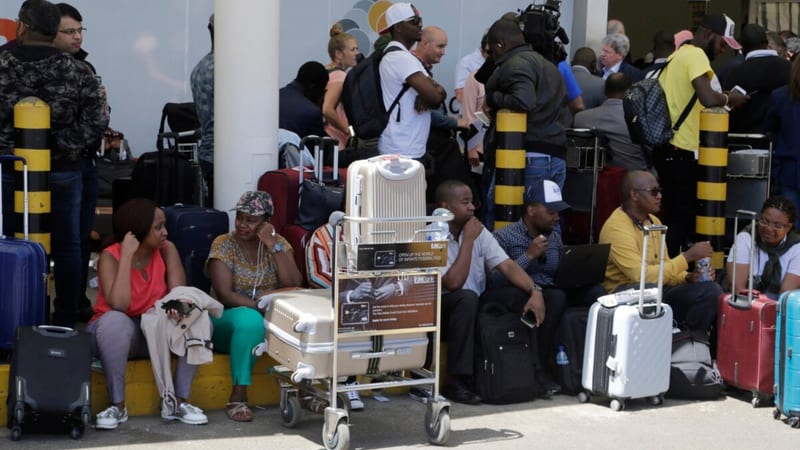
The union stressed that the strike remains avoidable. KAWU urged the government to intervene urgently and compel KCAA to address salary reviews, promotions, and unionisation without further delay. Lessons From the Last Aviation Strike The looming KAWU strike echoes the events of September 2025. During that strike, aviation services collapsed at JKIA and other airports for nearly two days.
Passengers missed flights. Airlines lost revenue. Businesses suffered delays. Pressure mounted quickly, forcing the government to step in.
A week later, the Kenya Airports Authority announced a breakthrough. Its managing director said talks succeeded after intense engagement with the Ministry of Roads and Transport and the Ministry of Labour.
Workers returned to duty after the intervention. However, KAWU now says the government failed to fully implement key agreements reached at the time.
Union leaders argue that authorities relied on short-term fixes instead of lasting solutions. They say unresolved issues resurfaced and worsened, leading to the current crisis.
As of now, the government remains silent. Neither KCAA nor KAA has issued an official response to the strike notice.
That silence worries workers and industry players alike. Every day without action shortens the countdown to disruption.
The KAWU Strike now stands as a critical test. The government must choose between dialogue and paralysis. The next seven days will determine whether Kenya’s skies remain open or grind to a halt.