Siaya Governor James Orengo has emerged as one of the most outspoken voices resisting proposals for ODM working with UDA ahead of the 2027 General Election. His warning is blunt and political. He believes such a move could undo decades of work by ODM founder Raila Odinga to build a truly national party. At a time when internal divisions are widening, Orengo argues that aligning with President William Ruto risks shrinking ODM’s influence, weakening its credibility, and turning it into a regional outfit rather than a dominant national force. Orengo’s warning exposes a defining choice for ODM, whether to safeguard its national identity or risk political decline through ODM working with UDA in 2027. Why Orengo Sees ODM Working With UDA as a Strategic Mistake Orengo’s opposition to ODM working with UDA is rooted in party identity, history, and long-term strategy. In an interview aired on December 29, the veteran lawyer and governor cautioned that ODM’s national reach was not accidental. He recalled how Raila Odinga deliberately moved away from ethnic or regional politics after realising that such formations could not adequately respond to the aspirations of Kenyans across the country. According to Orengo, ODM currently enjoys presence and support in nearly every region. That breadth, he argues, gives the party moral authority and political relevance beyond ethnic arithmetic. Partnering with UDA in 2027, he warned, would reverse these gains by pushing ODM back into a narrow corner, particularly in Luo Nyanza, a perception the party has spent years fighting. The governor also fears that ODM working with UDA would weaken the party’s bargaining power in the long run. While proponents of the alliance argue that it guarantees access to government, Orengo counters that ODM risks becoming junior and dispensable once its voter base is absorbed into a larger coalition dominated by UDA. Fear of Turning ODM Into a Regional Party A central pillar of Orengo’s argument is the danger of ethnicisation. He has openly accused some elements within ODM of attempting to steer the party toward a purely Luo identity. In his view, ODM working with UDA would accelerate this shift, since the party would lose its distinct national message and be perceived as trading principles for proximity to power. Orengo warned that such a trajectory would cost ODM both credibility and allies from other regions. Voters who once saw ODM as a national alternative could drift away, leaving the party confined to its traditional strongholds. He described this possibility as not only politically damaging but also internally destructive, potentially triggering what he termed a civil war within the party. Claims of Auctioning the Party and Internal Power Struggles Orengo has further inflamed debate by alleging that some ODM officials are planning to auction the party to powerful political figures. While he declined to name names, he insisted the claims were factual. These remarks have deepened mistrust between rival factions, with each side accusing the other of seeking personal gain rather than party ideals. The wrangles have spilled into public view, with leaders trading accusations over who is authorised to speak for ODM. Suna East MP Junet Mohammed recently warned members against issuing statements on behalf of the party, insisting that only the party leader’s position should be taken seriously. This pushback highlights the growing tension between those supporting ODM working with UDA and those, like Orengo, calling for caution or outright rejection. Clash With Pro-Alliance Voices and the 2027 Calculus Supporters of closer ties with President Ruto argue from a position of pragmatism. Ruto himself has said that a UDA-ODM alliance would likely form the next government in 2027. Senior ODM figures including party chairperson Gladys Wanga and deputy party leader Abdulswamad Nassir have echoed this view, stating that ODM must either form or be part of government after the next election. Nassir has even urged early negotiations with UDA in 2026, warning that delays could see ODM miss out on power. He has dismissed any alliance with the United Opposition led by former Deputy President Rigathi Gachagua. Orengo, however, rejects this logic. He argues that ODM’s popularity gives it leverage and that rushing into ODM working with UDA negotiations undervalues the party’s strength. For Orengo, the current broad-based arrangement with Ruto should not automatically translate into a post 2027 alliance. He maintains that ODM must preserve its independence, renew its national appeal, and avoid deals that compromise its identity. In his view, short-term access to government is not worth long-term political decline. As the 2027 contest approaches, Orengo’s stance has sharpened ideological lines within ODM. Whether the party heeds his warning or embraces ODM working with UDA may ultimately define not just its electoral prospects, but its future character in Kenyan politics.
Inside Orengo’s Fierce Rejection of ODM Working With UDA and the 2027 Power Game
N
Newsroom Updated 4 min read
Primary source nyakundireportblog
Story · Inside Orengo’s Fierce Rejection of ODM Working With UDA and the 2027 Power Game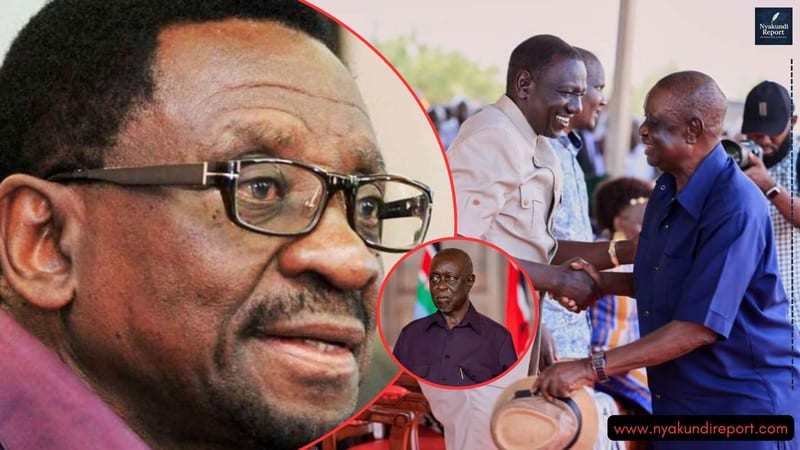
Next read
Elburgon Land Wars — How Armed Goons Are Driving Legal Landowners From Their Homes While Local Leaders Watch
25 April 2026 · 5 min read