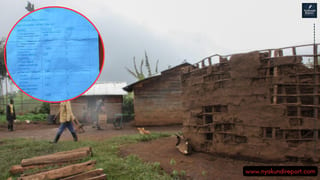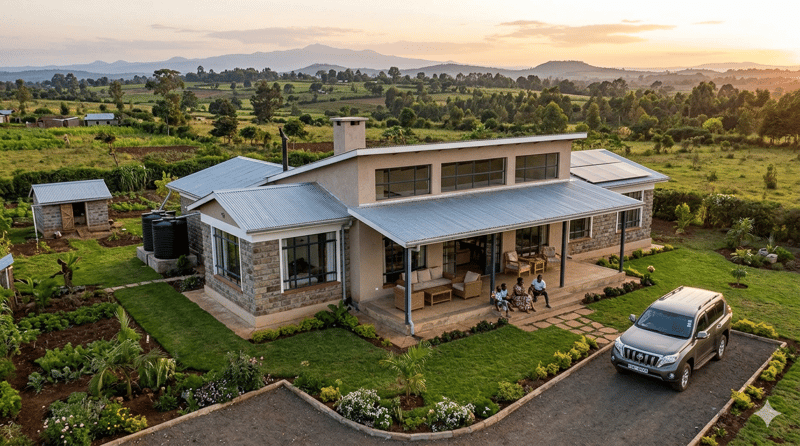
Thousands of Kenyans with land in rural areas can now access government funding to build their own homes without relocating to the city. The Affordable Housing Act, Cap 117A, includes a little-known provision that allows eligible Kenyans to borrow up to Ksh 4 million to construct a house on their own land. Many people have assumed this program only covers urban apartments, but the law goes further than that. This guide breaks down exactly who qualifies and what you need to access this funding today. Kenya's affordable housing programme offers a real opportunity for rural landowners to build decent homes. Gather your documents, register on Boma Yangu today, and turn your land into a place you call home. What You Need to Know About Govt Funding to Build a Rural Home The Affordable Housing Act divides affordable housing into four distinct categories: Category Description Social Housing Units Targeted at the lowest income earners Affordable Housing Units Standard units for moderate income earners Affordable Middle-Class Housing Units Units designed for middle-income Kenyans Rural Affordable Housing Units Loans for Kenyans building on their own rural land The rural affordable housing category is the provision that directly benefits Kenyans who own land outside urban centres. The National Assembly fully operationalized this framework through the Affordable Housing Regulations in August 2025, allowing contributors to access up to Ksh 4 million for construction on privately or ancestrally owned land.
The government introduced this option in direct response to public pressure from Kenyans who wanted to use their housing levy contributions for rural development rather than purchasing pre-built units in government urban projects. Who Qualifies for the Rural Housing Loan To access government funding to build a rural home, you must meet the following basic conditions: You must be a Kenyan citizen aged 18 years or older You must not have received any other unit under the affordable housing programme You must meet the additional eligibility criteria set out in the Affordable Housing Act Once the government approves your application, the law requires that funds be disbursed within 90 days of submission. Requirements and Steps to Access the Funding Accessing the rural housing loan requires you to gather specific documents and complete a structured application process. Here is a full breakdown of what you need: Registration and Savings Start by enrolling on the Boma Yangu portal using the USSD code 832# or by visiting the official website. You also need to maintain an active voluntary savings account with the Fund, as this improves your overall eligibility score during assessment. Land and Construction Documents You must provide the following documents to prove land ownership and construction readiness: A valid title deed registered in your name An official land search document A declaration confirming the property carries no existing loan A development permit obtained from the relevant County Executive Member for Lands A priced Bill of Quantities (BQ) prepared by a registered quantity surveyor Financial and Identification Documents Proof of the required deposit as prescribed by the Cabinet Secretary Valid identification documents A life insurance policy that covers the full loan amount to protect your family in the event of your death Repayment Terms and Interest Rates The interest rate on the loan depends on your monthly income, as shown in the table below: Monthly Income Interest Rate Below Ksh 20,000 3% Up to Ksh 149,000 6% Above Ksh 149,000 9% This tiered structure makes the loan more accessible to low-income earners in rural areas who would otherwise struggle to secure financing from commercial banks. Important Restrictions to Note Once you receive the loan and complete construction, the law prohibits you from selling or transferring the house until you fully repay the loan. If you experience repayment difficulties, you can petition the housing board for relief. The board may allow you to downgrade to a smaller, more affordable housing option rather than defaulting on the loan entirely.
The rural affordable housing provision under Kenya's Affordable Housing Act opens a genuine path for landowners across the country to build decent homes using government-backed funding.
If you own land in a rural area and have been contributing to the housing levy, visit the Boma Yangu portal today, gather your documents, and take the first step toward building a home you can truly call your own.