A Kenyan High Court has overturned a previous order barring Marie Stopes International Kenya from providing abortion and post-abortion care services. Therefore, restoring operations for the reproductive health provider amid ongoing debates on safe maternal care. The ruling, delivered by Justice Chacha Mwita, declared the 2023 suspension unconstitutional. Additionally, citing violations of rights to health and bodily autonomy as outlined in the 2010 Constitution. This decision allows Marie Stopes to resume comprehensive services, including contraception and emergency care for complications, addressing a critical gap in women's healthcare access. Kenyan Court unbans Marie Stopes! Justice Mwita rules the 2023 suspension unconstitutional; safe maternal care is restored amid 465K unsafe abortions yearly. Background of the Suspension The ban stemmed from a 2023 petition by pro-life groups alleging Marie Stopes conducted unsafe abortions beyond legal limits under Kenya's penal code, which permits procedures only to save a woman's life. Operations halted across clinics, sparking concerns over increased unsafe procedures and maternal deaths. With health experts warning of back-alley risks in a country where abortion remains highly restricted. Marie Stopes maintained compliance with court-approved guidelines from a 2019 advisory opinion allowing care for victims of defilement, incest, and life-threatening cases. Key Court Arguments and Ruling Justice Mwita ruled the blanket ban discriminatory and overly broad. Additionally, it fails to distinguish legal post-abortion care from prohibited acts, while affirming Kenya's strict abortion laws. The court emphasized evidence-based standards from the Kenya Medical Association and WHO, protecting providers from criminalization for essential services. Petitioners' claims of unethical practices were dismissed for lack of proof, with the judge urging Parliament to clarify laws amid rising unsafe abortion statistics estimated at 465,000 annually. Implications for Reproductive Health The lift enables Marie Stopes, which serves over 500,000 clients annually, to expand its safe services. Thus, potentially reducing maternal mortality rates hovering at 355 per 100,000 births. Critics fear it undermines fetal rights, while advocates hail it as a win for women facing unintended pregnancies from rape or health risks. Health Ministry officials pledged oversight to ensure adherence, amid calls for legislative reform to align with constitutional health rights ALSO READ: Trump Imposes Travel Ban on South Sudanese Nationals Entering US
High Court Lifts Ban on Marie Stopes Abortion Services
N
Newsroom Updated 2 min read
Primary source nyakundireportblog
Story · High Court Lifts Ban on Marie Stopes Abortion Services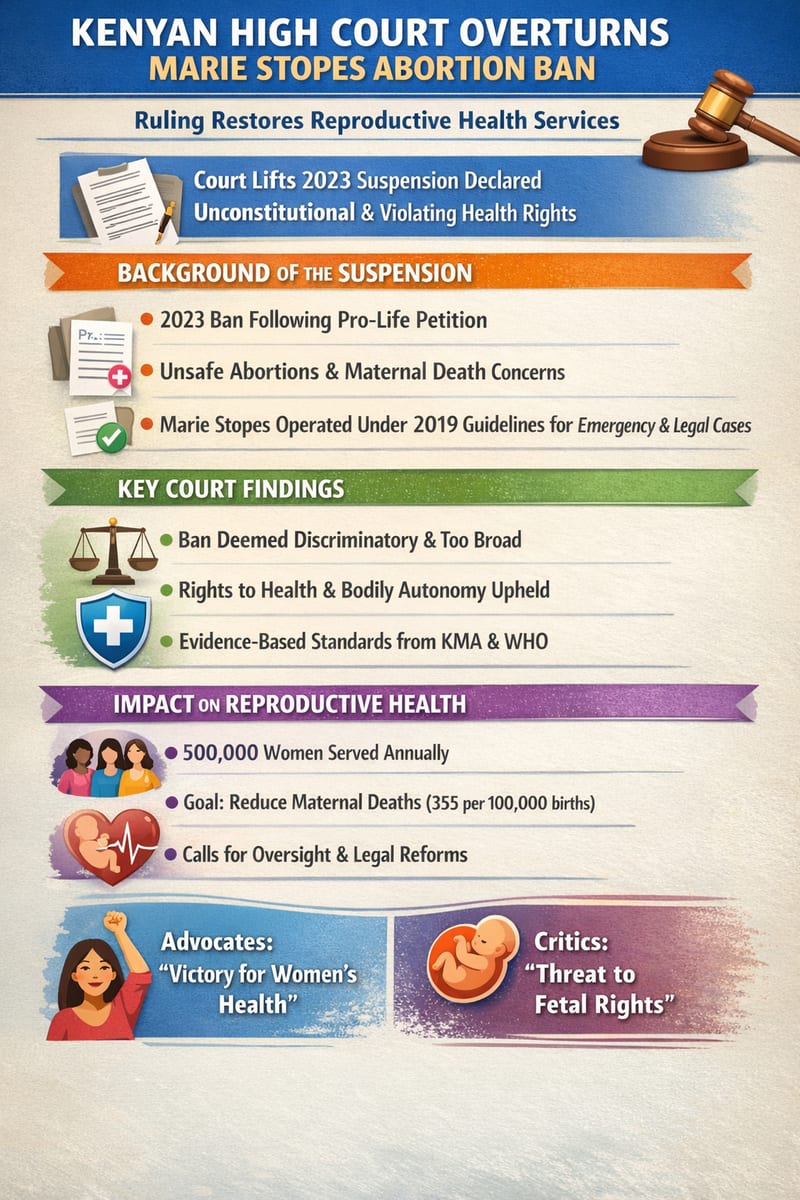
Next read
Elburgon Land Wars — How Armed Goons Are Driving Legal Landowners From Their Homes While Local Leaders Watch
25 April 2026 · 5 min read