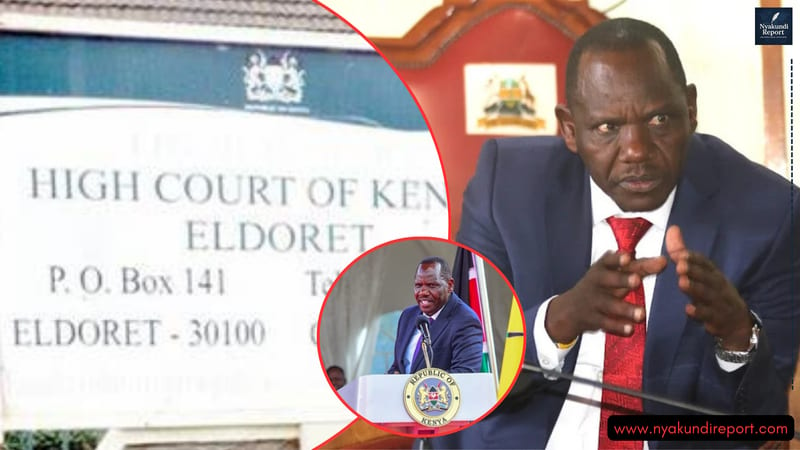
Uasin Gishu Governor Jonathan Bii faces a legal storm after being dragged to court for allegedly failing to pay Sh15 million owed to a contractor. Glakos Paint Company Limited, led by director Joseph Bwambok, claims it completed two major projects for the governor: a luxury private mansion in Elgon View Estate and a commercial Airbnb in Hazina Estate, Kapsoya. Despite the successful delivery of these developments, Governor Bii is accused of snubbing payment, forcing the contractor to seek justice in Eldoret courts. The case has sparked renewed discussions on accountability and transparency in public leadership. Governor Bii now faces a defining test of leadership. He must respect the court, settle legitimate debts, and restore public trust, or risk cementing his name among Kenya’s growing list of scandals. Contractor Moves Court Over Alleged Payment Default The lawsuit filed in Eldoret accuses Governor Bi i of failing to settle Sh15 million for construction work delivered by Glakos Paint Company Limited. According to the petition, the projects included high-end developments meant for personal and commercial use, highlighting the scale and visibility of the work done.
Attempts to resolve the dispute outside court through Alternative Dispute Resolution (ADR) failed. Court-appointed mediator Tarigo Daniel reported that Governor Bii repeatedly missed scheduled sessions. The contractor claims this shows an intentional refusal to engage in settlement talks, raising questions about the governor’s commitment to legal and financial obligations. The court first heard the matter in March 2025, but repeated adjournments followed as Governor Bii consistently skipped hearings. Eldoret Principal Magistrate Peter Areri has now warned that the court will not tolerate further delays, signaling a possible turning point in the case. Legal Team Accuses Bii of Stalling Justice Lawyer Kevin Kimaru, representing Glakos Paint Company Limited, has accused Governor Bii of deliberately stalling justice. Kimaru described the governor’s actions as a lack of “legal goodwill” and moved for the case to proceed ex-parte if Bii continues to ignore court summons. “This is not just about Sh15 million; it is about accountability. The law cannot bend for status or position,” Kimaru told the court. He accused Governor Bii of undermining justice and blocking the contractor from recovering money owed for completed projects. The magistrate backed the warning, refusing any further delays. He set March 12 as the firm hearing date and made it clear: Governor Bii must appear or risk the case proceeding in his absence. Implications for Governor Bii Scandals and Public Accountability This lawsuit adds to the growing list of controversies surrounding public officials in Kenya. Governor Bii’s alleged refusal to honor contractual obligations fuels debates on ethical governance and financial responsibility among elected leaders.
Observers note that cases like this highlight wider concerns under the umbrella of “Governor Scandals,” where personal business dealings intersect with public perception. Failure to settle legitimate claims risks damaging public trust and invites scrutiny from both the courts and the media.
As the March 12 hearing approaches, all eyes are on Uasin Gishu, with citizens and contractors alike watching how justice will be administered. The outcome could set a precedent for accountability and reinforce the principle that no public official is above the law.