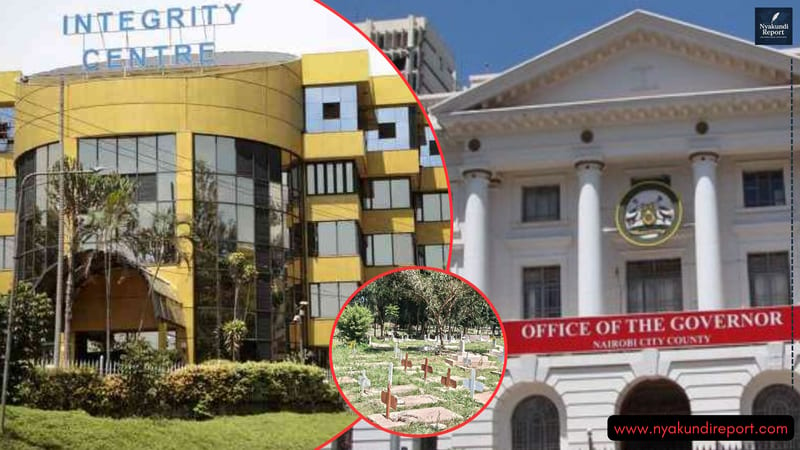
The Ethics and Anti-Corruption Commission (EACC) has recovered Ksh13 million from former Nairobi City Council official Mary Ng'ethe, who is implicated in the notorious cemetery land scandal. The recovered funds were part of a multi-million-shilling scheme involving the irregular purchase of land meant for cemetery use, highlighting EACC’s commitment to reclaiming stolen public money and holding public officials accountable. Investigations revealed that Ng’ethe, who chaired the Technical Evaluation Committee during the defunct Nairobi City Council era, received the Ksh13 million as a kickback for facilitating the fraudulent procurement process. The recovery follows a court order from the Anti-Corruption and Economic Crimes Court, signaling that corrupt public officials will not escape justice. Justice Benjamin Musyoki delivered the landmark judgment on March 24, 2026, emphasizing that Mary Ng’ethe played a central role in orchestrating and guiding the flawed procurement process. The court found that the funds she received were illegally pocketed and must be returned to the public coffers. The recovery of Ksh13 million from Mary Ng’ethe signals EACC’s resolve in fighting corruption, warning that public officials misappropriating funds will face prosecution, imprisonment, and restitution without compromise. How the Nairobi Cemetery Land Scandal Unfolded The scandal centers on the purchase of land intended for cemetery use under tender notice CCN/MOH/T/020/08/09. EACC investigations found that the land acquired was unsuitable for burials, yet the Nairobi City Council paid a grossly inflated price of Ksh283 million.
Officials and intermediaries involved in the scheme fraudulently shared the remaining funds, while the registered landowner received Ksh110 million. Mary Ng’ethe emerged as a key beneficiary, pocketing Ksh13 million in kickbacks for manipulating the procurement process to favor corrupt parties.
The scandal not only defrauded taxpayers but also delayed the development of essential cemetery facilities in Nairobi, exposing how corruption directly undermines public services. Mary Ng’ethe’s Role and Court Conviction As Chairperson of the Technical Evaluation Committee, Ng’ethe wielded significant influence over the evaluation and awarding of the procurement contract. EACC investigations and court findings revealed that she orchestrated the process to benefit herself and other conspirators.
She was convicted in Nairobi Anti-Corruption Criminal Case No. 20 of 2010 on May 15, 2018. The court sentenced Mary Ng’ethe to three years’ imprisonment on two counts and imposed a mandatory fine of Ksh52 million. The recently recovered Ksh13 million represents a portion of the public funds she illegally received.
Justice Musyoki emphasized that the recovered money belongs to the taxpayers. An EACC statement stressed, “The commission has shown that no one is above the law and that corrupt gains can and will be recovered.” Broader Recovery Efforts by EACC This recovery is part of a wider campaign by EACC to reclaim public funds lost to corruption. To date, the Commission has recovered over Ksh80 million through eight civil suits targeting beneficiaries of the Cemetery Land scandal. Additional fines imposed following criminal convictions reinforce the message that corruption carries consequences.
Pending cases, including ACC No. 19 of 2010, remain before the courts. EACC maintains that combining civil recovery with criminal prosecution is critical for deterring future corruption and ensuring public accountability. Implications for Public Procurement and Governance The cemetery land scandal highlights how weak oversight in procurement can lead to massive financial losses and deny citizens critical services. The involvement of Mary Ng’ethe demonstrates that even senior officials can exploit their positions for personal gain.
EACC’s firm action sends a clear warning: officials who divert public funds for private gain will face prosecution, imprisonment, and restitution. The Ksh13 million recovery is a small but significant step toward restoring public confidence and strengthening governance systems.
For Nairobi residents, the scandal represents both financial loss and lost opportunities for essential services. By continuing to pursue Mary Ng’ethe and others, EACC protects public resources and refuses to tolerate mismanagement.
The cemetery land scandal remains a stark reminder that accountability, transparency, and rigorous oversight are essential to safeguard public resources. Through persistent enforcement and public awareness, Kenya can curb corruption and ensure that public officials serve the people rather than exploit them.
[pdf-embedder url="http://nyakundireport.com/wp-content/uploads/2026/03/JUDGEMENT-35-OF-2018-EACC-VS-MARY-NGECHI-NGETHE.pdf"]