













The Democratic Action Party of Kenya is projecting confidence, but beneath the defiant slogans and carefully worded statements lies a party struggling to contain an internal war.
The Wamalwa and Natembeya feud has exposed deep fractures within DAP-K, pitting its leader, Eugene Wamalwa, against his deputy, George Natembeya, in a bruising contest for control of Western Kenya politics.
Despite public denials, the party’s delayed and defensive response has only reinforced perceptions of drift, indecision, and a leadership crisis that threatens to derail its relevance ahead of the 2027 elections.
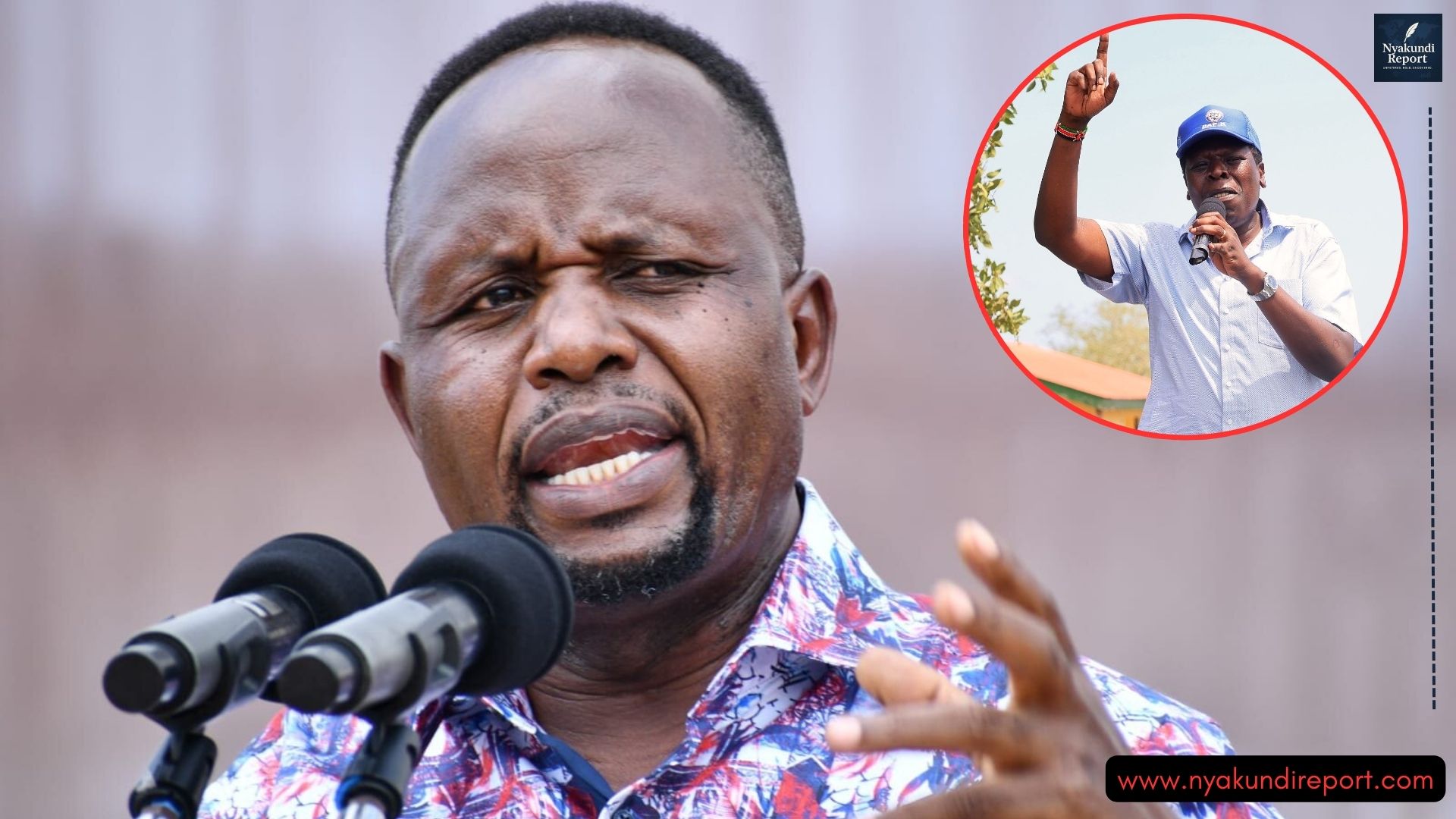
How DAP-K Is Losing Grip Over the Wamalwa and Natembeya Feud
DAP-K’s statement shared on X on Tuesday January 6 2025 was meant to draw a line under months of speculation. Instead, it raised more questions than it answered. By dismissing reports of a rift and blaming unnamed forces for attempting to divide the party, the leadership opted for denial rather than clarity. The emphatic declaration that DAP-K is TAWE and TAWE is DAP-K sounded more like a rallying chant than a solution to a festering crisis.
The problem is that the Wamalwa and Natembeya feud is not a creation of outsiders. It has unfolded in public through petitions, counter accusations, and open threats of defection. For months, DAP-K remained largely silent, allowing the narrative to be shaped by rival camps. When the party finally spoke, it failed to outline concrete steps to reconcile the factions or address the substantive grievances driving the conflict.
This hesitation has cost DAP-K moral authority. Supporters see a leadership unwilling or unable to discipline its top officials, while rivals see an opposition outfit ripe for manipulation. The longer the party avoids decisive action, the more the feud hardens into an existential struggle rather than a manageable disagreement.
Pressure on Wamalwa and the Ruto Question
At the heart of the Wamalwa and Natembeya feud lies a strategic disagreement over the party’s future direction. Eugene Wamalwa has been under sustained pressure from some Western Kenya leaders to dissolve DAP-K and back President William Ruto’s 2027 re election bid. For critics within the party, this is viewed as political surrender disguised as pragmatism.
Natembeya has emerged as the loudest opponent of this line. He has framed any alliance with Ruto’s camp as a betrayal of opposition principles and regional interests. This stance has earned him grassroots support but also intensified tensions with Wamalwa’s inner circle, who accuse him of grandstanding and undermining party cohesion.
DAP-K’s failure to clearly articulate its position on the Ruto question has allowed this disagreement to spiral. Without a firm ideological anchor, the party appears split between accommodation and resistance, with each camp accusing the other of endangering its survival.
Natembeya’s Challenge to Party Authority
The feud has also taken on a personal and institutional dimension. Natembeya has accused Wamalwa of attempting to micromanage his Trans Nzoia administration from party headquarters, a charge that resonates with governors wary of centralized party control. His allies went further, branding Wamalwa’s leadership autocratic in a petition seeking his removal.
Wamalwa’s camp responded in kind, accusing Natembeya of arrogance and betrayal before launching a counter petition to strip him of the deputy party leader position. This tit for tat escalation exposed a party more focused on internal combat than national strategy.
By August 2025, even DAP-K’s Secretary General Dr Eseli Simiyu conceded that the dispute was serious, referring it to the Internal Disputes Resolution Committee. Yet the lack of visible outcomes from this process has reinforced perceptions of paralysis rather than progress.
Regional Power Struggle in Western Kenya
Beyond party offices, the Wamalwa and Natembeya feud is a contest for regional supremacy. Natembeya’s Tawe movement has positioned him as a populist challenger to Wamalwa’s long-standing dominance in Western Kenya. His threats to quit DAP-K and form a new political vehicle have raised the stakes, turning internal disagreements into a battle for political survival.
Wamalwa’s allies have alleged state involvement in backing Natembeya, a claim that underscores the level of mistrust within the party. Whether true or not, such accusations reveal how deeply the conflict has eroded internal confidence.
By early 2026, the feud has evolved into an open confrontation for party control and influence. DAP-K’s insistence that all is well rings hollow against this backdrop. Without decisive mediation, transparent reforms, and a clear political direction, the party risks being remembered not for resistance slogans but for squandering its moment through indecision and denial.