
Zimbabwean lawyer and human rights activist Brian Kagoro was stopped from travelling to Kenya on Tuesday, September 15, despite a High Court order directing that he be allowed entry into the country.
The incident raises serious questions about the enforcement of Kenyan court orders, the powers exercised by security officials, and the extent to which immigration and national security decisions can override judicial protection.
According to the Pan African Lawyers Union, Kagoro had already boarded a flight in Addis Ababa, Ethiopia, bound for Nairobi when security personnel removed him from the aircraft and questioned him.
He was then prevented from reboarding the flight, effectively ending his journey to Kenya before he could reach Jomo Kenyatta International Airport.
The incident is particularly significant because Kagoro was expected to arrive at JKIA at around 1:30 pm, where civil society groups, lawyers, and human rights defenders had planned to welcome him and witness the enforcement of the court order.
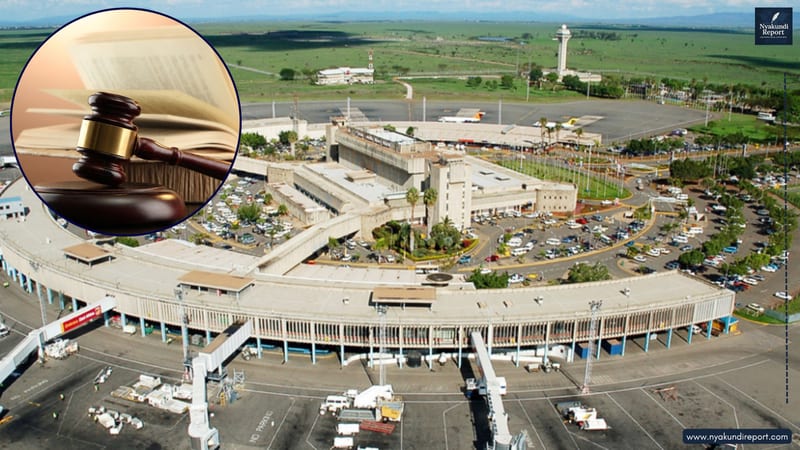
Kagoro Stopped Despite High Court Order 
The biggest question arising from the incident is straightforward. How was Kagoro stopped from travelling to Kenya when a Kenyan court had already issued orders protecting his entry?
PALU said the circumstances surrounding his removal from the aircraft were deeply concerning because of the existing court order.
The organization said Kagoro was protected against arbitrary denial of entry into Kenya pending the determination of a petition filed following his earlier detention and deportation.
This changes the nature of the dispute.
The issue is no longer simply whether Kenyan authorities wanted Kagoro to enter the country. The bigger question is whether officials could prevent him from travelling to Kenya despite an order issued by the High Court.
If the reported events are confirmed, the case could develop into a significant test of judicial authority and the obligation of public agencies to respect court orders.
February Deportation Triggered Legal Battle 
Kagoro’s latest ordeal follows his earlier confrontation with Kenyan authorities.
On February 22, he was detained at JKIA and later deported to Johannesburg, South Africa.
His deportation followed allegations that he had been involved in efforts to organize or finance anti-government protests in Kenya.
Kagoro denied the allegations and maintained that his visit was for personal reasons and a speaking engagement.
The deportation triggered a legal challenge by PALU, the East Africa Law Society, the Law Society of Kenya, and the Kenyan Section of the International Commission of Jurists.
The organizations raised concerns over due process and the rule of law in challenging the treatment of Kagoro.
The High Court’s Constitutional and Human Rights Division subsequently issued conservatory orders protecting him against arbitrary denial of entry into Kenya pending determination of the petition.
PALU said the orders were issued in June 2026 and specifically protected Kagoro against future arbitrary denial of entry.
That order is now at the centre of Tuesday’s incident.
Who Stopped Kagoro, and Why 
One of the biggest unanswered questions is who ordered Kagoro’s removal from the Addis Ababa flight and what legal authority was relied upon.
PALU said security personnel removed him from the aircraft, questioned him, and prevented him from continuing his journey.
However, publicly available information does not establish which agency initiated the intervention, what information was presented to the officials, or whether a formal directive was issued.
That uncertainty is important.
Airports involve airlines, immigration authorities, security agencies, and law enforcement bodies operating under different jurisdictions. A passenger can be prevented from boarding for various reasons, including security or immigration instructions.
But if the intervention was connected to Kenya’s attempt to prevent Kagoro from entering the country, a difficult legal question arises.
Can a Kenyan court order protecting a person’s entry be effectively defeated by stopping that person before the aircraft reaches Kenya?
That question could become central if Kagoro’s lawyers return to court seeking enforcement of the existing orders.

Court Authority Faces Fresh Test 
Court orders carry legal authority and are expected to be obeyed unless they are lawfully varied, suspended, or overturned.
That makes the reported interception particularly sensitive.
Kagoro’s lawyers have said they are seeking clarification from the relevant authorities and preparing further legal action to ensure that the court order is followed.
The next legal proceedings could therefore establish whether Tuesday’s incident resulted from a legitimate administrative decision, a security concern, a misunderstanding, or an action that conflicted with the existing court orders.
Several questions remain unanswered.
Why was Kagoro removed from the aircraft?
Who gave the instruction?
Was Kenya directly involved?
What legal basis was given for stopping him?
And were the officials involved aware of the High Court order?
Kenyan authorities had not publicly addressed the incident by the time of publication.
That leaves PALU’s account as the main public explanation of what happened and increases the importance of an official response.
The Bigger Rule of Law Question 
The Kagoro case is bigger than one foreign lawyer attempting to travel to Kenya.
It touches on the difficult balance between national security, immigration control, individual rights, and judicial authority.
Governments have legitimate responsibilities to protect national security and regulate entry into their territories. Those powers, however, operate within a legal framework.
Where a court has already issued an order protecting an individual, any attempt to restrict that protection raises serious questions about the relationship between executive power and the judiciary.
The courts will ultimately have to establish what happened and whether any authority acted contrary to the existing orders.
Until then, the central question remains unanswered.
Kagoro was reportedly stopped before reaching Kenya despite a High Court order that PALU says was designed to protect him from arbitrary denial of entry.
If those facts are confirmed, the controversy will no longer be simply about why one activist was stopped from boarding a flight.
It will be about whether an existing court order protecting a person’s rights can be bypassed before that person even reaches Kenya.
That is the rule of law question now hanging over the Kagoro case.