
The pursuit of one of Kenya’s highest legal honours is supposed to represent the culmination of an advocate’s distinguished career, exemplary professional conduct and unwavering commitment to justice. But when an advocate seeking such recognition is associated with unresolved allegations involving disputed testamentary documents, contested estate administration and an approved criminal prosecution, difficult questions about the meaning of professional integrity inevitably arise.
For Peter Mbuthia Gachuhi, a partner at Kaplan & Stratton Advocates, the reported ambition to become Senior Counsel comes against the background of an increasingly contentious dispute surrounding the estate of James Boro Karugu, Kenya’s second Attorney General, and his wife, Margaret Waithera Karugu.
Four years after James Karugu died on November 10, 2022, the controversy surrounding documents presented as his Last Will and Testament and Settlement Trust Deed remains unresolved. What should have been a straightforward administration of the estate of a distinguished public servant has instead developed into a prolonged legal confrontation involving allegations of forgery, disputed executorship, forensic investigations and proposed criminal charges.
The central question is whether the professional distinction Gachuhi reportedly seeks can be considered without thoroughly examining the circumstances surrounding his involvement in the estate dispute.
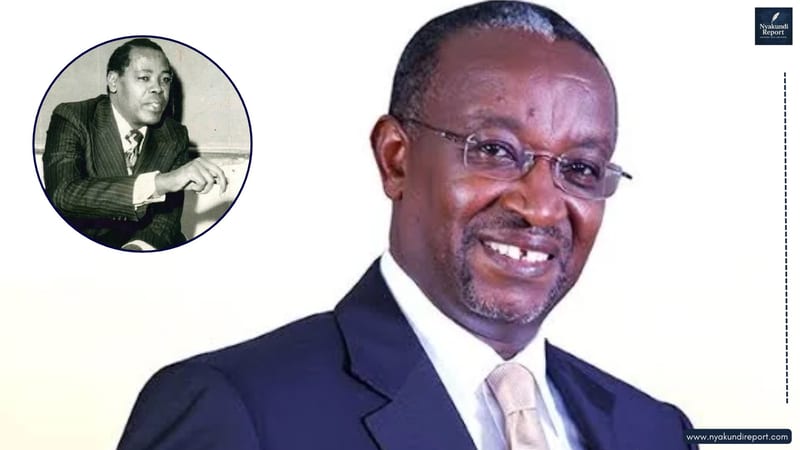
The disputed Will that triggered the estate controversy 
The controversy began barely three weeks after James Karugu's death.
On November 29, 2022, former company secretary Jane Wangechi Kabiu of Optimum Registrars reportedly convened a meeting at Elysian Resort along Kiambu Road, where documents presented as the deceased's Will and Settlement Trust Deed were introduced.
Gachuhi attended the meeting and reportedly took custody of the original Will, which purported to appoint him as an executor and trustee.
However, the documents subsequently attracted allegations of forgery, with concerns raised over grammatical errors, spelling mistakes, formatting inconsistencies and irregularities surrounding their execution.
These allegations are particularly consequential given the professional and educational background of James Karugu. A former Attorney General who attended Mang'u High School, Bowling Green State University and Lincoln's Inn, Karugu had served in senior government legal positions before rising to the country's highest legal office.
The question raised by the objectors is whether the documents genuinely reflected his intentions.
Poor drafting, grammatical mistakes or unusual formatting cannot independently establish forgery. Nevertheless, when the authenticity of testamentary instruments is formally challenged, their preparation, execution, custody and forensic examination become matters of considerable importance.
Victoria Nyambura Karugu, the deceased's daughter, formally challenged the documents and the authority of the purported executors.
DCI investigation and the controversy over original documents 
In July 2023, following a visit by Directorate of Criminal Investigations officers to Kaplan & Stratton concerning the disputed instruments, Gachuhi and two other purported executors moved to the High Court seeking probate through Succession Cause E916 of 2023.
Victoria subsequently filed an objection on August 14, 2023, challenging the Will's authenticity and the purported executors' authority.
The dispute consequently moved beyond disagreements among beneficiaries and into questions requiring independent judicial and forensic examination.
According to evidence presented by DCI investigators, obtaining the original testamentary instruments for forensic examination proved difficult. Investigators identified irregularities that required further examination, while questions emerged concerning the documents' custody and production.
The continued retention of original testamentary documents is particularly significant because forensic examination is central to establishing whether signatures, handwriting, alterations and execution details are genuine.
Gachuhi's reported handling of the documents therefore raises legitimate questions about the responsibilities of an advocate entrusted with instruments whose authenticity has become the subject of criminal investigation.
The public deserves clarity on when investigators first requested the originals, what responses were provided and when the documents eventually became available for examination.
These are not peripheral administrative questions. They go directly to the integrity of the process through which the truth about the deceased's final wishes must be established.
The disputed intervention involving the Deputy Registrar 
The controversy acquired another dimension in October 2023 when Deputy Registrar Catherine Ng'ang'a reportedly wrote to the DCI suggesting that investigations into the alleged forgery await the determination of the succession objection.
The correspondence raised an important legal question: should criminal investigations into suspected forgery be delayed simply because related probate proceedings are pending?
Victoria and her legal representatives reportedly challenged the intervention, questioning the circumstances under which the correspondence was issued.
Of particular concern was the reported fact that Gachuhi was copied into the communication while Victoria, the objector challenging the Will, was not.
Questions were also raised about an alleged ex parte meeting involving Gachuhi and the Deputy Registrar.
The circumstances surrounding that correspondence deserve independent examination. The public should know whether the communication followed established judicial procedures and whether all relevant parties were afforded procedural fairness.
Criminal investigations and succession proceedings serve different legal purposes. A probate court determines questions concerning the validity of a Will and the administration of an estate, while criminal investigators examine whether offences have been committed.
Neither process should become an instrument for improperly frustrating the other.
The January 2026 correspondence and the estate's financial interests 
The dispute became even more consequential in January 2026 when Gachuhi and Eric Mwaura Karugu reportedly communicated with Maramba Holdings Limited, a tea factory associated with the late James Karugu and businessman Naushad Merali.
In correspondence issued on Kaplan & Stratton letterhead, they reportedly instructed the company to continue remitting dividends attributable to James Karugu's estate into the deceased's bank account pending further instructions from the purported executors.
On January 30, 2026, Gachuhi reportedly supplied certified extracts of the disputed Will to support the position.
Senior Counsel Philip Murgor challenged the representations in correspondence dated February 5, 2026, arguing that the Will remained disputed, no Grant of Probate had been issued and criminal investigations were underway.
This episode raises serious questions about the extent of authority exercised over assets belonging to an estate whose administration remained contested.
An advocate's professional responsibility does not end with preparing correspondence or communicating instructions. Where questions concerning executorship and ownership remain unresolved, the legal basis for directing the movement or administration of estate-related funds must be established.
The beneficiaries and the public deserve an independent account of what happened to the dividends and the legal authority relied upon in handling them.
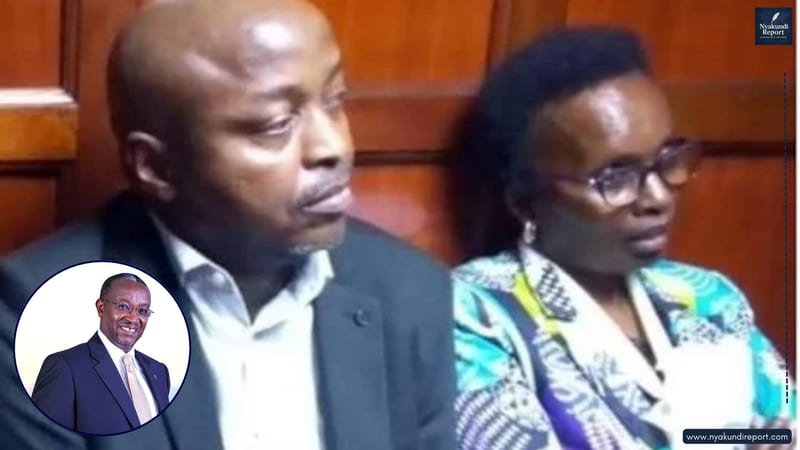
ODPP-approved charges and the constitutional challenge 
Perhaps the most significant development came in December 2025 when the Office of the Director of Public Prosecutions approved criminal charges against several individuals, reportedly including Gachuhi, arising from the disputed testamentary documents.
The proposed offences included forgery-related allegations, uttering a false document and conspiracy to defraud.
The decision followed investigations conducted by the DCI and a prosecutorial review by the ODPP.
An approval to prosecute is not a conviction. It does not establish criminal guilt, and every accused person remains entitled to the presumption of innocence and a fair hearing.
However, the decision represents a significant development that cannot simply be dismissed as an ordinary disagreement among family members.
Following the proposed prosecution, Gachuhi and other petitioners instituted Constitutional Petition E027 of 2026, challenging the intended prosecution and seeking conservatory relief.
The Attorney General opposed the proceedings, reportedly arguing that the petition was misconceived and that pending succession litigation could not automatically prevent lawful criminal investigations.
The precise effect of any interim orders must be understood from the court record. Nevertheless, the underlying allegations remain matters requiring a conclusive legal determination.
In September 2026, Justice Gregory Mutai dismissed Victoria Karugu's application to join the constitutional proceedings.
Crucially, that procedural ruling did not determine whether the disputed Will was authentic, whether any criminal offence had been committed or whether the conduct of the individuals implicated was lawful.
It would therefore be misleading to present the ruling as an acquittal or judicial endorsement of the disputed testamentary documents.
Does Gachuhi meet the Senior Counsel standard? 
This brings the controversy to the question of Gachuhi's reported pursuit of Senior Counsel status.
Under Section 17 of the Advocates Act, the distinction is reserved for advocates who demonstrate irreproachable professional conduct and exemplary service to the legal profession and public service.
It is not simply a recognition of years spent in practice, professional connections or seniority within a prestigious law firm.
The standard is deliberately demanding because Senior Counsel represents the highest level of professional recognition within Kenya's legal fraternity.
The question is therefore straightforward: can the Committee on Senior Counsel properly assess an applicant's suitability without examining credible and documented concerns about professional conduct that remain unresolved?
The presumption of innocence must be respected. Gachuhi should not be declared guilty of offences that have not been proved in court.
However, the presumption of innocence does not mean that professional suitability assessments must ignore substantiated concerns about ethical conduct, fiduciary responsibilities or the handling of disputed legal instruments.
The Committee must independently establish what evidence exists, what proceedings remain pending and whether any professional misconduct findings have been made.
An honour founded on irreproachable conduct must be awarded through a process that inspires public confidence.

The legacy of James and Margaret Karugu deserves protection 
The human dimension of this controversy is particularly painful.
James Karugu rose from humble beginnings to become Attorney General, while his wife, Margaret Waithera Karugu, established herself as a pioneering senior civil servant.
Both benefited from the Kennedy Student Airlift, supported by the late Tom Mboya and Dr Julius Gikonyo Kiano, which opened educational opportunities for African students in the United States.
Their educational journeys helped shape a lifelong commitment to public service, entrepreneurship and academic advancement.
Their legacy continues through the Dr James and Margaret Karugu Scholarship at Bowling Green State University, which supports educational opportunities for deserving African students.
This is more than a family inheritance. It is a contribution to future generations of students who might otherwise struggle to access higher education.
Any dispute over the administration of their estate must therefore be handled with exceptional transparency and respect for their documented intentions.
The beneficiaries, scholarship recipients and wider public deserve assurances that the assets and philanthropic commitments associated with the couple are being protected.
The allegations involving Gachuhi, Jane Gitau, Eric Mwaura and other individuals must be independently established rather than treated as proven wrongdoing. Equally, the interests of the estate must not be subordinated to competing claims of authority.
Institutions cannot afford to ignore the controversy 
The reported Senior Counsel ambition also places the responsibility on professional and institutional bodies to demonstrate that reputation and professional standing do not place individuals beyond scrutiny.
The Advocates Disciplinary Tribunal should independently consider any properly lodged complaint within its jurisdiction, while the Committee on Senior Counsel should undertake the rigorous assessment required by law.
Chambers and Partners, the internationally recognised legal research and ranking organisation, and the Anglican Church of Kenya, under the leadership of Archbishop Jackson Ole Sapit, have also reportedly been alerted to concerns surrounding Gachuhi's involvement in the disputed estate documents.
His reported position as Deputy Provincial Chancellor of the Anglican Church of Kenya makes questions about professional and ethical standards particularly relevant to the institution's responsibilities.
Neither international professional recognition nor religious office should be confused with a determination of legal innocence or guilt. Equally, credible concerns supported by documentary evidence deserve appropriate institutional attention.
Four years after James Karugu's death, the most important responsibility is to establish the truth through lawful, independent and transparent processes.
Peter Gachuhi is entitled to defend himself against every allegation. The Karugu family is equally entitled to a fair determination of the disputed estate.
Kenya's legal profession must also protect the credibility of its highest professional honours.
Senior Counsel should represent integrity, exemplary service and public confidence, not merely professional achievement. The higher the honour, the higher the standard.
And no advocate, however prominent, should be beyond legitimate scrutiny.