
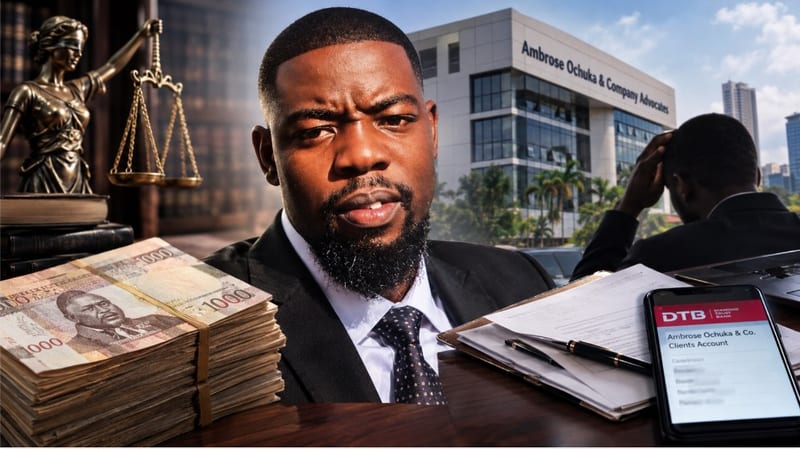
A Nairobi lawyer has been exposed for pocketing Ksh 2.9 million from a client who sought help recovering Ksh 11 million from a debtor, delivering no recovery in return and then dictating his own repayment schedule, under which the client was to receive the money back in monthly instalments stretching to September 2026.
The lawyer at the centre of the complaint is Ambrose Ochuka Abongo of Ambrose Ochuka & Company Advocates, whose offices are located at Krishna Centre in Westlands.
The matter is before the Advocates Complaints Commission, while a parallel investigation by the Directorate of Criminal Investigations (DCI) has found that Ochuka obtained money through a fraudulent scheme, with the file now awaiting the Office of the Director of Public Prosecutions (ODPP) to approve the charges before prosecution.
The Law Society of Kenya (LSK) has also been drawn into the dispute, with a separate complaint lodged over the advocate's conduct.
The proceedings have now placed Ochuka under increased scrutiny within the legal fraternity, with calls growing for his suspension and the harshest disciplinary measures available for breaching professional rules.
How the Client Was Lured Into the Scheme 
When the client approached the advocate in September 2025 after losing Ksh 11 million to a debtor named Pinto Kidige Omonge, Ochuka informed him that Omonge was also his client in a separate property transaction involving a house in Kajiado.
Ochuka then presented a plan under which the client would provide money to clear the outstanding balance on the property, allowing the debtor to acquire the property before the client commenced legal proceedings to attach it and recover the Ksh 11 million debt, with the proposed arrangement requiring Ksh 5,362,537 from the client.
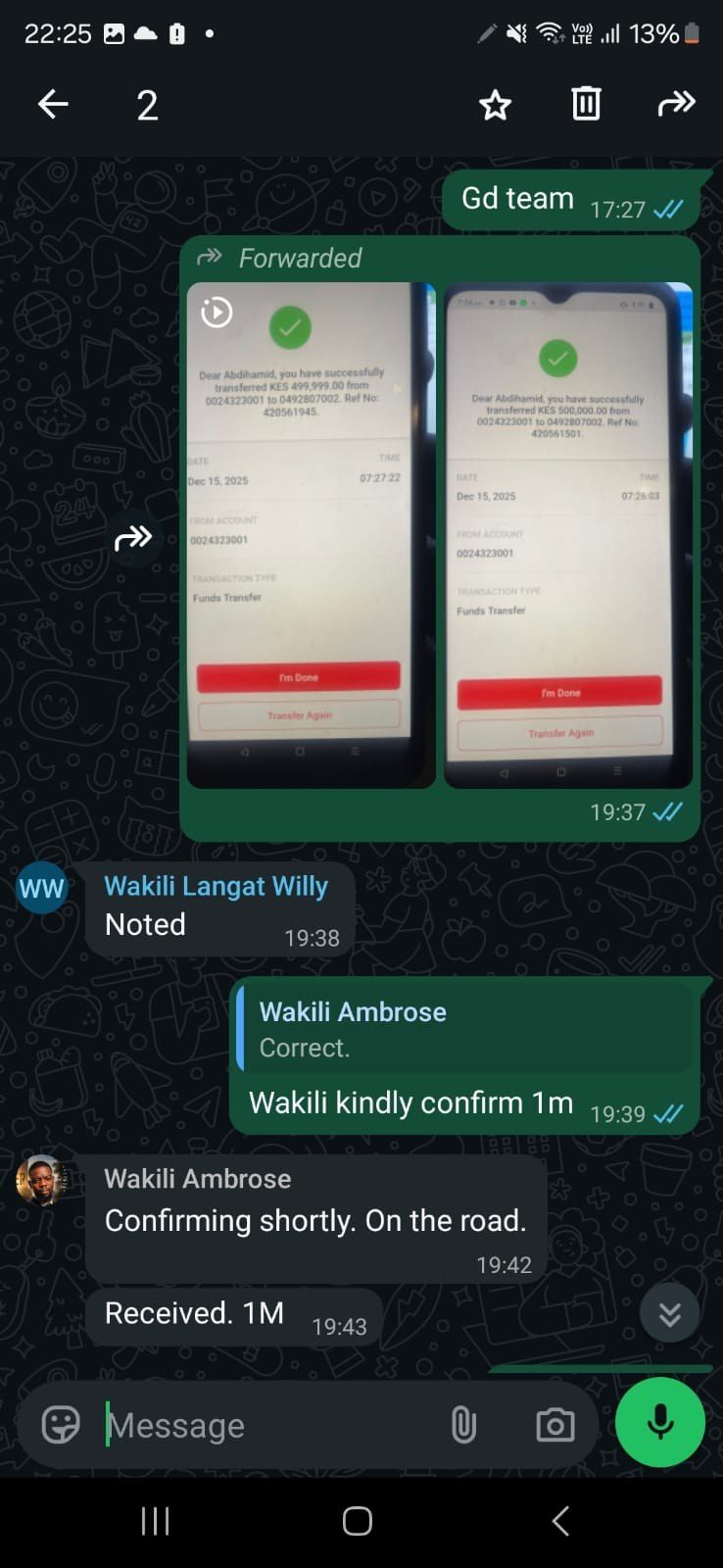
Between December 2025 and March 2026, the client remitted Ksh 1,000,000 on 15th December, Ksh 1,000,000 on 12th January, Ksh 200,000 on 17th January, Ksh 400,000 on 25th February, Ksh 200,000 on 11th March and Ksh 100,000 on 20th March, bringing the total amount paid to Ksh 2,900,000, with the demand letter setting out the purpose for which the money was advanced.
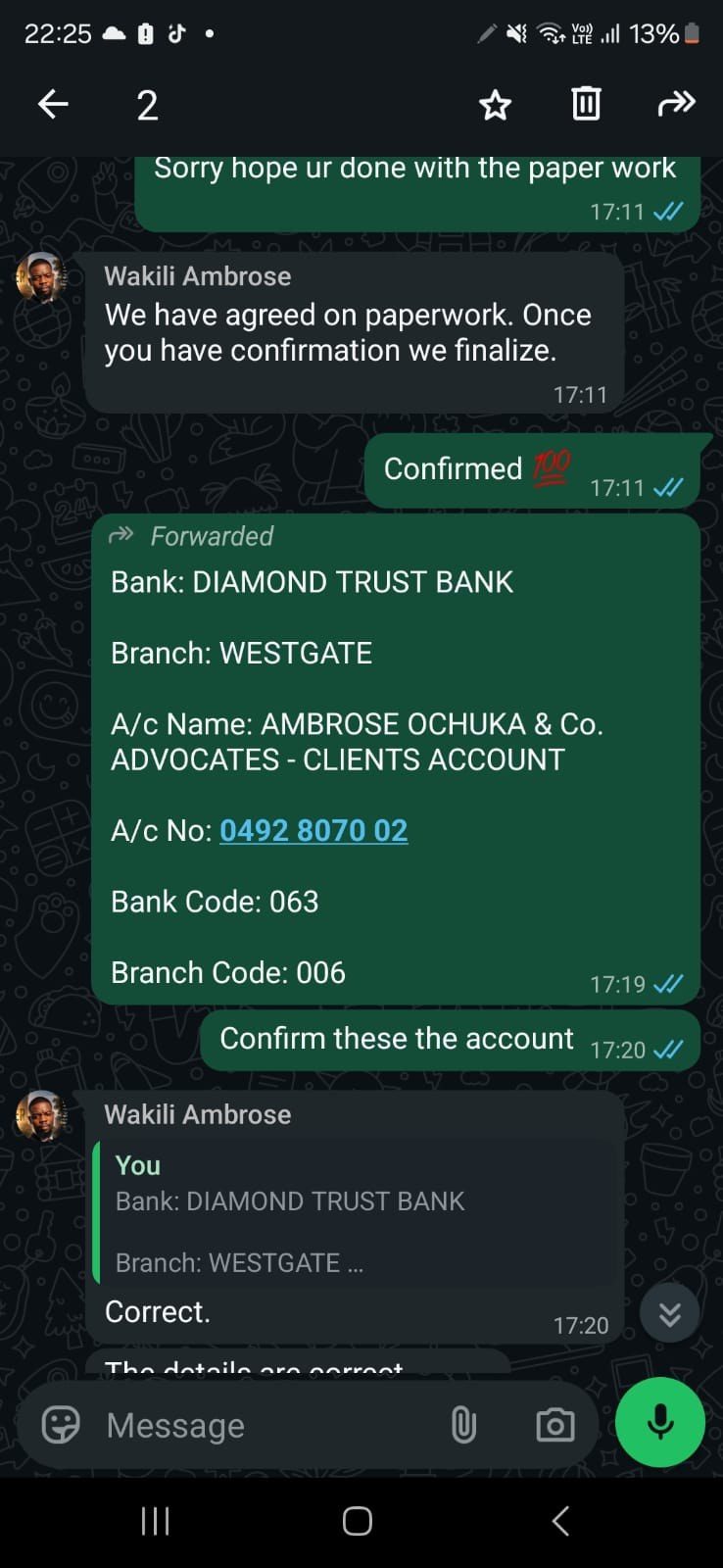
Screenshots reviewed by this publication show Ochuka directing the client to make payments to an Ambrose Ochuka & Co. Advocates Clients Account at Diamond Trust Bank, details he confirmed to the client on WhatsApp.
Other payment records show money sent through M-Pesa to a mobile number registered in Ochuka's name, as well as several Pesalink transfers to an account identified as Ambrose Ochuka & Co.
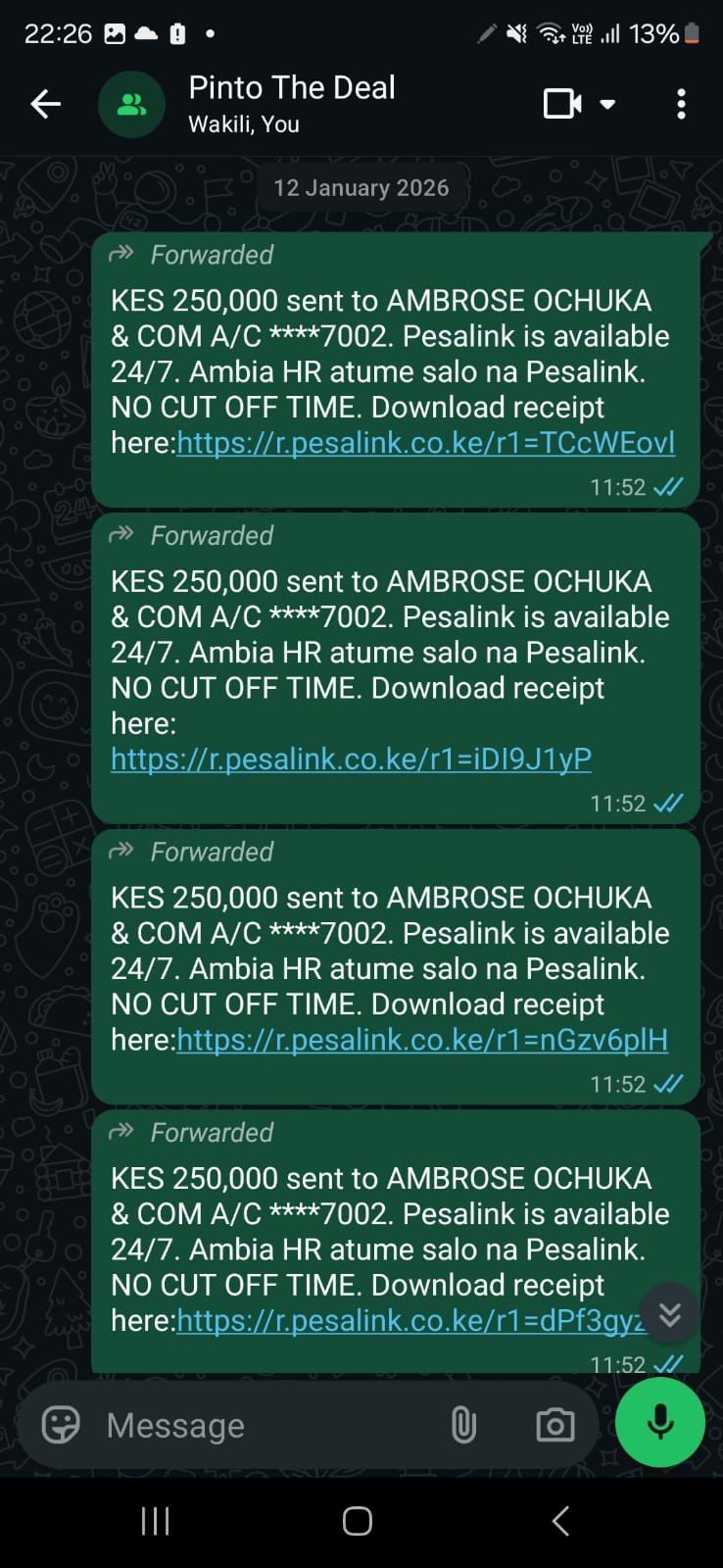
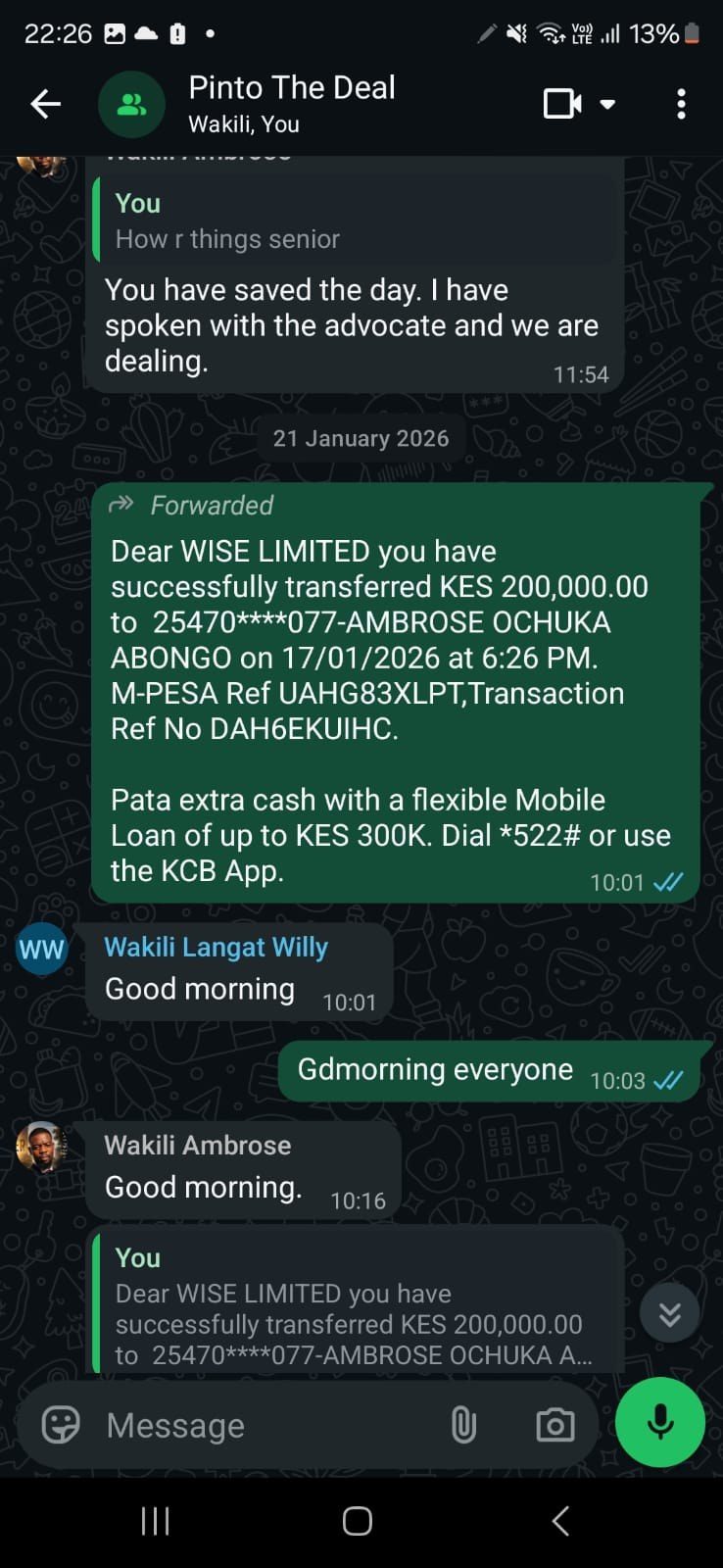
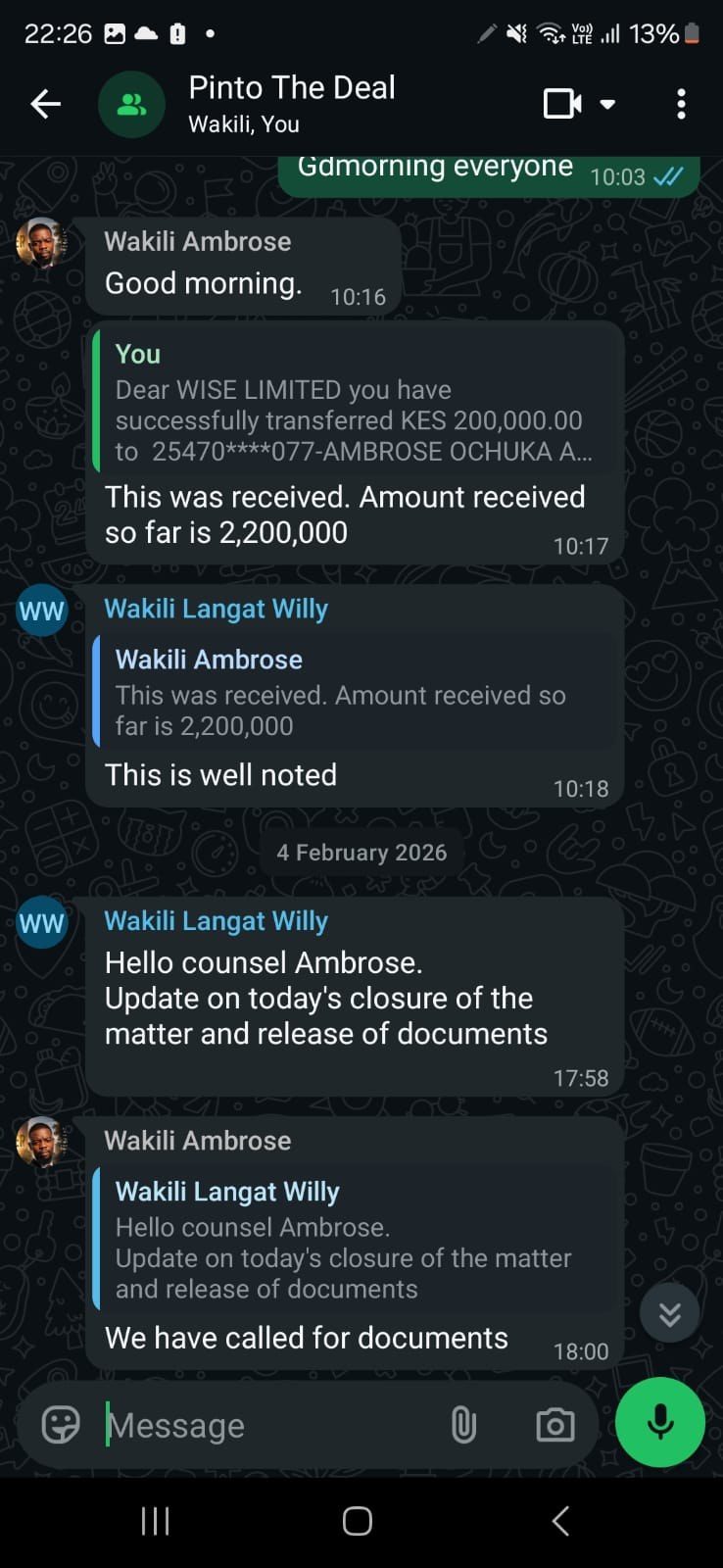
"The said monies were paid to you on the clear understanding that they were to facilitate and/or aid the intended recovery process and auction proceedings concerning the aforesaid property," the demand letter states.
The client was unable to raise the full Ksh 5,362,537 required under the arrangement, bringing the proposed property transfer to a halt, while the original Ksh 11 million debt remained unpaid and the Ksh 2.9 million already advanced towards the recovery process remained with the advocate.
In his response to the complaint, Ochuka acknowledged that the amount received was below the required Ksh 5,362,537, saying the shortfall had frustrated the arrangement, yet he continued to hold the money already paid by the client without returning it.
"This amount fell short of the initially requested advancement and as such frustrated the arrangement," Ochuka wrote, while simultaneously refusing to return the Ksh 2.9 million already in his possession.
A letter dated 27th February 2025 from Fatah and Company Advocates further reveals that Ochuka was holding the original title documents for the property in question, with the professional undertaking providing for the release and receipt of the documents before the balance of Ksh 1,550,000 would be remitted to his account within 30 days.
"Upon your release and receipt by our firm of the original Title Documents of property Known as Town House No 1 Title No. KAJIADO/KAPUTIEI NORTH/113994, our Client shall remit the balance of Kenya Shillings One Million Five Hundred and Fifty Thousand (Ksh 1,550,000) to your account within thirty (30) days," the professional undertaking states, placing Ochuka directly within the property transaction upon which the proposed recovery arrangement depended.
On 14th May 2026, the client's new lawyers, Fatah and Company Advocates, issued a demand letter that left nothing to ambiguity, seeking the immediate return of the Ksh 2.9 million after the recovery process had failed to produce the intended outcome.
"Take notice therefore that we hereby demand the immediate and unconditional refund of the sum of Kenya Shillings Two Million nine Hundred Thousand (Ksh 2,900,000) within forty-eight (48) hours from the time of receipt of this letter," the letter states.
"You have failed and/or neglected to undertake the agreed process or refund the monies to our Client, thereby turning the entire transaction into a scheme aimed at unlawfully obtaining money by false pretences," the letter continues, warning that failure to refund would result in both civil and criminal proceedings against him.
The advocate responded on 17th May 2026 by dismissing the demand as grossly misguided while acknowledging receipt of Ksh 2.9 million and promising to return the funds, but only according to a repayment arrangement that mirrored the instalments through which the client had advanced the money.
"The undersigned acknowledges receipt of the sum of KES. 2,900,000 as an advancement from your client and accepts to refund your client in the same manner and fashion of advancement," Ochuka wrote, proposing to pay Ksh 1,000,000 on or before 15th June, Ksh 1,000,000 on or before 12th July, Ksh 200,000 on or before 17th July, Ksh 400,000 on or before 25th August, Ksh 200,000 on or before 11th September and Ksh 100,000 on or before 20th September 2026.
"The undersigned shall not pay the sum of KES. 2,900,000 within the forty-eight (48) hours or any such other timelines that fall short of the time taken by your client to advance him the said funds but shall refund the same as above stated," Ochuka wrote, making clear that the refund would not be governed by the 48-hour demand issued by the client but by a timetable set out in his own response.
Ochuka also stated that he was no longer interested in continuing with the arrangement at all, effectively bringing the original recovery plan to an end while the Ksh 2.9 million paid towards it remained outstanding.
The demand letter explicitly accused Ochuka of unlawfully obtaining money by false pretences, a criminal offence under the Kenyan Penal Code carrying a maximum sentence of imprisonment.
The most striking aspect of the response was not merely the refusal to make an immediate refund, but the decision by the advocate to impose his own repayment terms after the arrangement for which the money had been advanced had failed.
Rather than treating the failed engagement as requiring the prompt resolution of the outstanding funds, Ochuka took the position that repayment would follow a timetable of his choosing, effectively converting money advanced for a professional engagement into an amount to be repaid over a period determined by the person who had received it.
The approach is particularly troubling because the client had approached the advocate precisely because he was seeking to recover money already lost to a debtor.
Instead of resolving that underlying dispute, the engagement ended with the proposed recovery failing and the client having to pursue the return of funds advanced to his own advocate.
Such conduct raises serious questions about the manner in which the advocate handled funds entrusted to him for a specific legal purpose, particularly after the arrangement on which the payments were based had ceased to proceed.
DCI Investigation 
The criminal investigation into Ochuka's activities began when the client reported the matter to the DCI at Parklands Police Station, prompting investigators to examine the documents provided by the client, including the demand letter, the professional undertaking and the advocate's response.
After reviewing the evidence, investigators established that Ochuka had obtained money through a scheme that amounted to a conning operation, concluding that the promise to help the client recover his debt was a fraudulent scheme designed to extract money from a desperate victim.
Their inquiry documented a consistent pattern of behaviour in which the advocate identified vulnerable clients who had suffered financial losses, presented elaborate recovery plans, collected substantial sums of money and then failed to deliver the promised results while refusing to return the funds except on terms designed to frustrate and exhaust the victims.
Evidence gathered during the investigation further indicated that Ochuka had employed the same modus operandi against multiple other victims, targeting clients who were desperate and willing to do anything to recover their money.
Investigators said the evidence pointed to an operation designed to defraud vulnerable members of the public, with their findings indicating that Ochuka had repeatedly promised recovery while failing to deliver the results presented to clients.
The DCI file has since been forwarded to the Office of the Director of Public Prosecutions (ODPP), with investigators recommending that Ochuka face criminal prosecution for obtaining money by false pretences, an offence carrying a maximum sentence of imprisonment under Kenyan law.
"He is known in legal circles as someone who preys on desperate clients," an advocate who has practiced in Nairobi for over two decades told this publication on condition of anonymity.
"The money goes in, nothing comes out, and the client is left with no recourse except a complaint that takes years to resolve."
More Victims Coming Forward 
The complaint has now prompted other clients who say they have had similar experiences with Ochuka to come forward, with some considering presenting their own cases and supporting documents to the relevant authorities as the matter gains wider attention.
They have been encouraged to report their cases to the DCI at Parklands Police Station and lodge complaints with the Advocates Complaints Commission, so that the authorities can also take up their grievances.
The client at the centre of the current case has vowed to pursue every available legal avenue until his money is recovered, refusing to accept the repayment timetable imposed by Ochuka or allow the matter to end with the advocate returning the funds at his own convenience.
Having already lost Ksh 11 million in the original debt dispute, the client is now pursuing the return of the money he advanced during the attempted recovery process, with the complaint before the Advocates Complaints Commission and the criminal investigation providing separate avenues through which he is seeking redress.
The client has made clear that he intends to continue pursuing the matter until he recovers his money, while the other clients being encouraged to report their own experiences could add further complaints to the cases already before the authorities.
For anyone considering engaging Ambrose Ochuka Abongo of Ambrose Ochuka & Company Advocates, the developments serve as a warning to exercise caution before handing over money or entering into an engagement with the firm.