This archive report was first published on 24 October 2021.
On a typical stroll through the park, you're likely to spot baby ducklings racing after their mother, while the sound of newborn birds chirping fills the air around your garden's nesting box. But where are the baby pigeons? Despite their abundance in cities, gardens, and rural areas, it's rare to catch a glimpse of these young birds.
One reason for this is that pigeons are extremely discreet when it comes to their breeding habits, preferring to make their nests on cliffs or other high places. They will go to great lengths to safeguard their nests and young ones, making it almost impossible to locate a nest or hear the chicks call out for food.
Another reason you may not see baby pigeons is that they spend a significant amount of time in their nest, emerging as almost adults when they finally leave. Young pigeons take around 40 days or more to develop, during which time they are buried in the nest and don't resemble newborns in appearance.
It's not surprising that we don't see many baby pigeons, considering that ground-nesting birds are often forest dwellers and young wild birds don't leave the nest until they're almost as big as their parents. Pigeons, like other wild birds, are no exception to this rule.
Meet the Squab: The Baby Pigeon 
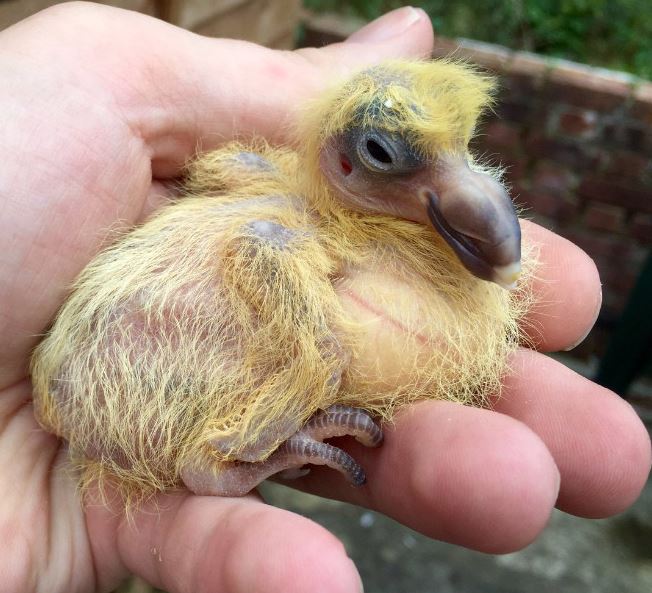
So, what exactly is a baby pigeon called? It's a squab, which can also be referred to as a squeaker. Take a look at this photo of a very young pigeon, probably just a day old.