This archive report was first published on 5 July 2020.
Kenya's livestock sector is facing a major threat from diseases that have been causing significant losses in the industry. To combat this, the government has launched a national vaccination program aimed at controlling and managing the spread of these diseases.
Agriculture Cabinet Secretary Peter Munya observed that farmers incur losses when their animals contract certain diseases. He pointed out that the rampant disease transmission and outbreaks are caused by the movement of livestock in times of drought or while being transported to markets.
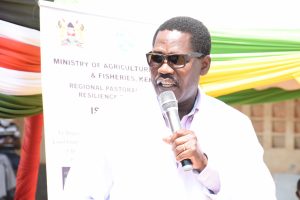
Speaking at the launch of the national vaccination program at Isiolo Livestock Market, Munya said the country has developed measures to be undertaken by stakeholders to eradicate the diseases that threaten the livestock population. He disclosed that there has been an upsurge in the transmission of diseases like foot and mouth from infested areas to disease-free zones through the movement of animals due to a shortage of pasture and water.
According to Munya, the problem is aggravated when some counties fail to implement disease control programs. He added that enforcement of regulations and bylaws meant to control livestock movement by county governments should be enhanced to reverse even trans-boundary disease outbreaks. Vaccination should also be improved to cover all animals against diseases.
The CS cited failure by counties to adhere to existing guidelines on disease control as spelt out in national control strategies and inadequate budgetary allocations towards surveillance and vaccination as a key impediment in disease control. He said that county governments ought to allocate sufficient funds to the livestock sector if they are serious about getting rid of the drawback to livestock production.
Kenya has an animal population of 18.8 million cattle, 26.7 million goats, 18.9 million sheep, 44.6 million poultry, 3.2 million camels, 500,000 pigs, and 1.9 million donkeys. Munya said that control measures would help livestock producers as well as national and county governments in combating frequent disease outbreaks.
Isiolo Agriculture Executive Lawrence Mwongela said the county had in the past six months vaccinated 340,000 animals and distributed 2,000 kgs of grass seeds, 3,000 bags of range cubes, and at least 2,000 beehives to farmers spread across the county.