




































The Ng’eno Helicopter Crash is rapidly emerging as one of Kenya’s most troubling aviation disasters in recent years, with investigators now piecing together a chain of decisions, weather challenges, and technical uncertainties that ended in tragedy.
New evidence shows the aircraft flew dangerously low before slamming into trees in Nandi County, killing six people, including Emurua Dikirr MP Johana Ng’eno.
As forensic teams analyze recovered flight instruments and eyewitness accounts contradict early assumptions, investigators are now examining whether human judgment, weather pressure, or mechanical failure combined to create a fatal sequence of events.

Ng’eno Helicopter Crash Investigation Reveals Critical Final Moments
Fresh findings from investigators show the helicopter involved in the Ng’eno Helicopter Crash descended to an unusually low altitude moments before impact, raising urgent questions about what forced the aircraft into a vulnerable flight path.
A preliminary report by the National Police Service indicates the aircraft struck trees in Chepkeip, Mosop Sub-county, after flying below safe operational levels. Investigators believe this low-altitude flight significantly reduced the pilot’s margin for recovery once visibility worsened.
Nandi County Police Commander Samuel Mukuusi confirmed that authorities recovered key flight instruments, including the aircraft’s black box, from the fire-damaged wreckage. Forensic experts secured the crash site immediately after the accident and transported critical components for technical analysis.
Investigators will now examine whether the helicopter suffered mechanical problems, whether the pilot misjudged flight conditions, or whether rapidly changing weather forced emergency maneuvers that ended disastrously.
The wreckage, heavily burned after impact, remains under tight security as specialists reconstruct the aircraft’s final minutes using flight data and cockpit recordings. Officials believe this analysis will provide the clearest timeline yet of the decisions made before the crash.
Transport Cabinet Secretary Davis Chirchir confirmed that international investigators aligned with the International Civil Aviation Organisation will independently review the accident. Under global aviation rules, a preliminary report is expected within 30 days.
The Aircraft Accident Investigation Department has already begun parallel investigations at the crash site, signaling the seriousness with which authorities are treating the Ng’eno helicopter crash.
Flight Timeline Shows Intense Travel Schedule Before Disaster
Newly released flight records reveal the helicopter followed a demanding schedule across several counties on the day of the accident, potentially exposing both crew and aircraft to cumulative operational strain.
The helicopter departed Wilson Airport at 11.04am before landing in Emurua Dikirr at 11.55am to pick up MP Ng’eno. It resumed its journey at 12.20pm, touching down multiple times across western Kenya throughout the afternoon.
The aircraft landed in Mararianta, Endebess, Eldoret Airstrip, and Tabolwa in quick succession, with some stops lasting only minutes. Aviation analysts note that frequent takeoffs and landings increase workload for pilots, especially when weather conditions deteriorate.
Radar data shows the helicopter departed Tabolwa at approximately 4.25pm. Just one minute later, air traffic controllers lost radar contact over Nandi County. Authorities now believe the crash occurred shortly afterward.
Interior Principal Secretary Raymond Omollo stated that early assessments point to adverse weather as a major contributing factor, though investigators caution that weather alone rarely explains aviation disasters without additional operational pressures.
Eyewitness Accounts Suggest Pressure to Resume Flight
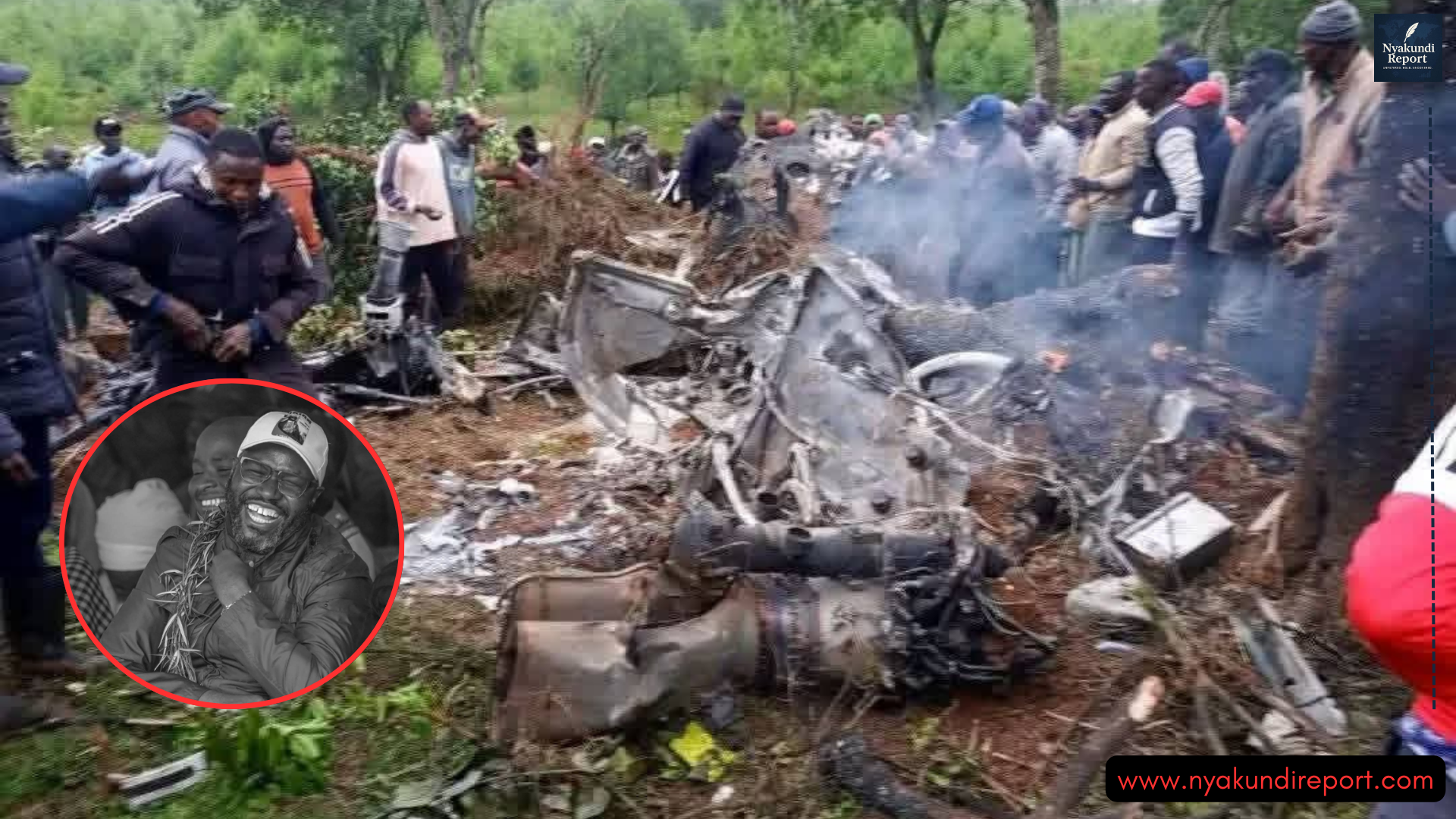
Eyewitness testimony gathered near the crash site adds a new and potentially troubling dimension to the investigation.
Residents reported that the helicopter had earlier made an emergency landing in Mosop due to worsening weather conditions marked by heavy mist and intermittent rain. Witnesses say the pilot spent about ten minutes assessing conditions while passengers made repeated phone calls.
According to accounts collected by investigators, the group appeared eager to continue their journey despite limited visibility.
Witnesses claim the helicopter lifted off shortly after the weather showed slight improvement but remained airborne only briefly before descending rapidly.
One eyewitness described watching the aircraft struggle moments after takeoff before it disappeared into trees and erupted into flames.
These accounts now form a critical part of the Ng’eno helicopter crash investigation because they may help determine whether external pressure, time constraints, or misjudgment influenced the decision to resume flight.
Authorities have not assigned blame, but aviation experts say accidents often result from a chain of small decisions rather than a single catastrophic failure.
Investigators Examine Weather, Human Factors and Aircraft Performance
The investigation has widened beyond weather conditions to include operational decision-making and aircraft performance standards.
Officials confirmed that Kenya notified the aircraft’s country of manufacture in line with international aviation protocols, allowing technical experts familiar with the helicopter model to assist in the probe.
The National Police Service continues to secure the crash scene while coordinating with aviation investigators to ensure evidence remains intact. Officials have urged the public to avoid speculation as investigators analyze data from recovered instruments.
The Ng’eno Helicopter Crash claimed six lives, including Kenya Forest Service ranger Amos Kipngetich Rotich, photographer Nick Kosgei, teacher Robert Kipkoech Keter, Narok County protocol officer Wycliffe Kiprotich Rono, and pilot Captain George Were.
Investigators now face the complex task of determining whether the tragedy resulted from poor visibility, pilot workload, mechanical malfunction, or a combination of all three factors.
Aviation safety specialists note that crashes involving low-altitude flight during marginal weather often occur when pilots attempt visual navigation in rapidly changing conditions.
The coming weeks will prove decisive as analysts decode flight data and compare technical findings with eyewitness testimony.
For now, the Ng’eno Helicopter Crash stands as a stark reminder of how quickly routine travel can turn fatal when weather, operational pressure, and aviation risk intersect.