




















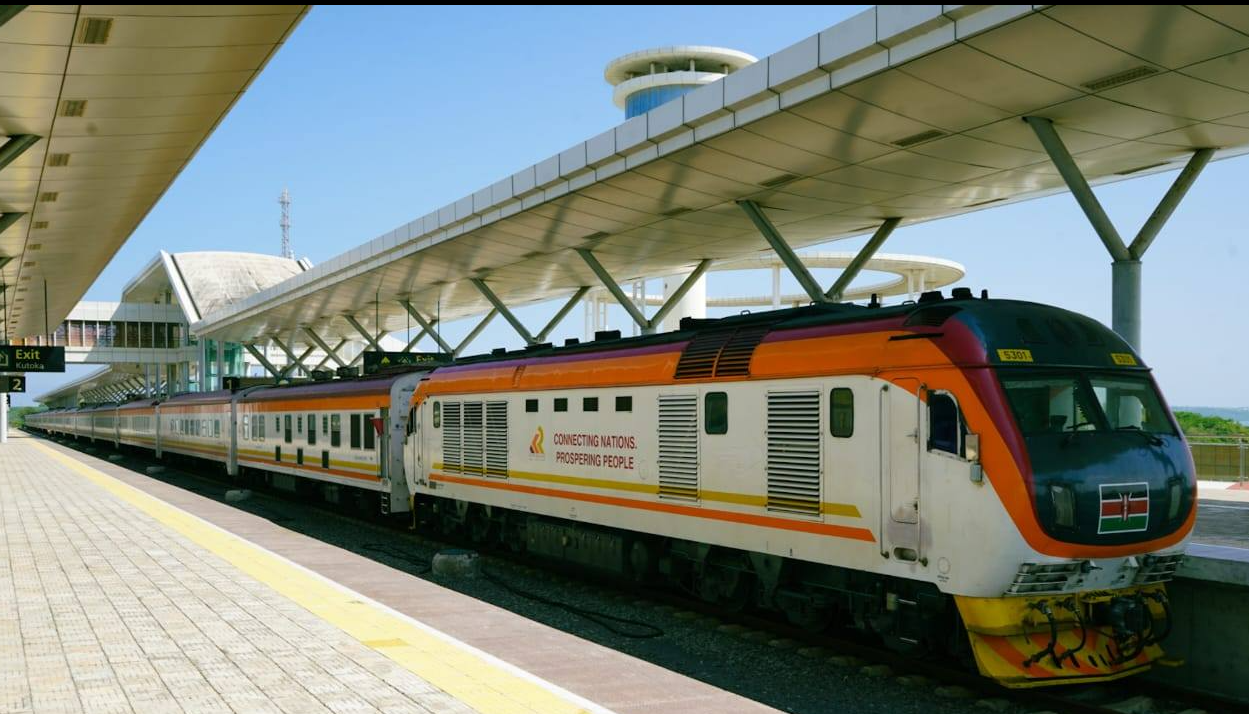
Kenya’s Standard Gauge Railway (SGR) is set to unlock a new wave of growth for a string of towns between Naivasha and Malaba.
After the government settled on a southern extension route, which will open up parts of the Rift Valley and western Kenya.
The 263.7‑kilometre Naivasha–Kisumu Phase 2B line, to be followed by a Kisumu–Malaba link, is designed not just as a rail track but as a full transport and logistics corridor.
With new hubs planned in several “sleepy” centres that are expected to become busy trading and industrial nodes.
Why the southern SGR route matters
Technical and environmental studies showed the Nairobi–Naivasha–Kisumu–Malaba “southern corridor” would be cheaper by about USD 772.7 million (KSh 99.7 billion) than northern alternatives via Nakuru and Eldoret, while passing through fewer high‑seismic risk zones.
Planners also argued that, although the middle route had larger existing hubs, the southern line hits several underdeveloped towns with strong agricultural.
And tourism potential, so the economic uplift per shilling invested could be higher.
According to Kenya Railways and government blueprints, Phase 2B from Naivasha will cut across Narok, Bomet, Kericho, Nyamira, and Kisumu counties before heading onward to Malaba, tightening Kenya’s links with Uganda, DRC and the wider EAC market.
The line will also integrate with the refurbished Kisumu Port and existing road networks, turning the western corridor into a multi‑modal trade spine.
Key towns set for economic uplift
Starting from the Naivasha SGR terminal, the extension is expected to boost both established cities and smaller rural centres along its path.
| Town | Role in SGR Extension / Expected Economic Uplift |
| Naivasha | Acts as an inland container and industrial hub linking Mombasa–Nairobi to western Kenya via SGR and ICD. |
| Narok | Gateway town benefiting from faster access to the Maasai Mara and decongested road traffic, boosting tourism and trade. |
| Bomet | Planned commercial and logistics hub supporting tea, dairy, and crop value chains along the corridor. |
| Sotik | Emerging aggregation and services center for agriculture, targeted for logistics and warehousing growth. |
| Kericho | Tea heartland expected to gain from cheaper, faster export logistics and agro‑processing investments. |
| Sondu | Projected aggregation point for produce from the highlands into the SGR and road network. |
| Ahero | Rice and sugar belt node in the Nyando basin, positioned as a food‑crop collection and distribution town. |
| Kisumu | Lakeside logistics and industrial hub linking SGR to Kisumu Port and regional EAC markets via Lake Victoria. |
| Malaba | Border town anchoring cross‑border freight, connecting SGR to Uganda and wider regional rail/road systems. |
Kenya Railways documents also highlight four priority commercial and logistics hubs, Narok, Bomet, Sotik, and Kisumu, where industrial parks, warehouses, container yards, and service centers will cluster around the line.
Sectors expected to benefit
The SGR extension is expected to stimulate multiple sectors in the corridor:
Agriculture: Tea from Kericho, maize and potatoes from the Nyamira/Gusii region, rice and sugarcane from the Nyando belt, and livestock products from Narok and Bomet will have access to larger markets more competitively via rail.
Tourism: Easier connections to Maasai Mara and western tourism circuits should shorten travel times for visitors arriving in Nairobi, thereby boosting hotel, transportation, and tour businesses along the route.
Trade & logistics: New depots and logistics parks in Narok, Bomet, Sotik, and Kisumu aim to attract wholesalers, light manufacturing, and warehousing, turning previously quiet towns into 24‑hour trading centres.
Regional integration: With Kisumu Port upgrades and the Malaba link, the corridor will support exports of fertiliser, cement, edible oils, rice, and other goods into neighboring EAC states, positioning western Kenya as a launchpad for regional commerce.
Financing, timing, and what to watch
Kenya will contribute roughly KSh 48 billion, mainly for land compensation and local works.
While Chinese financing and BRI frameworks are expected to support track and systems construction, with works slated to start around 2026.
Treasury has already renegotiated earlier SGR loans, extending repayment to 2040 and converting them into yuan, to ease annual debt service and create room for the new phase.
As feasibility, ESIA, and land‑acquisition processes continue, key issues to watch include compensation disputes and environmental impacts through sensitive Rift Valley sections.
In addition to how quickly planned logistics hubs attract private investment once tracks are laid.
For now, the approved route signals that Narok, Bomet, Sotik, Kericho, Sondu, Ahero, Kisumu, and Malaba are firmly on the map as the next frontier of SGR‑driven economic growth.
ALSO READ: CS Kagwe’s Feed Reserve Strategy! Government of Kenya Unveils Bold Plan to Save KSh 50B in Livestock Losses