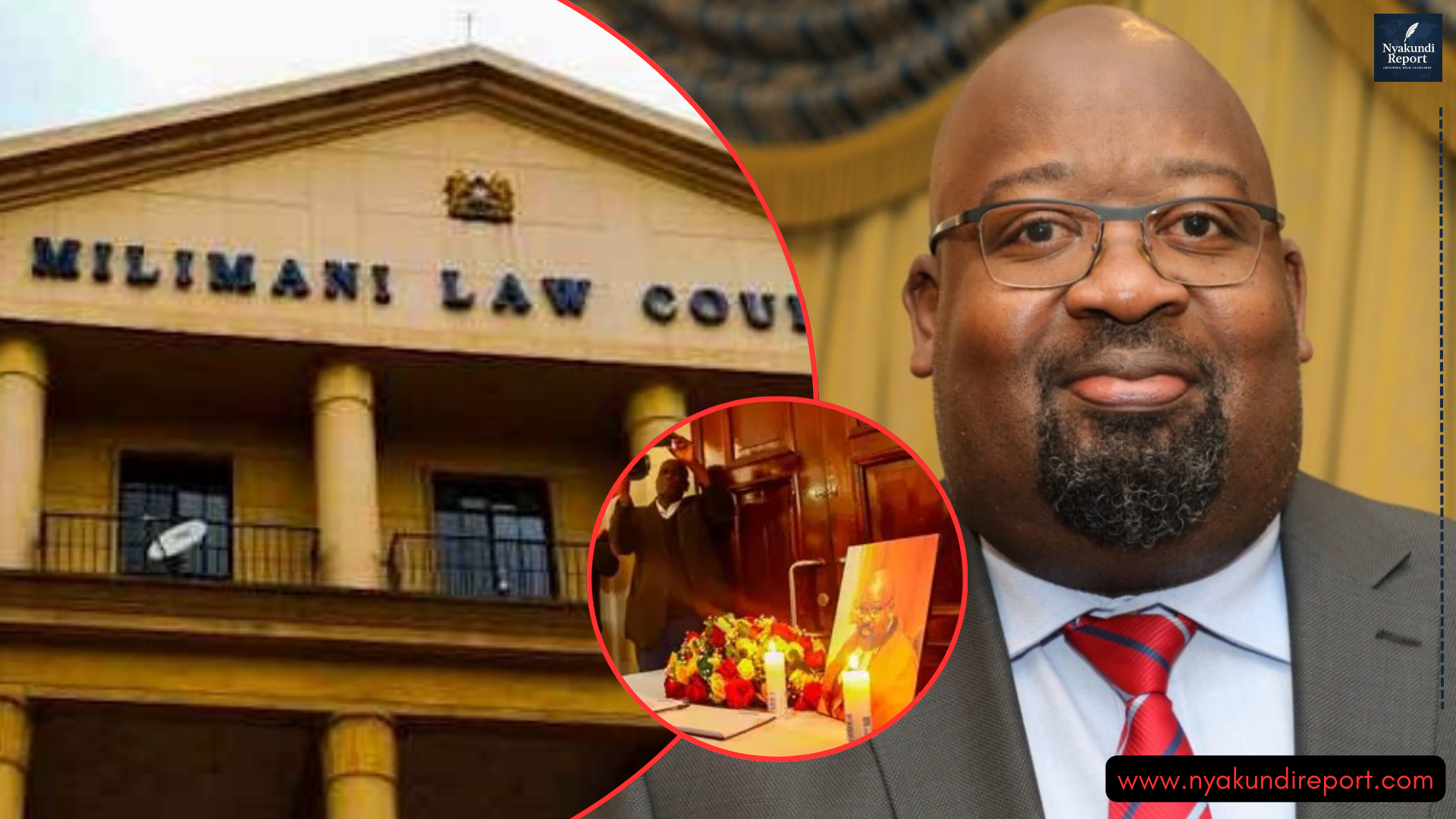
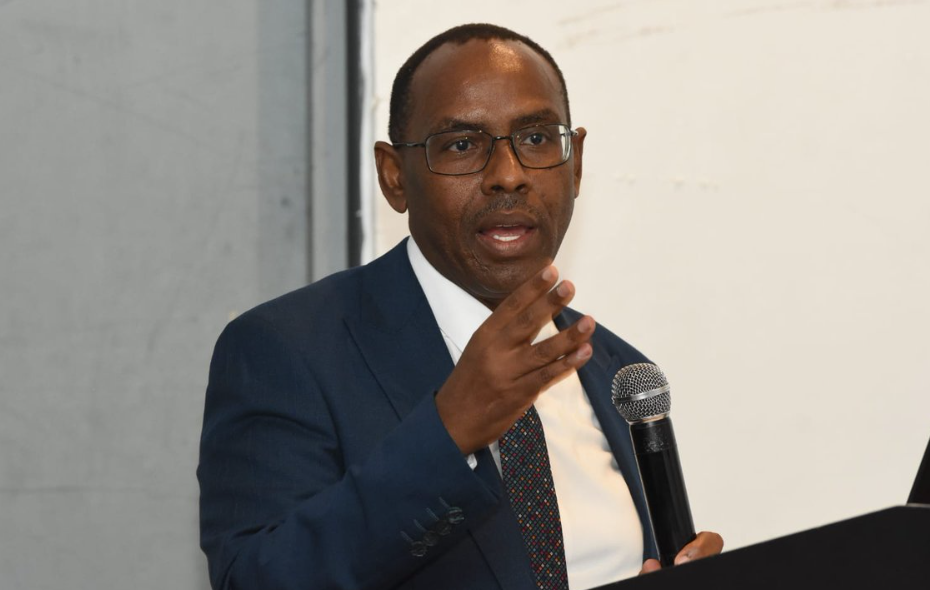



































A detailed and escalating whistleblower complaint submitted to the Public Service Commission (PSC), the Executive Office of the President, Parliament, and multiple oversight agencies has raised grave concerns over the continued tenure of LAPSSET Corridor Development Authority (LCDA) Director General Stephen Kariuki Ikua, alleging that he has unlawfully remained in office past the mandatory retirement age by relying on conflicting birth records, even as Cabinet-directed State Corporations reforms and explicit moratoria barred contract renewals, recruitment, and executive continuity in affected entities.
The complaint, filed by Joshua Otieno Adede and supported by official government documents, Cabinet circulars, court rulings, and LCDA’s own submissions to the PSC, places the controversy squarely within the broader national programme of State Corporations restructuring approved by Cabinet in January 2025, under which LCDA itself was earmarked for dissolution and transfer of functions back to the parent Ministry.
Conflicting Birth Records and Retirement by Operation of Law
At the centre of the dispute is an unresolved discrepancy in Mr Ikua’s date of birth, which the whistleblower argues has been deliberately exploited to delay mandatory retirement. A Kenyan passport issued by the Government of Kenya (Passport No. AK0086760), and enclosed in the complaint, records Mr Ikua’s date of birth as 24 September 1965, a date that places him at the mandatory retirement age of 60 years on 24 September 2025, thereby triggering retirement by operation of law under PSC Regulations and LCDA’s Human Resource Manual.
However, LCDA’s own official submission to the PSC dated 4 April 2025 (Ref. No. LCDA/ADM/1/10 (116)) lists the Director General’s date of birth as 1 January 1969, a declaration that, if relied upon, would extend his stay in office by several years and directly contradict the immigration record held by the State.
The whistleblower contends that this is not a clerical anomaly but a material governance breach, arguing that once contradictory biodata emerges for a senior public officer, the appointing authority and oversight bodies are legally obligated to verify the record with the Registrar of Persons and the Department of Immigration, rather than selectively relying on the version that favours continued occupation of office.
Retirement Law, PSC Authority, and a Binding High Court Decision
The complaint situates the retirement issue firmly within settled law. Section 70(1) of the PSC Regulations and Section 13.7 of the LCDA HR Manual both set the mandatory retirement age for public servants at 60 years, expressly stating that officers serving on contract terms are not exempt from retirement-age provisions.
Further, a High Court ruling delivered on 14 August 2025 upheld the constitutionality of mandatory retirement at 60 years for both public and private sector employees, dismissing claims of discrimination and affirming that the setting and enforcement of retirement age falls squarely within the constitutional mandate of the Public Service Commission.
The whistleblower argues that, taken together, these provisions leave no legal space for discretion, negotiation, or administrative delay once the retirement threshold is reached.
State Corporations Reforms and the Prohibition on Executive Continuity
Crucially, the complaint goes beyond retirement law to anchor the matter within the Cabinet-approved State Corporations reforms communicated through circulars dated 21 January 2025, 5 February 2025, and 16 May 2025, all of which imposed sweeping moratoria on recruitment, promotions, renewal of contracts, and continuation of chief executives in corporations earmarked for merger, restructuring, or dissolution.
Under Annexes II and III of the reforms framework, LAPSSET Corridor Development Authority is explicitly listed among State Corporations proposed for dissolution, with residual functions to revert to the parent Ministry, a designation that triggered an immediate prohibition on renewal of CEO contracts and any actions that would entrench existing executive leadership.
The whistleblower argues that continued retention of the Director General — whether through disputed age records or post-retirement arrangements — directly undermines Cabinet authority, violates binding moratoria issued by the Chief of Staff and Head of the Public Service, and frustrates the very reforms intended to restore fiscal discipline and accountability in State Corporations.
Board Liability, Succession Failure, and Mwongozo Breaches
The complaint further accuses the LCDA Board of failing in its fiduciary duties under Mwongozo, the Code of Governance for State Corporations, which assigns the Board responsibility for appointing and removing the CEO, ensuring compliance with law, verifying executive credentials, and putting in place lawful succession planning.
According to the whistleblower, the Board’s failure to resolve the age discrepancy, initiate succession planning, or prepare the Authority for transition in the context of dissolution reforms amounts to a breach of duty that exposes individual board members to personal liability for acts or omissions that facilitate unlawful retention in office.
Mwongozo explicitly provides that Board members may be held accountable where governance failures result in legal, financial, or reputational exposure for the State.
Pattern of Alleged Abuse of Office and Defiance of Cabinet Directives
The retirement dispute is presented as part of a wider pattern of governance violations at LCDA. In earlier submissions acknowledged by the PSC, the whistleblower alleges that the Director General repeatedly defied Cabinet moratoria by recruiting, promoting, transferring, and dismissing staff despite explicit prohibitions issued in January and May 2025.
He further alleges irregular recruitment of relatives and close associates, estimating that approximately 80 individuals were hired outside approved processes, and claims that public funds were exposed to abuse following the suspension of the Authority’s Enterprise Resource Planning (ERP) system in 2022, resulting in a return to manual accounting systems.
Retaliation and Oversight Inaction
Mr Adede also states that he was dismissed from LCDA on 28 May 2025, alleging that the termination was retaliatory and directly linked to his whistleblowing activities, while the senior official he reported continued to enjoy institutional protection.
Correspondence copied to the Ethics and Anti-Corruption Commission (EACC), the Directorate of Criminal Investigations (DCI), and the Office of the Director of Public Prosecutions accuses oversight bodies of prolonged inaction, despite the seriousness of the allegations and the availability of documentary evidence.
Relief Sought and Public Interest Implications
In his submissions to the Public Service Commission and other oversight bodies, the whistleblower sets out a structured sequence of remedial actions which he frames not as discretionary requests, but as measures that flow directly from the Commission’s constitutional mandate to enforce public service values, ensure uniform application of the law, and prevent abuse of office within State Corporations.
1. Determination of applicable retirement age
The whistleblower asks the PSC to make a formal and unambiguous administrative finding affirming 24 September 1965, as reflected in the Director General’s Kenyan passport issued by the Government of Kenya, as the controlling date of birth for retirement purposes, arguing that such a determination is necessary to resolve contradictory records and prevent selective reliance on biodata that favours continued occupation of office.
2. Enforcement of mandatory retirement and terminal leave
Flowing from that determination, he seeks a directive requiring the LCDA Board to enforce mandatory retirement effective 24 September 2025, and to place the incumbent on terminal leave from 24 August 2025, in strict compliance with PSC regulations, the LCDA Human Resource Manual, and established public service practice, emphasising that this action is corrective rather than punitive and arises automatically by operation of law.
3. Succession planning and competitive recruitment
The submissions further call for a binding directive compelling the LCDA Board to initiate and document lawful succession planning, including commencement of a competitive recruitment process for the office of Director General in accordance with Mwongozo and PSC guidelines, noting that succession planning is a mandatory governance obligation, particularly for an institution earmarked for restructuring or dissolution under Cabinet-approved State Corporations reforms.
4. Independent verification of biodata and accountability
The whistleblower also urges the Commission to order independent verification of the Director General’s biodata with the Registrar of Persons and the Department of Immigration, and to require that the outcome be formally recorded and acted upon, with any confirmed falsification or misrepresentation referred to investigative agencies such as the EACC and DCI, alongside administrative action within PSC’s remit.
5. Board accountability and fiduciary responsibility
In addition, he asks the PSC to formally caution the LCDA Board and its individual members on their personal and collective legal exposure under Mwongozo and general fiduciary principles should they continue to facilitate or acquiesce in unlawful retention beyond the mandatory retirement age, arguing that sustained inaction in the face of clear records constitutes a governance failure rather than mere oversight.
6. Limits on post-retirement engagement
The submissions further seek explicit guidance that any post-retirement engagement of the incumbent, whether as a consultant, adviser, or in any other capacity, must strictly comply with existing law and policy, including competitive processes and demonstrable exceptional need, and must not be structured as a workaround to defeat the mandatory retirement-age regime.
This news outlet will continue following this story with meticulous attention, monitoring the actions and responses of the Public Service Commission, Parliament, and all other relevant oversight agencies, while providing the public with timely updates on any measures taken to enforce mandatory retirement laws and uphold governance standards.
As the situation unfolds, we will carefully document and report each development, examining how authorities respond to the overstay and governance failures at LCDA, and highlighting the implications of their decisions for transparency, accountability, and the integrity of State Corporations.
Our coverage will continue with the objective of ensuring that public service rules are respected, breaches are addressed, and the public remains fully informed about the enforcement of laws designed to safeguard both institutional order and public trust.