



















The government has moved decisively to confront controversial prophetic healing claims that have stirred national debate over faith, medicine, and public safety.
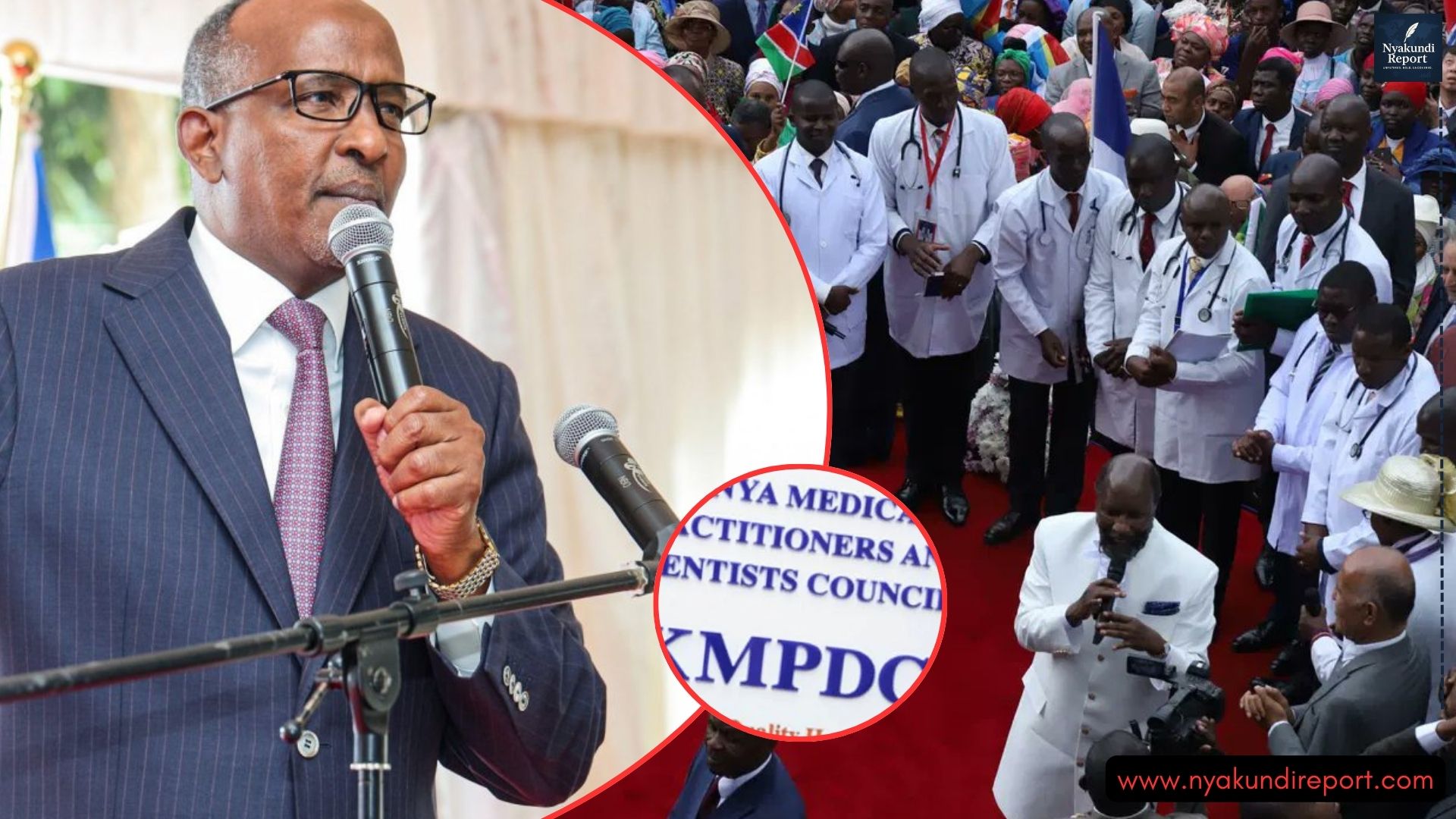
Health Cabinet Secretary Aden Duale has warned that doctors who appeared at a Nakuru crusade and testified to miraculous cures, including HIV and AIDS, now face possible suspension or loss of their licenses.
The announcement signals a tougher stance by the state on unverified medical claims, especially where licensed professionals are involved, and places scientific proof at the centre of Kenya’s healthcare governance.
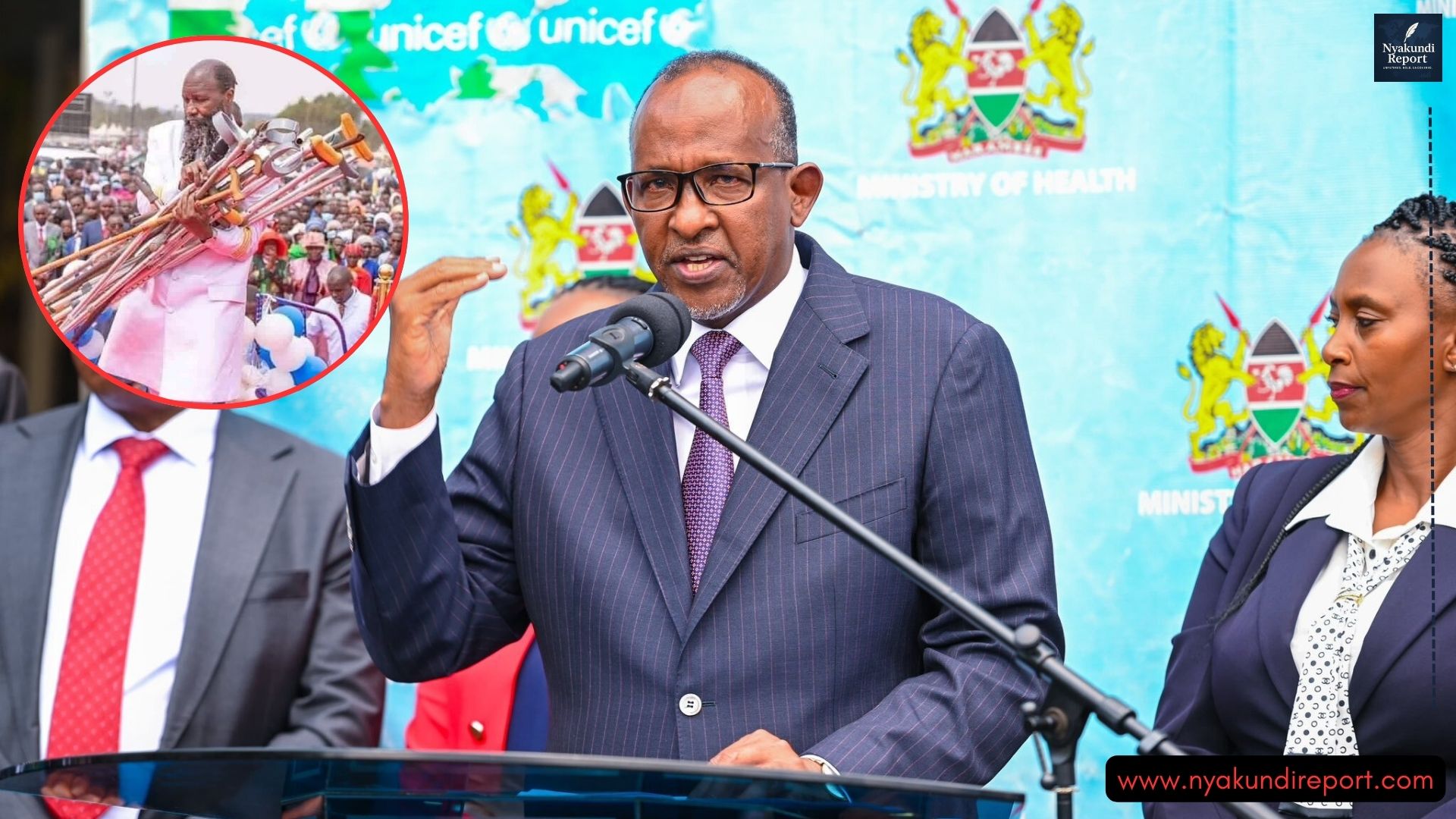
Duale draws a hard line between faith and medical ethics
Health CS Aden Duale’s remarks on Sunday, January 4, in Eldoret marked one of the strongest positions yet taken by the government on prophetic healing claims linked to medical practitioners. Duale revealed that the Ministry of Health had formally instructed the Kenya Medical Practitioners and Dentists Council KMPDC to open investigations into doctors who publicly testified that patients had been healed of HIV and other serious conditions during a Nakuru crusade.
According to Duale, the issue is not belief or personal faith, but professional conduct. He emphasised that any licensed doctor making claims of healing must back them with verifiable, scientific evidence. Without such proof, the ministry would consider the conduct professional misconduct and a breach of medical ethics. He warned that disciplinary action would not be symbolic, noting that suspension or outright revocation of licenses was on the table.
Duale acknowledged the role of faith and spirituality in Kenyan society, saying the ministry respects religious expression. However, he stressed that health matters, particularly those involving life-threatening conditions, must be anchored in science-based medicine. Allowing unverified prophetic healing claims by doctors, he said, risks misleading patients, undermining public trust, and potentially causing avoidable deaths.
KMPDC investigation targets doctors at Nakuru crusade
The KMPDC has now been directed to conduct a thorough probe into the practitioners involved in the Nakuru event. The council had earlier issued a public warning, cautioning Kenyans that the prophetic healing claims were unverified and potentially dangerous to public health.
At the centre of the controversy is a self-styled prophet who is also a licensed medical professional. During the crusade, he claimed to have miraculously healed people living with HIV and AIDS, along with the blind and physically disabled. These declarations, made in public and amplified through social media and church networks, triggered alarm within the medical community.
KMPDC has reiterated that chronic and life-threatening diagnoses must only be confirmed or overturned through proper medical documentation. The council warned that when doctors present unverified healing narratives, vulnerable patients may abandon treatment, delay care, or reject medical advice altogether. Such outcomes, the regulator said, contradict the core duty of healthcare professionals to do no harm.
Political pressure grows after Shakahola tragedy
The debate around prophetic healing has also taken on a political dimension, shaped by Kenya’s recent history with religious extremism. Several political leaders have urged authorities to investigate churches and ministries that display cult-like tendencies, warning that failure to act early could lead to tragedies similar to the Shakahola incident of 2022.
In that case, dozens of followers died after being encouraged to starve themselves in pursuit of spiritual salvation. The memory of Shakahola has heightened sensitivity around religious claims that override medical advice or encourage believers to reject established healthcare.
Duale’s intervention reflects this broader concern. By directing KMPDC to act firmly, the government is signaling that religious platforms cannot be used to shield professionals from accountability. The move also positions the state as a guardian of public safety, particularly for citizens living with HIV, disabilities, or other conditions that require continuous medical care.
Church defends Prophetic Healing and welcomes probe
Despite the mounting scrutiny, the prophet and his ministry have welcomed the investigations. Church officials insist that the Prophetic Healing claims are genuine and say more than 30 patients have already been fully healed of HIV. They maintain that these cases are documented, scientifically verified, and tested, though no such evidence has yet been publicly presented.
The prophet has challenged the authorities to publish the findings of the investigation without delay once it is complete. In his statement, he argued that transparency would restore moral authority in religious spaces and reaffirm faith among believers. “The public deserves to know the truth so that the fear of God may be restored at the pulpit,” he said.
For now, the standoff places science, faith, and politics on a collision course. What emerges from the KMPDC investigation is likely to shape future boundaries between religious expression and medical responsibility, especially where prophetic healing claims intersect with licensed healthcare practice.