






















President Donald Trump has once again turned to hardline immigration controls, this time placing Tanzanian nationals under new U.S. travel restrictions. In a proclamation signed on Tuesday, December 16, the Trump administration cited high visa overstay rates and weak screening systems in Tanzania.
The decision places Tanzania among a growing list of countries facing partial U.S. entry limits. While Washington frames the move around national security and immigration enforcement, critics see it as entangled with diplomatic strain and human rights concerns surrounding President Samia Suluhu’s government.
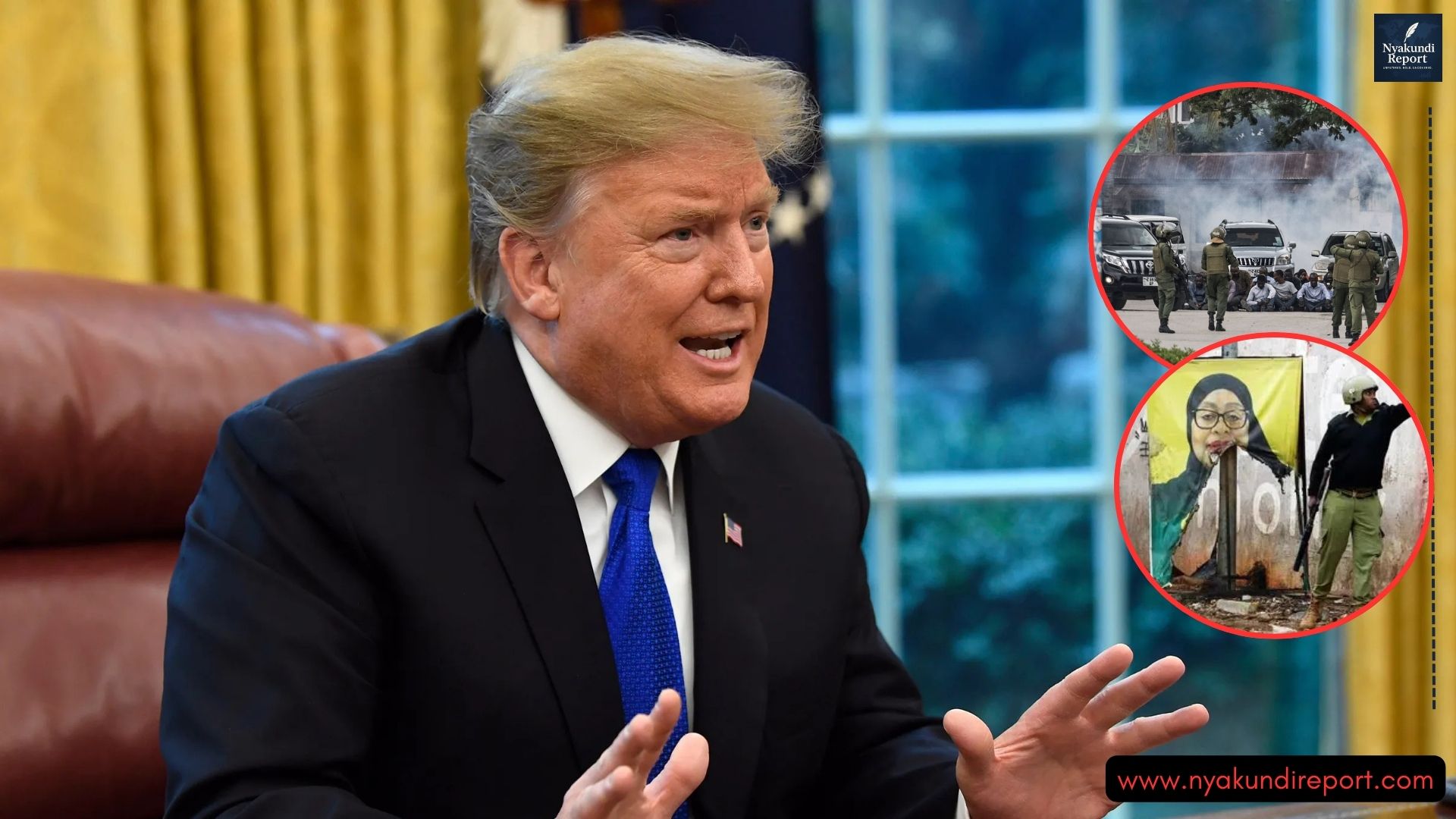
Trump Bans Tanzanians Under Expanded US Entry Restrictions
The latest proclamation marks a significant escalation in the Trump administration’s immigration agenda. Under the order, Tanzania is added to a list of countries subjected to partial travel restrictions, limiting the ability of its citizens to enter the United States under certain visa categories.
According to the White House, the decision stems from “demonstrated, persistent, and severe deficiencies” in Tanzania’s screening, vetting, and information-sharing processes. U.S. officials argue these gaps prevent American authorities from properly assessing the risks posed by some foreign nationals seeking entry.
The proclamation states that the restrictions are necessary to protect U.S. national security and public safety, enforce immigration laws, and secure cooperation from foreign governments. Trump said the move followed consultations with cabinet officials and a review of country-specific data gathered under Executive Order 14161 and Proclamation 10949.
While the ban is partial rather than total, it sends a strong political message. Tanzania now joins countries such as Nigeria, Senegal, Angola, Zambia, and Zimbabwe under similar restrictions, even as others face outright bans.
Visa Overstay Data Drives Trump Decision
At the core of the decision are visa overstay statistics released by U.S. authorities. Data shows that Tanzanians traveling to the U.S. on B-1 and B-2 visas recorded an overstay rate of 8.30 percent. These visas are typically issued for short-term business visits, tourism, medical treatment, and leisure travel.
More alarming to U.S. officials is the 13.97 percent overstay rate among Tanzanians on F, M, and J visas. These categories cover international students, vocational trainees, exchange visitors, and their dependents. Some holders are subject to a mandatory two-year home residency requirement, a condition Washington says is frequently violated.
The Trump administration has consistently treated visa overstays as a national security and immigration enforcement failure. Officials argue that overstays undermine the integrity of the U.S. visa system and strain domestic enforcement mechanisms.
By singling out Tanzania, the White House is signaling that compliance, not just border crossings, is central to its immigration crackdown.
Tanzania Joins a Growing List Under Partial US Travel Limits
Tanzania’s inclusion places it among more than a dozen African nations facing partial U.S. entry restrictions. Countries such as Benin, Cote d’Ivoire, Gabon, Gambia, Malawi, Mauritania, and Zimbabwe are already affected by similar measures.
At the same time, Washington has imposed complete travel bans on nationals from South Sudan, Syria, Burkina Faso, Mali, and Niger, indicating a broader shift toward aggressive immigration controls.
The proclamation outlines several exemptions. Lawful permanent residents, current visa holders, diplomats, athletes, and individuals whose entry is deemed to serve U.S. national interests will still be allowed into the country. However, new applicants face heightened scrutiny and potential denial.
For Tanzanians hoping to study, work, or visit family in the U.S., the policy introduces uncertainty and prolonged processing delays.
Human Rights Tensions Cloud as Trump Bans Tanzanians from Entering USA
Beyond immigration data, the ban unfolds against a backdrop of strained U.S.–Tanzania relations. Washington has raised concerns over reported human rights violations following Tanzania’s October elections, warning of possible diplomatic consequences.
U.S. officials previously threatened to reassess relations with President Samia Suluhu’s administration, citing allegations of state violence and political repression. While the proclamation does not explicitly link the travel restrictions to these events, analysts view the timing as politically significant.
Suluhu’s government has dismissed the accusations, blaming regional and international media for misrepresenting the situation and damaging Tanzania’s global image.
Still, the travel restrictions reinforce the perception of cooling ties between Washington and Dar es Salaam, with immigration policy now serving as a tool of diplomatic pressure.