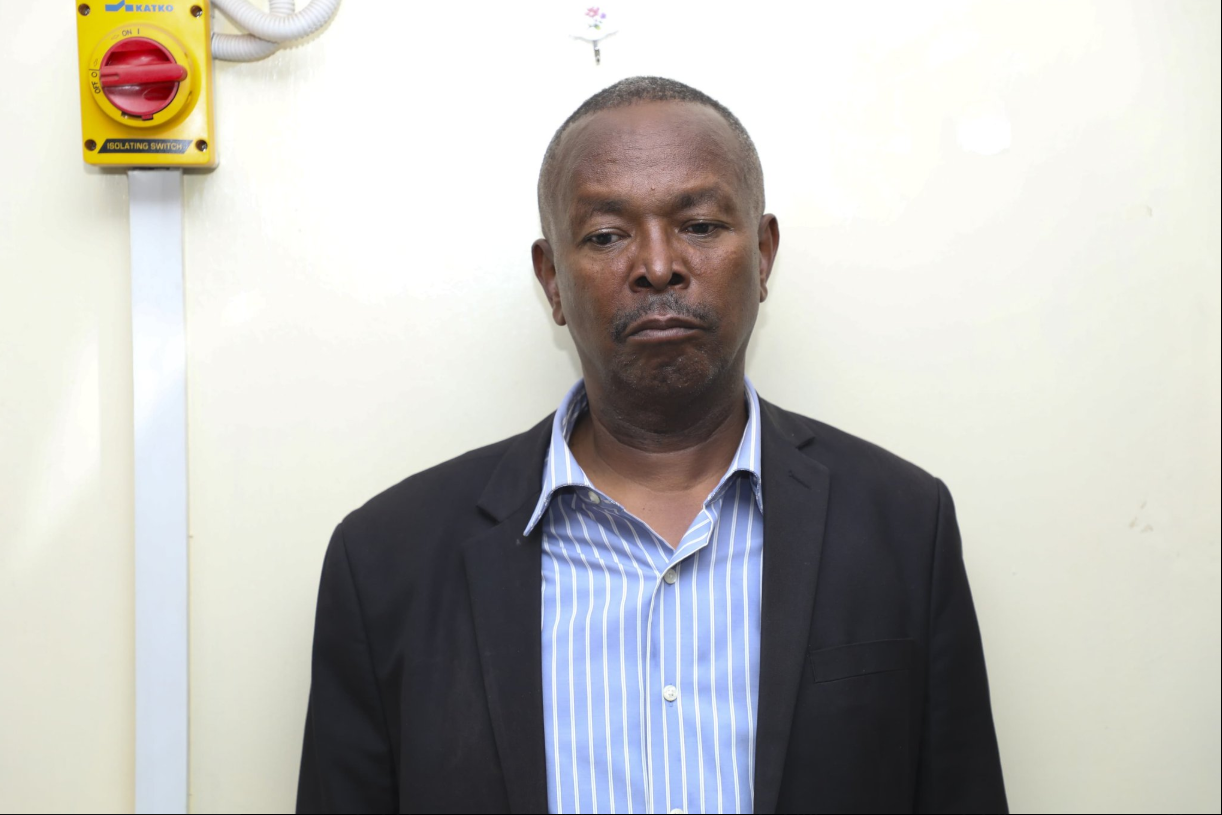


























For years, public conversation in Kenya has been saturated with the repeated narrative pushed by former SportPesa shareholder Paul Wanderi Ndung’u, who steadily presented himself as the victim of a corporate scheme that he believed had stripped him of his stake in SportPesa Global Holdings Limited.
This narrative circulated widely within the Kenyan media space in a manner that shaped widespread perception long before any courtroom examination of evidence took place.

The recent decision of the High Court of Justice in London has now produced a comprehensive and authoritative record that contradicts the narrative he advanced, creating a moment of clarity for observers who had been drawn into the long and often confusing public drama surrounding SportPesa’s corporate structure, its leadership history, and the internal turbulence linked to the Kenyan tax battles that had destabilised the company’s regional operations.
The judgment delivered by Justice Edwin Johnson, running to approximately 190 pages, subjected every allegation presented by Ndung’u to a detailed evidentiary test, and the court found that none of the claims met the threshold required for legal remedy.
Within this document, the court set out clear findings on forgery, alleged schemes, directorial conduct, shareholder treatment, notification procedures, and the financial rationale that informed capital injections during the period when Pevans East Africa had been struggling under the weight of disputes with Kenyan authorities.
List of Key Determinations
- The court found that no document relied upon in the dispute bore any trace of forgery.
- The court concluded that no plan existed to deprive Paul Wanderi Ndung’u of his shares.
- The court held that the directors fulfilled their duty to advance the success of the company.
- The court determined that Ndung’u did not lose confidence in the management of the company during the relevant period.
- The court recorded that the affairs of the company were not conducted in a manner that treated him unfairly.
- The court found that his shares carried no measurable value during the period under review.
- The court concluded that no financial loss capable of supporting compensation had been demonstrated.
- The court ordered him to pay approximately £2,200,000 in costs, a sum equal to about Ksh 375 million and enforceable in Kenya through recognised procedures.
The clarity of these findings removes the haze that has surrounded the matter for a considerable period, since many Kenyans had encountered only the repeated claims by Ndung’u without ever accessing the underlying corporate records or the detailed representations that were tested before the court.
The judgment records that there was no forgery of documents at any stage of the transactions, no coordinated plan to deprive Ndung’u of his shares, no breach of directors’ duties, no unfair treatment directed at him, and no basis for the claims that he had been excluded from key decision-making processes.
Justice Johnson set out the reasoning that guided the capital calls made during the financial turbulence experienced by SportPesa’s international structure, explaining that the dilution of his stake occurred because he declined or failed to participate in the capital injections required to support the viability of the parent company at a time when the Kenyan betting sector had been destabilised by extended tax battles.
This reasoning is presented as a straightforward corporate reality that emerged from the documentary record, and it serves to remove the suspicion-laden storyline that Ndung’u had cultivated.
The Kenyan reader who has been exposed for years to the idea of stolen shares, improper dealings, and the notion of a targeted campaign against one shareholder will find in this judgment a markedly different version of events, one that relies on written resolutions, board records, capital structures, and paper trails that underwent legal testing in a jurisdiction where corporate governance disputes are examined with intense precision.
Justice Johnson notes that Ndung’u did not lose confidence in the management of the company, despite statements he has made repeatedly in public forums, and the judgment shows that he remained willing to serve and interact with the leadership at a time when he was publicly presenting a picture of hostility and mistrust.
This internal contradiction is now captured permanently in a court record that cannot be reshaped by media commentary or personal narratives.
The financial dimension of the ruling carries a weight that cannot be understated for a Kenyan audience.
After dismissing all claims, Justice Johnson awarded costs against Ndung’u amounting to approximately £2,200,000, a sum that translates to about Ksh 375 million, and this amount is not symbolic or theoretical since the judgment is enforceable in Kenya through recognised legal procedures.
This means that property registered in his name may be attached or auctioned if he fails to meet the obligations imposed by the court.
The magnitude of this figure places the dispute in a new light, as it becomes clear that the narrative pursued over several years has now resulted in a financial consequence of extraordinary scale, especially in comparison to the public posture that portrayed him as a victim rather than a litigant whose claims did not withstand judicial examination.
The ruling also carries consequences for the broader understanding of SportPesa’s position in the years when its operations in Kenya had been slowed by heavy tax disputes relating to Pevans East Africa.
Justice Johnson recounts the financial pressure that the group faced during that period, indicating that capital had to be raised through the UK holding entity in order to maintain the viability of the global structure.
He presents a picture of a corporate group under strain, responding through capital reorganisation and financial commitments from shareholders who were willing to sustain the enterprise.
Ndung’u’s decision not to match those capital injections led directly to the dilution of his stake, and the record shows that this was an unremarkable outcome under company law when an investor declines to meet capital obligations at a time when fresh funds are required.
The Kenyan media landscape has, for several years, given ample space to Ndung’u’s claims, often without access to the internal documents that later appeared before the UK court.
This has created an environment where many Kenyans formed impressions on the basis of repeated statements rather than a tested evidentiary foundation.
The London ruling shifts the centre of gravity by supplying a definitive document that records what the court found, what the records showed, and how the various claims collapsed once examined.
It also introduces a fiscal reality that Kenyan audiences are likely to examine closely, since the sum of Ksh 375 million is not merely large but potentially ruinous for a litigant who projected himself as the aggrieved party.
SportPesa’s leadership has responded to the ruling with a formal statement welcoming the decision.
The directors expressed satisfaction that the court examined the matter comprehensively and concluded that the allegations lacked substance.
Their position, now backed by the findings of Justice Johnson, is that the company acted within the law and followed the processes required for the survival of a group that had been destabilised by the tax war in Kenya.
The judgment gives them a platform to move forward, having been cleared of the allegations that have circulated widely in Kenya for an extended period.
The ruling also serves as a cautionary tale for those who may seek to transfer disputes into the public arena without anchoring their claims in verifiable documentation.
Kenya’s media environment is dynamic and often susceptible to forceful personalities who repeat narratives that gain traction through repetition rather than evidence.
The London proceedings, conducted with procedural rigor, show how quickly such narratives can disintegrate once the law demands proof rather than assertion.
For readers who have followed this protracted and often misleading saga, the ruling represents an unambiguous repudiation of Paul Wanderi Ndung’u’s repeated public claims, replacing a narrative of stolen shares, internal betrayal, and corporate intrigue with a meticulously documented judicial record that exposes the complete absence of foundation for his allegations and imposes a financial obligation that can now be enforced through debt recovery measures, asset attachment, and full legal mechanisms within Kenya, thereby dismantling the façade he had maintained for years and irrevocably altering his personal and professional standing in a way that no media statement or public declaration can reverse.
This episode now stands as a stark lesson in accountability, demonstrating the cost of propagating claims without evidentiary backing, as the court’s findings expose the collapse of every narrative Ndung’u advanced while providing a comprehensive legal analysis of SportPesa’s operations and governance, leaving him with no recourse except to address the consequences of his actions, with any future proceedings limited solely to the enforcement of the costs imposed, rather than the substance of claims that were conclusively disproven after years of misleading the public and shaping discourse on the basis of unfounded assertions.