



















Raila Odinga’s sister, Emily Oginga, has revealed that the late opposition leader was quietly working on a powerful political project before his death.
Speaking during his memorial service at Jaramogi Oginga Odinga University of Science and Technology (JOOUST) in Bondo, Siaya County, Emily disclosed that Raila had begun writing his third biography. This time, it was not about his struggles or achievements—it was about Africa.
According to her, Raila Odinga’s final project was a book entirely dedicated to Pan-Africanism and the future of the continent. It was meant to reflect his lifelong dream of a united and economically independent Africa.
“Raila’s last political project, which he did quietly days before his death, was a third biography dedicated purely to African Pan-Africanism and what the continent needs to do to move forward,” Emily said.
She noted that the book would have captured Raila’s experiences, lessons, and vision for Africa’s liberation from Western dominance. However, his death cut short what was shaping up to be a historic contribution to the continent’s political literature.
A military gun carrier transported Raila Odinga’s remains during his funeral service at JOOUST on October 19, 2025, as Kenyans from all walks of life mourned the loss of one of Africa’s most prominent statesmen.
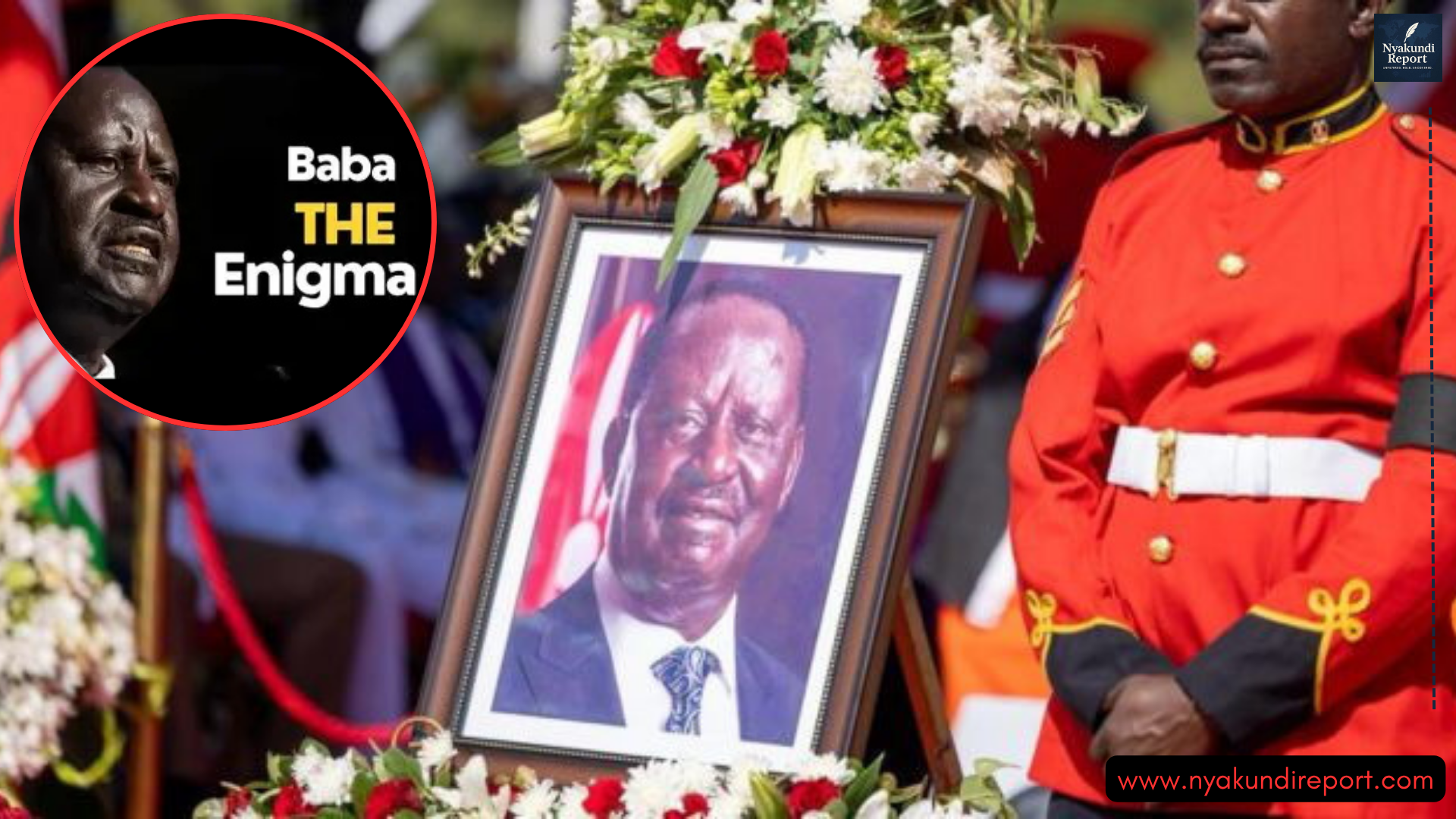
Raila Odinga Book on Pan-Africanism Was His Final Mission
Emily Oginga said the idea behind the new book was to remind Africans of their strength and potential when united under a common purpose.
Raila believed that Africa’s future depended on self-reliance, unity, and youth empowerment. His unfinished work was expected to outline clear strategies for achieving economic independence through stronger continental partnerships and reduced reliance on Western aid.
Those close to Raila described him as deeply concerned about Africa’s place in global affairs. In his later years, he had become more involved in regional politics and Pan-African movements, advocating for reforms at the African Union (AU) and across the continent’s governance systems.
Political analysts believe that Raila’s book could have offered an intellectual blueprint for Africa’s next generation of leaders. Many hope that his family or foundation will ensure the manuscript is completed and published in his honor.
Raila Odinga’s Literary Legacy Lives On
Raila Odinga was not new to writing. His 2013 autobiography, The Flame of Freedom, remains one of the most influential political memoirs in Kenya’s history. Co-authored with journalist Sarah Elderkin, the book details Raila’s long journey through imprisonment, resistance, and reform during Kenya’s fight for multiparty democracy.
In it, he shared insights into his father Jaramogi Oginga Odinga’s legacy, his own years of political struggle, and his vision for a democratic and just Kenya. It became a must-read for anyone studying Kenya’s political history or understanding the struggle for freedom in post-colonial Africa.
Before that, his political journey was chronicled in Raila Odinga: An Enigma in Kenyan Politics, a 1991 biography written by Nigerian scholar Babafemi Badejo. That early work focused on Raila’s rise from political prisoner to national reformist, painting a picture of resilience that later defined his public life.
Raila’s written works have inspired scholars, journalists, and activists across Africa. His storytelling combined personal conviction with historical depth, offering readers a view into the challenges of leadership in a continent still finding its identity.
A Legacy Beyond Politics
Beyond politics, Raila Odinga’s final days showed a man deeply reflective about Africa’s destiny. His interest in Pan-Africanism was not new; he had spoken about it during his time as the African Union’s High Representative for Infrastructure Development, where he emphasized cross-border trade and connectivity.
Colleagues often described him as a leader who thought beyond borders—one who believed that true independence for African nations lay in shared prosperity, industrial growth, and peace.
Although it remains unclear whether his unfinished manuscript will be completed or published, Emily’s revelation adds a new dimension to Raila’s enduring legacy. It shows that even in his final moments, his focus remained on a cause greater than himself—the liberation and unity of Africa.
Raila Odinga is set to be laid to rest at his father’s home in Kang’o Kajaramogi, Bondo, in a private ceremony led by the Anglican Church of Kenya.
In his death, Kenya and Africa have lost not only a political giant but also a thinker who sought to shape the continent’s future through words and action.