Four astronauts are racing back to Earth after completing humanity's first crewed lunar flyby in more than 50 years.
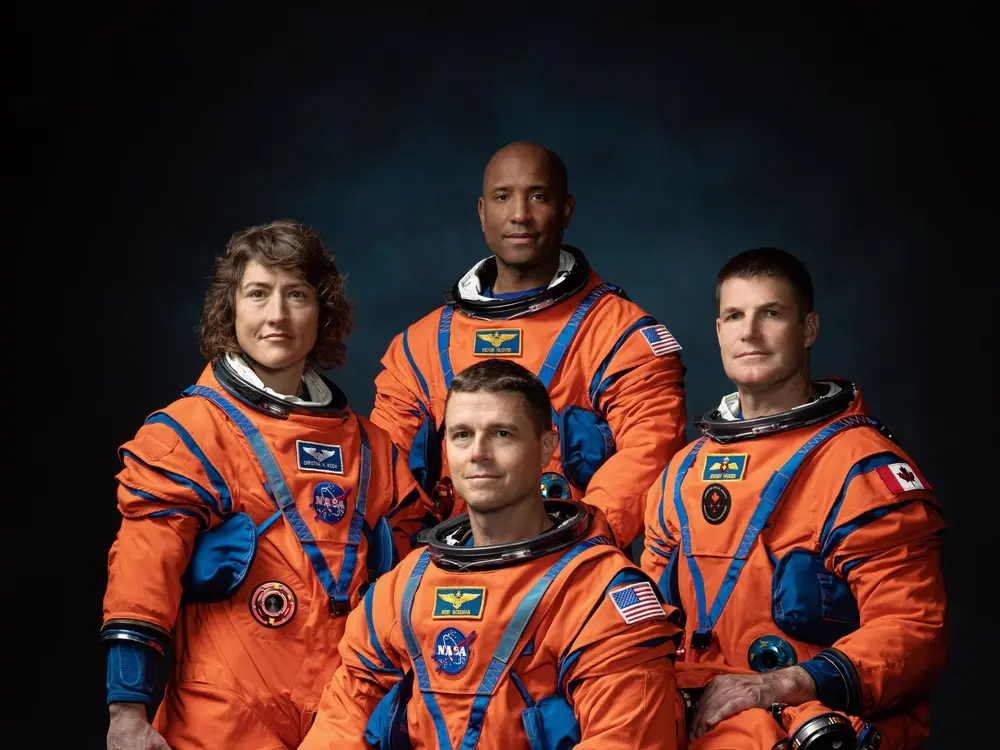
As of Wednesday, April 8, 2026, the Artemis II crew members—NASA astronauts Reid Wiseman, Victor Glover, Christina Koch, and Canadian Space Agency astronaut Jeremy Hansen—are aboard the Orion spacecraft on the final stretch of their historic 10-day mission.
With splashdown scheduled for Friday, April 10, off San Diego, the world is watching as history prepares to make its Pacific Ocean landing.
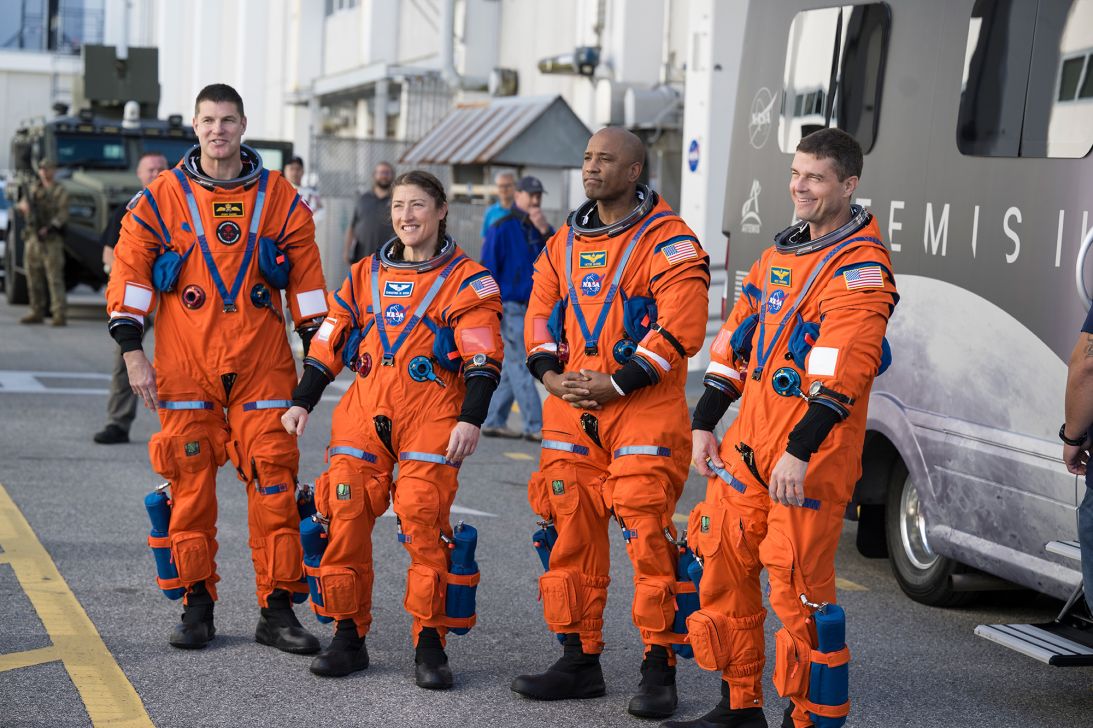
The Artemis II crew members did not just fly around the Moon. They carried humanity's oldest dream across 50 years of waiting and delivered it back home, alive and triumphant. [Photo: Courtesy]
Artemis II Crew Members Complete Lunar Flyby and Enter Final Phase of Their Historic Return to Earth
The Artemis II crew members officially left the Moon's sphere of gravitational influence and are now firmly back within Earth's dominant gravitational pull—a critical navigational milestone confirming the home stretch of their journey. The crew successfully completed their historic lunar flyby on April 6, 2026, placing human beings in the vicinity of the Moon for the first time since the Apollo era more than half a century ago.
Flight Day 8 is no quiet cruise home. The crew is actively conducting radiation-shielding experiments vital to planning future deep-space missions, holding a live downlink event with the Canadian Space Agency, and performing manual piloting tests of the Orion capsule to evaluate its real-mission handling capabilities.
The mission has already rewritten the record books across multiple fronts. Victor Glover became the first person of colour to travel to the Moon. Christina Koch became the first woman to reach lunar distance. Jeremy Hansen became the first Canadian to make the journey. Together, these four Artemis II crew members have carried the relay baton of human spaceflight further than any crew since Apollo 17 departed the Moon in December 1972.
Here is a full mission status snapshot as of Wednesday, April 8, 2026:
| Mission Detail |
Current Status |
| Flight Day |
Day 8 of 10 |
| Current Position |
Returning to Earth under dominant Earth gravity |
| Lunar Flyby Completed |
April 6, 2026 |
| Today's Activities |
Radiation experiments, CSA downlink, manual piloting tests |
| Scheduled Splashdown |
Friday, April 10, 2026 |
| Splashdown Location |
Pacific Ocean, off San Diego |
| Recovery Vessel |
USS John P. Murtha |
| Post-Splashdown Plan |
Medical evaluations, return to Johnson Space Center |
Who Are the Artemis II Crew Members and What Makes Each of Them Extraordinary
Reid Wiseman — Commander
Reid Wiseman leads the Artemis II mission as its commander, bringing a career built on precision, leadership, and an exceptional ability to perform under pressure. An American born and raised with deep roots in military aviation, Wiseman earned his designation as a Naval Aviator in 1999 and deployed twice to the Middle East in support of Operations Southern Watch, Enduring Freedom, and Iraqi Freedom. He graduated from the prestigious US Naval Test Pilot School in 2004 before NASA selected him as an astronaut in 2009.
His first spaceflight came during ISS Expedition 40/41 in 2014, where he logged more than 165 days in space, completed nearly 13 hours across two spacewalks, and contributed to over 300 scientific experiments. He later served as Chief of the Astronaut Office from December 2020 to November 2022, overseeing the astronaut corps before receiving his Artemis II assignment.
Wiseman holds a bachelor of science in computer and systems engineering from Rensselaer Polytechnic Institute and a master of science in systems engineering from Johns Hopkins University.
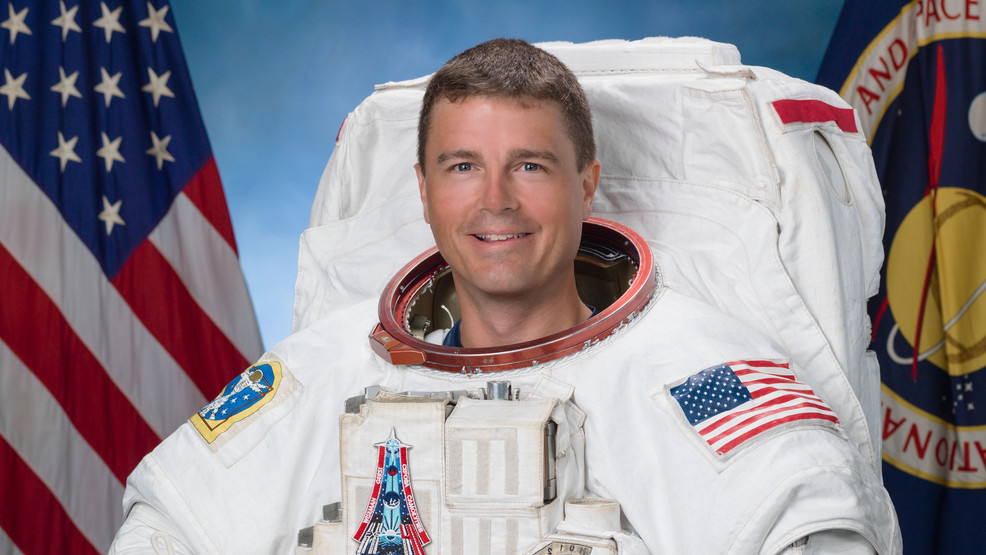
Reid Wiseman led humanity's boldest lunar mission in 50 years, commanding the Artemis II crew with precision, courage, and quiet authority. [Photo: Courtesy]
| Detail |
Information |
| Nationality |
American |
| Military Background |
US Navy Fighter Pilot and Test Pilot |
| First Spaceflight |
ISS Expedition 40/41, 2014 |
| Days in Space (prior) |
165+ |
| Artemis II Role |
Commander |
Victor Glover — Pilot
Victor Glover is making history as the first person of colour to travel to the Moon—a milestone carrying profound cultural weight for America and the world. A Californian by birth, Glover built his career as a decorated US Navy aviator, completing advanced flight training in 2001 and flying the F/A-18 Hornet, Super Hornet, and EA-18G Growler as a test pilot. In a remarkable display of versatility, he also served as a legislative fellow in the US Senate in 2012, contributing to defence and foreign relations policy before NASA selected him as an astronaut in 2013.
His first spaceflight on SpaceX Crew-1 in November 2020 placed him aboard the ISS for 168 days as part of Expedition 64, during which he completed four spacewalks. Crew-1 was the first post-certification operational mission of SpaceX's Crew Dragon spacecraft, making Glover part of another historic moment even before Artemis II.
Glover holds multiple advanced degrees including master of science qualifications in flight test engineering, systems engineering, and military operational art and science.
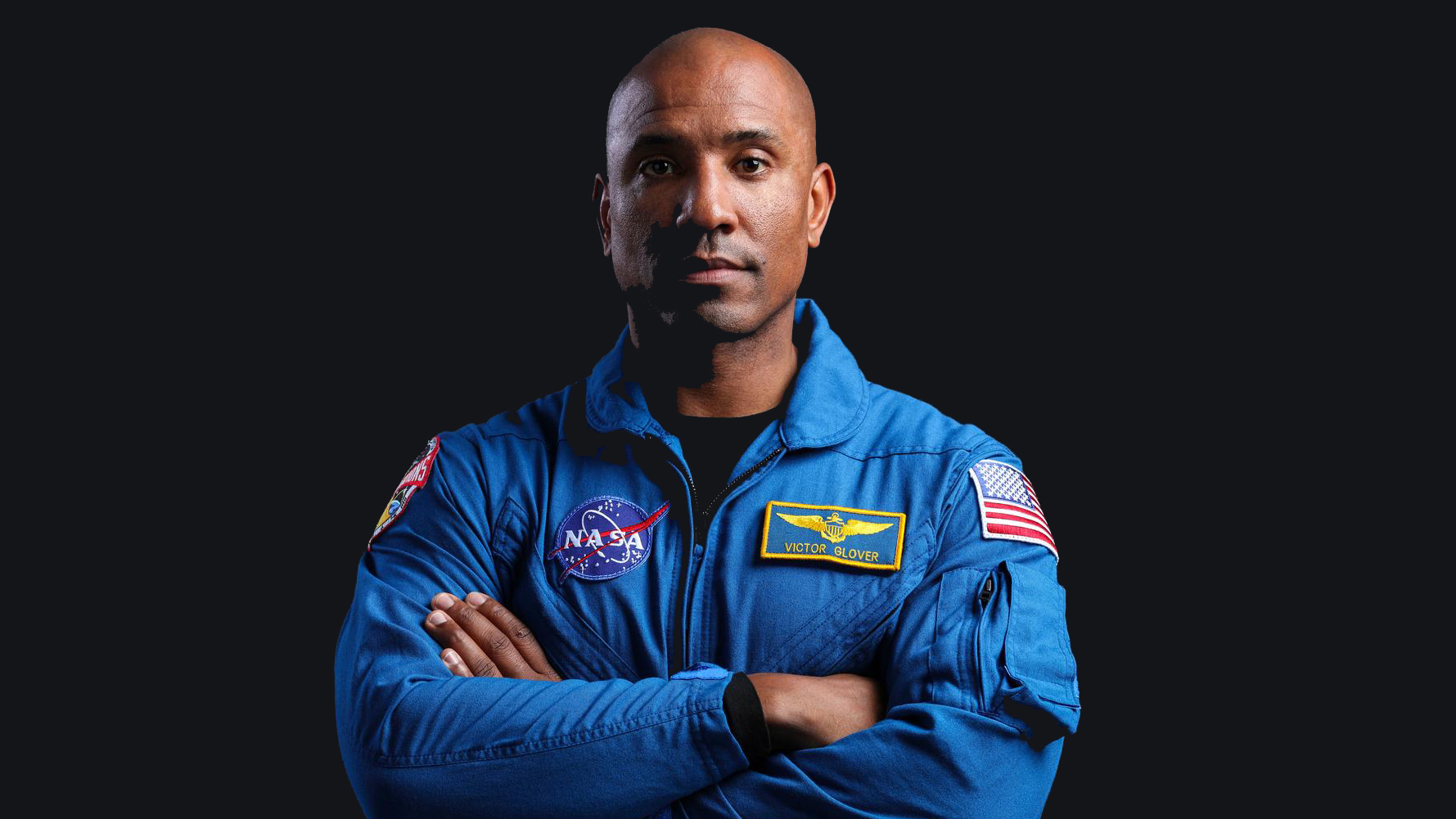
Victor Glover shattered barriers and inspired millions by becoming the first person of colour to travel to the Moon, proving that space truly belongs to everyone. [Photo: Courtesy]
| Detail |
Information |
| Nationality |
American |
| Military Background |
US Navy Fighter Pilot and Test Pilot |
| First Spaceflight |
SpaceX Crew-1, November 2020 |
| Days in Space (prior) |
168 |
| Artemis II Role |
Pilot |
| Historic First |
First person of colour to travel to the Moon |
Christina Koch — Mission Specialist
Christina Koch carries the distinction of becoming the first woman to travel to the
Moon, a milestone built on a career of breaking barriers in some of the world's most extreme environments. A North Carolina native, Koch worked as an electrical engineer at NASA's Goddard Space Flight Center and Johns Hopkins University Applied Physics Laboratory before venturing further afield — serving as a research associate in Antarctica for a full year and working at remote NOAA scientific bases in Alaska and American Samoa. Those experiences forged the resilience that defines her astronaut career.
Koch first launched into space in March 2019 for ISS Expedition 59/60/61, spending a record-breaking 328 days in orbit—the longest single spaceflight ever completed by a woman. During that mission she conducted six spacewalks, including the landmark first all-female spacewalk alongside NASA astronaut Jessica Meir. NASA selected Koch as an astronaut in 2013.
She holds bachelor of science degrees in both electrical engineering and physics from North Carolina State University, along with a master of science in electrical engineering from the same institution.
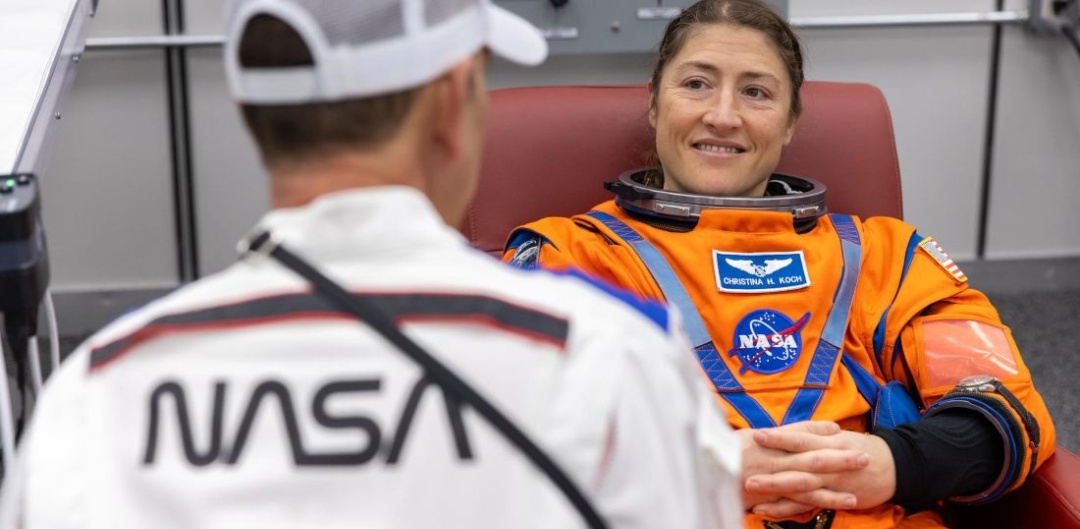
Christina Koch made history as the first woman to travel to the Moon, carrying decades of record-breaking resilience, scientific excellence, and quiet determination across the lunar frontier. [Photo: Courtesy]
| Detail |
Information |
| Nationality |
American |
| Background |
Electrical Engineer, Antarctic Researcher |
| First Spaceflight |
ISS Expedition 59/60/61, 2019 |
| Days in Space (prior) |
328 — women's record |
| Artemis II Role |
Mission Specialist |
| Historic First |
First woman to travel to the Moon |
Jeremy Hansen — Mission Specialist
Jeremy Hansen brings the honour of becoming the first Canadian to travel to the Moon, capping a career that has consistently placed him at the frontier of human achievement. A proud Canadian from London, Ontario, Hansen served as a fighter pilot in the Royal Canadian Air Force, flying CF-18 fighter jets and serving as a combat operations officer responsible for NORAD operations, deployed exercises, and Arctic flying missions before the Canadian Space Agency selected him as an astronaut in 2009.
Since joining the astronaut corps, Hansen has served as CapCom in NASA's Mission Control Center, participated in the European Space Agency's CAVES programme simulating deep-space exploration underground, and in 2017 became the first Canadian ever entrusted with leading a NASA astronaut training class — a powerful signal of the confidence both NASA and CSA place in him. Artemis II marks his first spaceflight.
Hansen holds a bachelor of science in honours space science and a master of science in physics, both from the Royal Military College of Canada.

Jeremy Hansen proudly carried Canada to the Moon for the very first time, representing a nation's dreams and proving that human exploration knows no borders or boundaries. [Photo: Courtesy]
| Detail |
Information |
| Nationality |
Canadian |
| Military Background |
Royal Canadian Air Force Fighter Pilot |
| First Spaceflight |
Artemis II, 2026 |
| Artemis II Role |
Mission Specialist |
| Historic First |
First Canadian to travel to the Moon |
What Happens at Splashdown and Why Friday Marks a Defining Moment for the Future of Human Space Exploration
When the Orion capsule splashes down in the Pacific Ocean off San Diego this Friday, recovery teams will immediately move to retrieve the spacecraft. The USS John P. Murtha will serve as the primary recovery vessel, where the Artemis II crew members will undergo thorough post-flight medical evaluations assessing how their bodies responded to deep-space radiation and the physical demands of travelling beyond low Earth orbit.
After medical clearance, the crew will return to NASA's Johnson Space Center in Houston for detailed mission debriefs. Every experiment conducted, every system evaluated, and every observation recorded during their 10-day journey will directly shape NASA's preparation for Artemis III — the mission that will land humans on the lunar surface for the first time since 1972.
Friday's splashdown is not simply four astronauts coming home. It validates the Orion spacecraft and Space Launch System as genuinely deep-space-capable vehicles, proves that humans can safely travel to lunar distance and return, and opens the door to a sustained human presence on and around the Moon. For Reid Wiseman, Victor Glover, Christina Koch, and Jeremy Hansen, it marks the moment they pass the relay baton to the next crew. They ran their race. Now the world waits to welcome them home.
https://www.youtube.com/watch?v=B_7EUmCxcvE
Reading is free. Sign in to comment.