
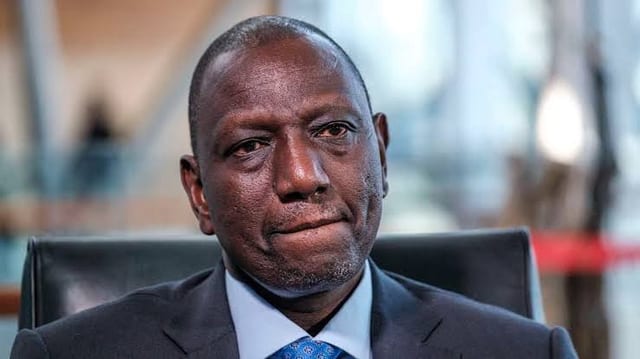
On 29 September 2022, William Ruto addressed Parliament and told Kenyans that borrowing to finance recurrent government expenditure was wrong, unsustainable and that his administration would cut government spending by Sh300 billion.
Four years later, the same government's National Treasury projects that Kenya will spend Sh2.3 trillion servicing public debt in the financial year ending June 2027.
That translates to approximately Sh6.3 billion every day, Sh262.7 million every hour, Sh4.38 million every minute and nearly Sh73,000 every second, including Saturdays, Sundays and public holidays.
Of that money, Sh1.29 trillion will go into paying interest alone, meaning Kenya faces an interest bill of approximately Sh2.46 million every minute before accounting for the repayment of the actual loans.
When Ruto took over in September 2022, Kenya's public debt stood at Sh8.75 trillion, and by September 2026, that figure had risen to Sh13.53 trillion, an increase of nearly Sh4.8 trillion.
Ruto must explain his own economic decisions, particularly after promising Kenyans that his administration would reduce unnecessary government expenditure and borrowing.
Look at how much Kenya has spent servicing public debt over the years:
• 2021/22: Sh917.8 billion. • 2022/23: Sh1.20 trillion. • 2023/24: Sh1.58 trillion. • 2024/25: Sh1.72 trillion. • 2025/26: Sh1.87 trillion. • 2026/27: Sh2.30 trillion projected.
Kenya spent approximately Sh6.38 trillion servicing public debt over the four completed financial years since July 2022, yet the outstanding debt is considerably higher than it was when Ruto took office. The government expects to collect Sh2.88 trillion in ordinary revenue this financial year against debt servicing obligations of Sh2.3 trillion, an amount equivalent to almost 80% of that revenue.
Where exactly does Ruto expect to get money to employ teachers, adequately fund hospitals, finance universities, build industries, maintain infrastructure and provide basic services to millions of Kenyans? In just three months between July and September 2026, Ruto's government exceeded its expenditure target by Sh146 billion, missed its revenue target by Sh58.4 billion and recorded a budget deficit of Sh381.3 billion on a commitment basis.
How does a government that keeps telling Kenyans to make sacrifices exceed its own expenditure targets by Sh146 billion within three months, knowing very well the financial situation of the country?
Ruto himself acknowledged in his November 2023 State of the Nation address that excessive government borrowing had made credit expensive for businesses and slowed down economic activity, particularly among small businesses.
By September 2026, domestic public debt had reached Sh7.78 trillion, accounting for 57.5% of Kenya's total public debt, with the government continuing to borrow heavily from the local financial market.
When the government competes with businesses for money held by commercial banks and other financial institutions, the cost of financing businesses can increase, making it harder to expand industries and create employment.
We cannot expect the private sector to create millions of jobs when government borrowing competes for the same money that businesses need to finance their operations.
Then there is the issue of government extravagance, unnecessary State departments, overlapping government agencies, expensive delegations, political appointments and the billions spent maintaining the political class at the expense of taxpayers.
The question Ruto must answer is why his administration continues expanding parts of government when the financial position of the country calls for a serious reduction in expenditure.
The National Treasury's own projections show that Kenya's public debt could reach Sh14.7 trillion by June 2027 and Sh18.24 trillion by June 2030, based on the government's current economic forecasts.
These are not figures from an opposition rally or somebody spreading rumours on social media, but figures published by the National Treasury under William Ruto's own administration.
Ruto's government has managed to refinance some expensive debts and avoid immediate repayment crises, but borrowing new money to settle old obligations does not necessarily reduce what Kenya owes.
Kenyans need to see a full account of the loans taken under Ruto, the interest rates attached to them, the projects they financed, the contractors who received the money and the economic returns those projects have produced.
We need to establish how much borrowing went into new development, how much went into refinancing existing debts and how much went into maintaining a government that continues spending beyond its means.
There must be an independent investigation into Kenya's public debt, including borrowing under Uhuru Kenyatta, borrowing under William Ruto and the responsibility of lenders in any transactions found to have violated the law.
William Ruto came into office promising to address the very debt and expenditure problems that Kenyans are still experiencing, and four years later, his administration has messed up the country further.
How much longer does his government expect Kenyans to tolerate increased taxation, expensive credit and inadequate public services without presenting a clear timetable for ending this country's dependence on borrowing?
That is the question William Ruto needs to answer