
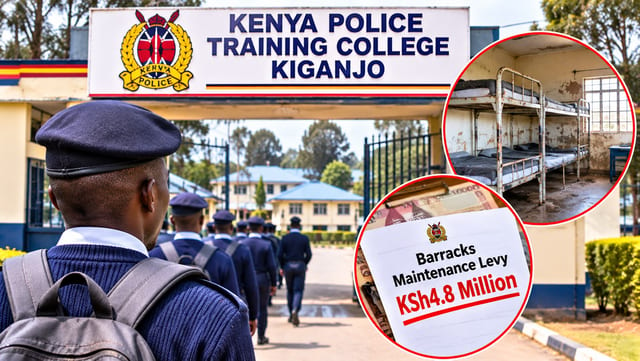
Fresh concerns have emerged over the welfare of police trainees at the National Police College, Kiganjo, following reports of questionable financial collections, poor accommodation, inadequate meals and mistreatment by instructors.
In a complaint sent to Nyakundi Report, a source familiar with the conditions at the institution claims that trainees are being required to pay KSh1,200 each towards barracks maintenance despite the accommodation facilities remaining in a deplorable state. The complaint raises questions about the management of funds collected from trainees and why individuals undergoing training at a government institution are being asked to finance the maintenance of public infrastructure.
According to the source, the college has approximately 4,000 trainees, meaning that if each is required to pay KSh1,200, the institution would collect an estimated KSh4.8 million. The complainant questions where this money goes, who authorises the collections and whether the funds are properly accounted for by the college's finance department. Despite the reported payments, the source claims that the barracks remain in poor condition, describing them as ageing facilities that have experienced little meaningful improvement over the years. The actual number of trainees subjected to the levy and the total amount collected have not been independently verified.
The concerns extend beyond financial management to the general welfare of trainees, with complaints about poor meals and arbitrary mistreatment by instructors. The source claims that some instructors subject trainees to degrading treatment, creating an environment so hostile that some have reportedly expressed unwillingness to return to the college.
While police training is expected to instil discipline, resilience and professionalism, there is a fundamental difference between rigorous training and conduct that humiliates or abuses trainees. An institution responsible for preparing future police officers should demonstrate the very standards of dignity, integrity and respect for human rights that those officers will be expected to uphold upon deployment.
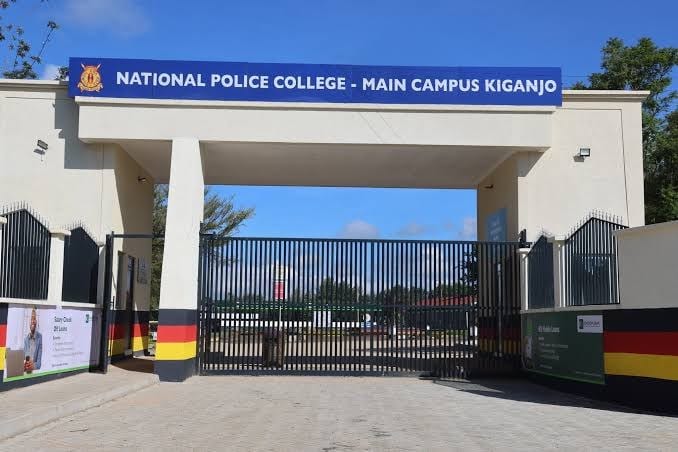
The complaint sent to Nyakundi Report reads:
Morning sir ,you will hide my ID,got a friend who's a cadet in kiganjo who's complaining alot of corruption in kiganjo college imagine the college kiganjo demands every student cadet to pay ksh 1200 claiming to be barrack maintance which the barracks are in poor state since 1960...imagine 1200 x 4000 student that is ksh 4,800,000.someone is pocketing.yet the food welfare is pathetic....its claimed most student have vowed never return to college due to arbitrary abuses by the instructors who have no respect to student .......Eacc should should Audit the college bursar. We can't expect charges to police yet kiganjo is rotten. With mind colonisation
The reports concerning the maintenance levy warrant particular attention from the Ethics and Anti-Corruption Commission (EACC) and the Office of the Auditor-General. The college's management should disclose the legal and administrative basis for collecting KSh1,200 from each trainee, whether official receipts are issued, the accounts into which the money is deposited and the specific maintenance works financed through these collections. An examination of the bursar's financial records alongside the institution's government-funded maintenance allocations would help establish whether the money is being collected and utilised appropriately or whether trainees are being subjected to unauthorised charges.
There is also a need to examine the college's expenditure on food, accommodation and other essential services. If public resources are allocated towards feeding and accommodating police trainees, the management should explain why complaints about poor living conditions persist. Procurement records, food supply contracts, maintenance budgets and expenditure reports would provide a clearer picture of whether the institution is receiving adequate funding and whether those resources are being managed responsibly.
The National Police Service Internal Affairs Unit and the Independent Policing Oversight Authority (IPOA) should equally examine the allegations of mistreatment by instructors. Trainees must have confidential channels through which they can report abuse without risking disciplinary retaliation, victimisation or dismissal from the training programme. The fear of jeopardising a future career in the police service should not become a tool for silencing legitimate complaints about misconduct within training institutions.
Kenya cannot effectively address corruption, abuse of authority and professional misconduct within the police service without examining the institutions where officers receive their initial training. If future police officers are exposed to questionable financial demands, humiliation and arbitrary exercise of authority from the beginning of their careers, there is a danger of normalising the very practices that police reforms are intended to eliminate.
The Inspector General of Police, the National Police Service Commission and the commandant of Kiganjo Police Training College should address these complaints, clarify the legitimacy of the reported maintenance levy and account for any money collected from trainees. The EACC should establish whether there is evidence of financial misconduct, while the Auditor-General should scrutinise the institution's expenditure on accommodation, maintenance and trainee welfare.
Police accountability must begin at the training college, not after officers have graduated and been deployed to serve the public.