
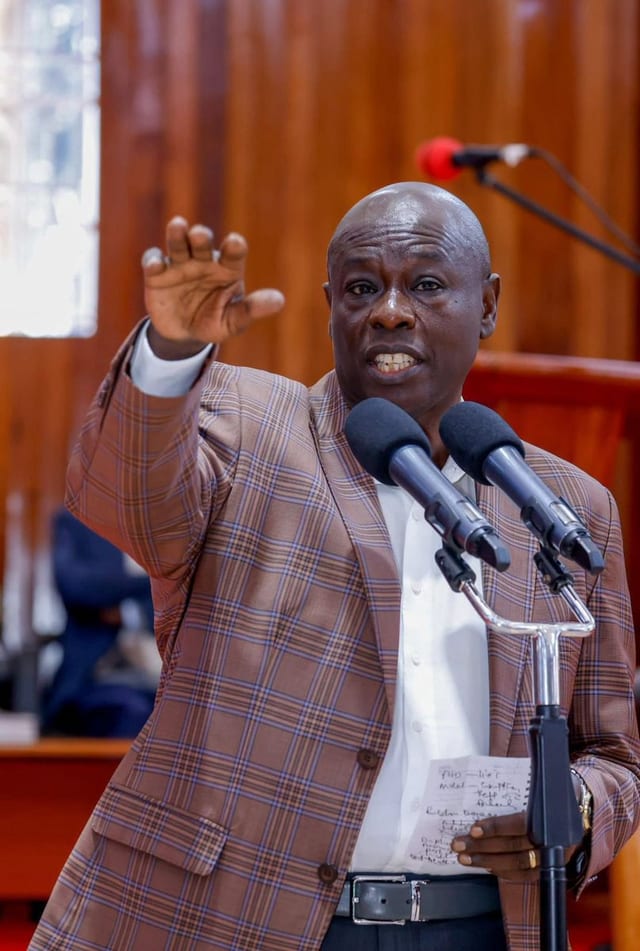
There is something interesting about Rigathi Gachagua's political strategy that many Kenyans are overlooking, especially those who believe the only important contest in 2027 is who occupies State House.
My reading is that Rigathi is playing a calculated political game, one that could leave him influential whether he becomes president, supports the eventual winner or ends up in opposition.
Gachagua has served as Deputy President and understands the serious financial problems facing Kenya, including public debt, unemployment, government expenditure and the enormous cost of maintaining the current political system.
He knows that removing William Ruto will not automatically solve these problems, and whoever takes over will inherit the same expensive government structures and enormous public expectations.
Rigathi is not stupid. He understands that the next president could face serious political difficulties if the administration continues borrowing heavily, maintaining unnecessary offices and failing to address unemployment. He knows that if Kenyans don't see change in the first 100 days, there could be protests.
Now look at what he is doing with DCP.
Instead of concentrating exclusively on the presidency, Gachagua has been putting considerable effort into building a political party, recruiting aspirants and targeting a substantial number of MPs, governors, senators and MCAs.
This is where his political calculations become particularly interesting because a leader who controls a sizeable parliamentary bloc and several county governments can exercise considerable influence without occupying State House.
Raila Odinga understood this very well with ODM, which remained central to national political negotiations for years, including periods when Raila was outside government.
Gachagua appears to be pursuing a political arrangement that could give him similar bargaining power, particularly if DCP manages to secure a substantial number of elected representatives in 2027.
And there is another interesting issue.
Much of Gachagua's public political messaging revolves around removing Ruto, but Kenyans still deserve detailed explanations about how the next administration will deal with debt, unemployment and the cost of government.
Which government offices will be abolished? How will borrowing be reduced? Where will the money to create jobs come from? What happens when Kenyans discover that changing presidents has not changed their economic circumstances?
These are difficult questions for every politician seeking power, and Gachagua understands them better than many people because he has served inside the government.
Now consider what happens if another opposition politician becomes president with DCP's support, and Gachagua's party secures a substantial parliamentary presence and several county governments.
Gachagua would have a political organisation capable of influencing legislation, negotiating government appointments, participating in budget decisions and bargaining with whoever controls the Executive.
If that administration struggles to deliver, he could attempt to distance himself from its failures and remind Kenyans that his primary contribution was helping remove William Ruto.
He could say that he helped bring change, but the people entrusted with running the country failed to deliver, leaving him with a political argument to take back to voters.
If Ruto remains president, Gachagua could continue operating through DCP as an opposition leader, relying on whatever parliamentary and county representation the party secures to maintain his political presence.
This is why I find his concentration on building DCP particularly interesting, because the presidency is only one source of political power in Kenya.
The bigger possibility is that Rigathi Gachagua is building a political organisation that could keep him relevant and powerful regardless of who becomes president.
He could find himself in a position where different political camps must negotiate with him, even when he is not the person occupying State House.
And that raises a question Kenyans should be asking.
Is Rigathi Gachagua more interested in taking responsibility for fixing Kenya's enormous problems, or is he building a political party that could give him influence without carrying the full burden of governing?
Because removing Ruto, becoming president and building a powerful political party are three different political objectives, and Gachagua's activities suggest that the third deserves considerably more attention.