
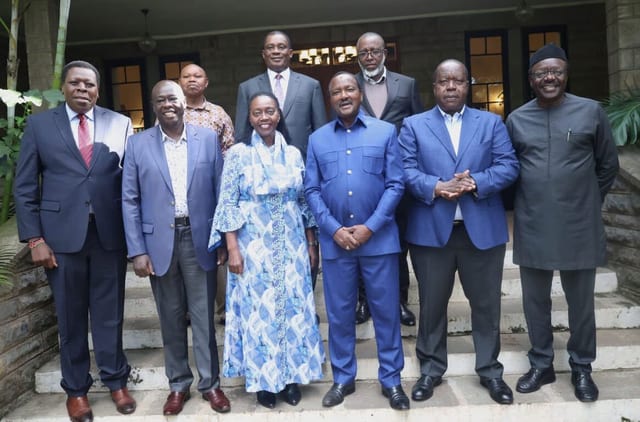
There is a very dangerous argument being promoted in Kenya today, particularly among people who believe the only political discussion worth having is how to remove William Ruto from office.
They keep telling us that we should concentrate on removing Ruto first and that questions about the next government's agenda can be addressed when we get there.
"We will cross that bridge when we reach there."
That argument might make sense if we were dealing with an entirely new generation of political leaders who have never held public office, never managed government resources and never participated in the decisions that brought Kenya to its present condition.
But we are not dealing with strangers.
We are dealing with politicians whose records are already known, some of whom have spent decades inside the very governments they now claim they want to rescue Kenyans from.
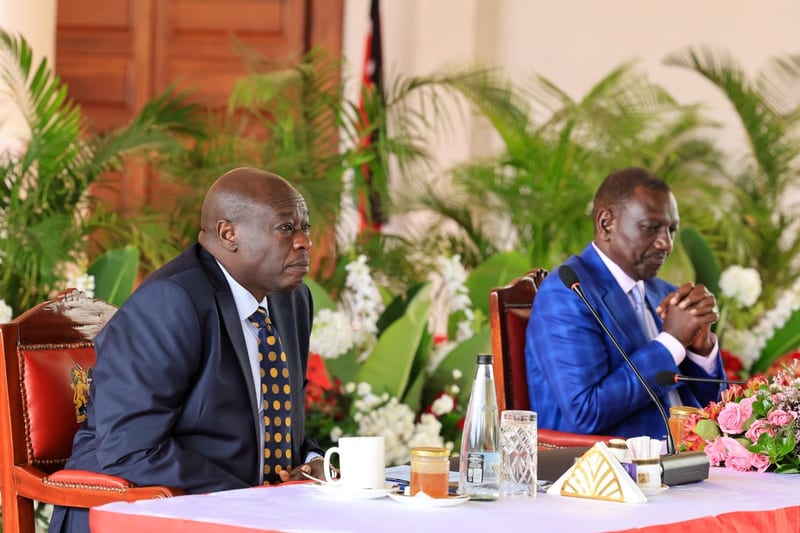
Take Rigathi Gachagua, for example.
In 2022, Gachagua publicly declared that he was worth approximately KSh800 million, explaining that much of his wealth came from businesses and contracts involving government institutions.
His business dealings became the subject of an Assets Recovery Agency case in which approximately KSh200 million was initially ordered forfeited before the money was returned in 2023 following a settlement supported by evidence concerning the contracts.
The return of the money matters, and it would be wrong to present the earlier forfeiture ruling as a conviction for corruption.
But Gachagua's own account of building substantial wealth through business dealings involving government institutions raises a political question that Kenyans are entitled to ask.
What economic model is somebody whose business success has been closely associated with government contracts proposing for millions of young Kenyans who have no political connections?
Where is the industrial development programme, the manufacturing strategy and the plan for creating opportunities that do not depend on knowing somebody in government?
This is a country where young people finish university, spend years looking for employment and eventually discover that many of the most profitable opportunities revolve around supplying government institutions.
And then we have the same political class promising to rescue those young people from the economic system it has spent years operating within.
Gachagua was also Ruto's Deputy President from 2022 until his impeachment in 2024.
He was part of the administration during some of the decisions that opposition politicians now condemn.
This is the same politician who, in 2023, publicly defended the idea of government having shareholders, with those who helped elect the administration receiving priority in certain appointments and benefits.
He later clarified that government services should reach all Kenyans regardless of political affiliation.
But that history cannot simply disappear when a politician moves from government to opposition.
What has changed in his thinking about public appointments, government contracts, political loyalty and the distribution of national resources?
Has he abandoned the political culture of rewarding supporters, or is he simply seeking another opportunity to distribute government shares under a different administration?
These questions cannot wait until after an election.
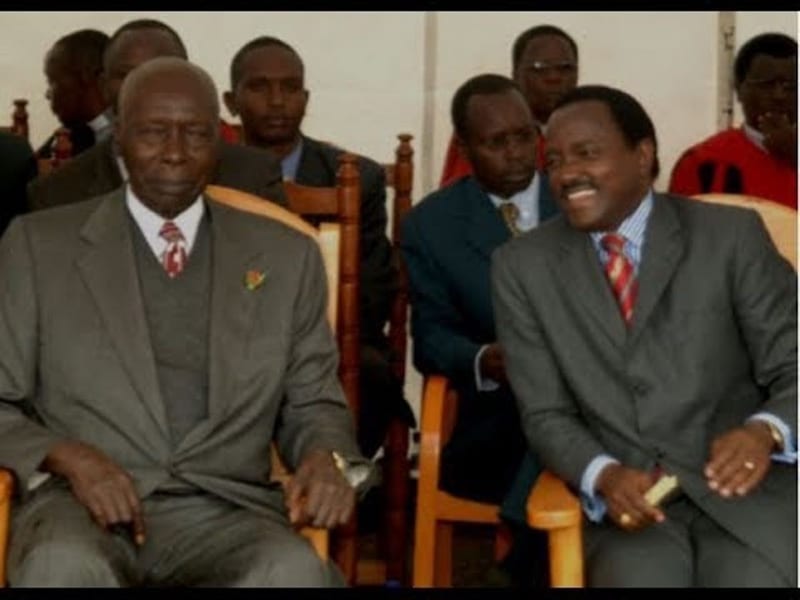
Now look at Kalonzo Musyoka.
Kalonzo is being presented as one of the experienced politicians capable of providing an alternative to Ruto, and his long record in public office is certainly relevant to that discussion.
But we must remember where his political career developed.
Kalonzo entered Parliament in 1985, served in Daniel arap Moi's government and became KANU's national organising secretary during an era when the ruling party had enormous influence over the State.
He served in senior ministerial positions under Moi before leaving KANU in 2002, and later became Vice President under Mwai Kibaki.
KANU's history includes the concentration of political authority, restrictions on opposition activity and serious abuses of state institutions.
Membership in that government does not automatically make Kalonzo personally responsible for every abuse committed during the Moi years.
But somebody who held senior positions in that political system should be prepared to explain what lessons he learnt and what safeguards he would introduce to prevent similar abuses.
Which practices from the KANU era does he now reject? What would he change about the relationship between the presidency, political parties, the police and the intelligence services?
How would he prevent another government from using public institutions to reward political friends and punish opponents?
These are questions about political history, not personal hatred.
We cannot keep recycling the same political class, removing one group from government, welcoming another group into opposition and pretending that their records have been erased.
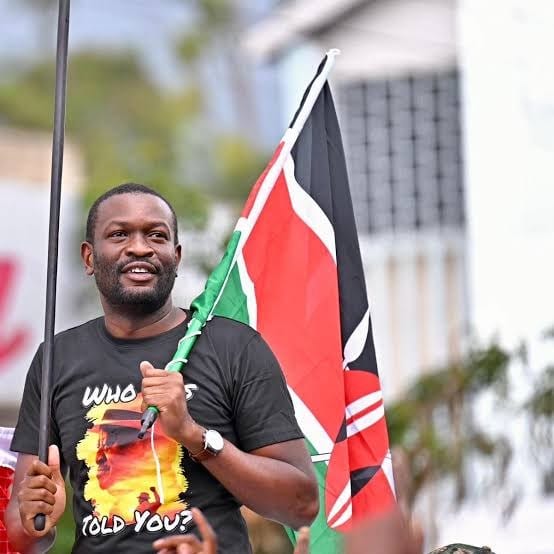
Now, I want to be fair to Edwin Sifuna.
Sifuna belongs to a different political generation, and he has presented proposals that deserve serious discussion, including reducing government waste, cutting certain taxes and abolishing the housing levy.
He has spoken about saving KSh500 billion from government expenditure, which is a proposal that should be examined carefully to establish where those savings would come from.
I can excuse Sifuna's online trolls for failing to explain every detail of his economic proposals.
They are supporters, not the people who will be responsible for preparing budgets, appointing Cabinet Secretaries or negotiating government policy.
But there is one question that Sifuna himself cannot escape.
How does he intend to deliver his proposed reforms in a government that may depend on politicians such as Rigathi Gachagua and Kalonzo Musyoka?
Sifuna has met Gachagua, and both Gachagua and Kalonzo have publicly expressed willingness to support his presidential ambitions under a common opposition arrangement.
That is a legitimate political conversation.
But suppose Sifuna becomes the presidential candidate of a coalition containing politicians who have spent decades operating within Kenya's traditional political system.
Who will control Treasury? Who will decide government appointments? Who will determine the allocation of development resources? Who will control public procurement?
What happens when Sifuna proposes cutting government expenditure, but coalition partners demand additional Cabinet positions, appointments and resources for their political supporters?
What happens when he wants to change the procurement system, but influential people within the coalition have built their business careers around government contracts?
These are not allegations about what any particular politician intends to do. They are the practical questions any coalition promising major reforms must answer.
And what happens when Sifuna disagrees with the older politicians whose support he may need to govern?
Does he have the political independence and institutional support to implement his programme, or would every major decision become another round of negotiations among coalition leaders?
The biggest challenge for Sifuna is not necessarily explaining what he wants to do for Kenya. It is explaining how he would get it done with politicians whose records, interests and political habits may differ sharply from his own.
This is why the argument about crossing the bridge later is so dangerous.
Kenya has already experienced political coalitions that came together around the desire to remove an incumbent, only for disagreements over appointments, authority and the direction of government to emerge later.
We should have learnt from that history.
Kenyans are carrying more than KSh13 trillion in public debt, and the next administration will inherit repayment obligations, struggling public services, pending bills and enormous pressure to reduce taxation.
We have serious questions about police killings, disappearances, corruption and the conduct of public institutions.
These problems require more than politicians standing together at rallies and promising to discuss their differences once they have won.
The opposition already has individual proposals and promises. What Kenyans need to examine is whether those proposals can survive the compromises required to form and run a coalition government.
What reforms are all the coalition partners prepared to support? Which government expenses will they cut? Will they agree to independent investigations into misconduct committed under previous administrations, including administrations in which some of them served?
And are they prepared to give up the same political privileges they have criticised whenever their opponents occupied government?
I refuse to accept that such questions should wait until after the election.
We cannot remove Ruto for presiding over a government whose record we condemn, hand the country to politicians who have participated in earlier governments and only then begin asking whether they intend to behave differently.
The bridge argument is especially troubling when it is promoted by politicians who are familiar with how government works.
They know what Treasury does. They know how Cabinet appointments are negotiated. They know how contracts are awarded and how political interests influence decisions.
They cannot claim that the difficult questions are premature.
If anything, their experience gives them an even greater responsibility to answer those questions before asking Kenyans to trust them.
And this is where the opposition leadership must become much more serious.
Kenyans do not need another political arrangement whose only common agreement is that William Ruto must leave State House.
They need to know what the politicians seeking to replace him have agreed to do with the country once they get there.
A coalition formed to remove a President is not automatically a coalition capable of repairing a country.
And the worst possible outcome would be for Kenyans to fight so hard for political change, only to discover that the incoming government is another collection of familiar politicians negotiating access to the same offices, contracts and privileges.
We cannot cross the bridge first and ask where it leads later when the people offering to guide us are the same political class that has been taking Kenyans across bridges for decades.