
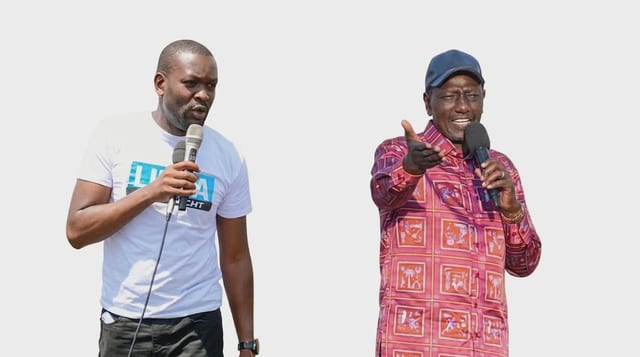
President William Ruto is back on Facebook telling Kenyans how he inherited a broke government in 2022 and saved the country from economic collapse.
At this point, I think somebody needs to remind Ruto that he was Kenya’s Deputy President for nine years before becoming President. The way he speaks about the previous government, you would think he was living in Uganda during Uhuru Kenyatta’s presidency.
But the most interesting part is the borrowing.
In September 2022, when Ruto became President, Kenya’s public debt stood at approximately KSh8.7 trillion. By September 2026, the figure had grown to approximately KSh13.53 trillion.
That is an increase of KSh4.83 trillion in just four years.
Do the mathematics.
Kenya’s public debt has increased by an average of KSh3.31 billion every day, KSh137.8 million every hour and approximately KSh2.3 million every minute under Ruto’s presidency.
These are average increases in the country’s outstanding debt, not the exact amounts of new loans taken every minute.
Now, somebody explain to me how a President who inherited a country supposedly collapsing under the weight of debt ends up adding another KSh4.83 trillion to that burden and still spends his days celebrating his economic management.
Ruto is telling us the shilling has stabilised at KSh129 against the dollar, inflation has fallen, interest rates are coming down and Kenya is now one of Africa’s best performing economies.
Very nice figures for a Facebook post.
But the ordinary Kenyan is interested in something much simpler. Can I afford food? Can I pay school fees? Can I run my business without being squeezed by taxes? Can I access healthcare without endless confusion over SHA? Can I find a job without begging a politician?
You cannot keep telling hungry people that the economy is doing extremely well and expect them to celebrate a graph.
And this business of blaming Uhuru Kenyatta is becoming ridiculous. He promised Kenyans to launch a state capture commission but remembered he was stealing with him.
Ruto served in the previous administration for nine years. He has now been President for four years. That is thirteen years at the very top of government.
Thirteen years!
Surely, at what point does he stop talking about the government he inherited and start taking responsibility for the government he is running?
Every good economic figure is apparently the result of Ruto’s brilliant leadership. Every problem facing the country is something Uhuru left behind.
What a convenient arrangement.
If the shilling strengthens, Ruto takes credit. If Kenyans complain about taxes, we are reminded about the mess he inherited. If public debt keeps growing, we are told the government is borrowing to develop the country.
Fair enough. Show Kenyans what the additional KSh4.83 trillion in debt has delivered. Show us the completed projects, the jobs created, the money saved and the actual benefits to taxpayers.
And please, spare us another lecture about inheriting a broke government.
Kenyans did not elect William Ruto in 2022 to spend five years explaining what Uhuru did wrong. They elected him to fix the problems he promised to fix.
A President who has overseen an average increase of KSh2.3 million in public debt every minute should be answering serious questions about government spending, not treating the country to another Facebook sermon about his inheritance.
Instead of waking up every morning to shout “Sisi Ndio Sifuna” from morning to evening, insulting people and fighting imaginary enemies on X, this is the kind of information these online trolls should be educating Kenyans about. Question Ruto’s borrowing, expose the failures of his government, explain how his policies are affecting ordinary Kenyans and give people serious reasons to demand better leadership.