
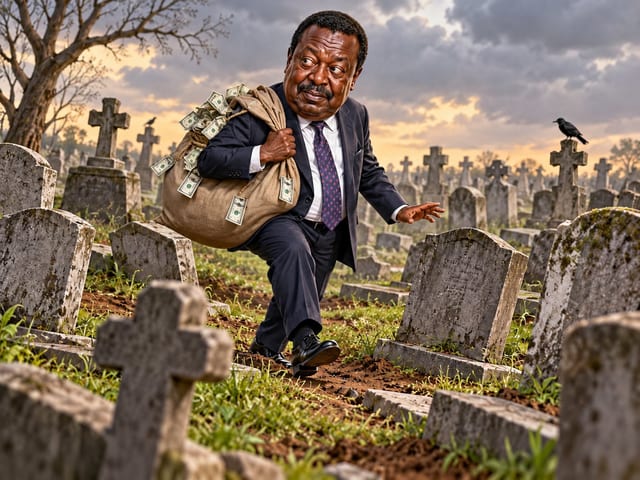
Many Gen Z Kenyans probably have no idea that Musalia Mudavadi, the man who today presents himself as one of the experienced and sober voices in government, once found himself at the centre of one of Kenya's most extraordinary corruption controversies.
Let me take you back to 2008 and 2009, when the defunct Nairobi City Council decided to purchase land in Athi River for a new public cemetery because the existing burial grounds were running out of space.
The council ended up paying KSh283.2 million for land that government valuers had estimated at approximately KSh24 million, and investigations later established that the property was unsuitable for the intended burial purposes.
Imagine a country where even the dead could not be guaranteed a decent resting place without public money becoming the subject of a massive corruption investigation!
At the time, Mudavadi was Deputy Prime Minister and Minister for Local Government, the ministry under which the Nairobi City Council operated, and his name featured prominently in investigations and parliamentary disagreements surrounding the transaction.
Mudavadi denied receiving any money from the deal and maintained that he had pushed for investigations after discovering irregularities, arguing that political opponents were attempting to damage his reputation.
But the scandal itself was real, and investigators established that only KSh110 million reached the original landowner, with substantial amounts ending up in the hands of individuals involved in the transaction including Musalia Mudavadi.
And here is something younger Kenyans may find particularly interesting.
The cemetery scandal has refused to die, because on October 27, 2026, a Nairobi court ruled that eleven accused persons, including former Local Government Permanent Secretary Sammy Kirui, had a case to answer over the controversial transaction.
What fascinates me about Kenyan politics is how politicians can remain prominent for decades, moving between administrations, political alliances and powerful government offices, while entire generations grow up knowing almost nothing about the controversies that shaped their earlier careers.
Gen Z should study Kenya's political history carefully, because many of the people now presenting themselves as the country's experienced leaders were already occupying powerful offices when some of the most notorious public finance scandals were unfolding.
The cemetery saga is a remarkable reminder that Kenya's political memory is often much shorter than the careers of the politicians who govern it.