
Current
Dr Dennis Mbiti Mwondi Demands KSh200 Million Over X Fraud and Carding Posts as Evans Nudih- Asamoh Rejects Apology and Retraction
A legal dispute has erupted on X between medical doctor and entrepreneur Dr Dennis Mbiti Mwondi and social media commentator Evans Ochieng Nudih, popularly known as Rein Asamoh, after the doctor threatened to pursue defamation proceedings seeking more than KSh200 million in damages over a series of posts accusing him of involvement in online card fraud.
The dispute has now drawn in two Nairobi law firms, with Mwondi demanding a public apology, removal of the posts and a written admission of liability, while Nudih has rejected all three demands and instructed his advocates to defend any proceedings brought against him.
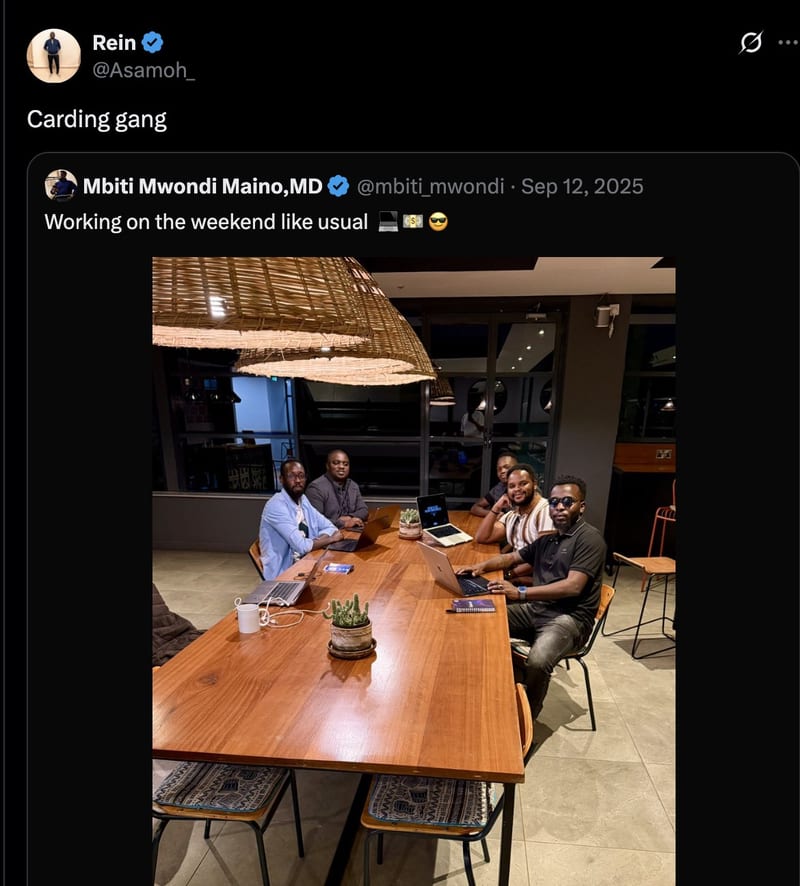
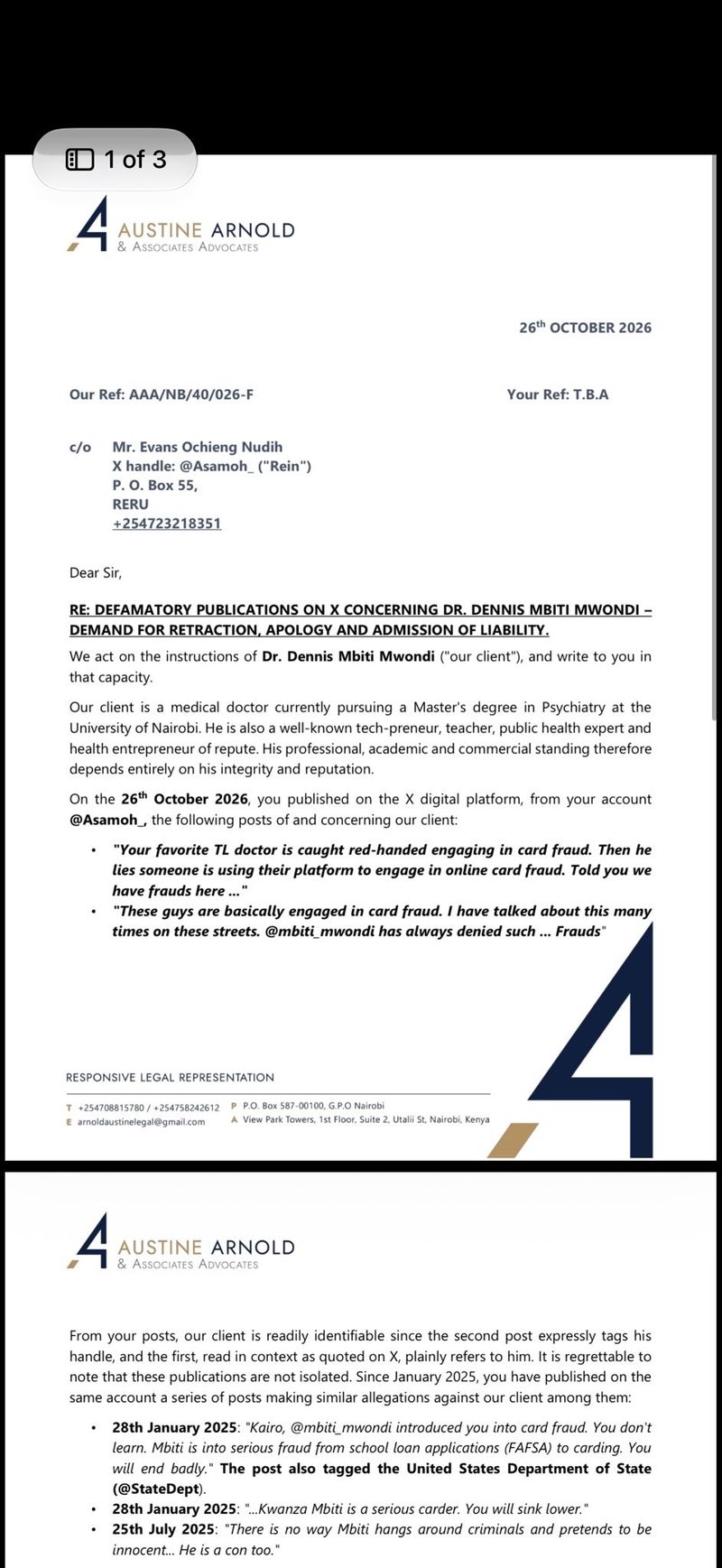
The confrontation began with a demand letter dated October 26, 2026, issued by Austine Arnold & Associates Advocates on behalf of Mwondi. Addressed to Nudih through his X account, @Asamoh_, the letter accused him of publishing defamatory statements about the doctor, including claims that he had been caught engaging in card fraud and had falsely denied involvement in the activities. The lawyers described Mwondi as a medical doctor pursuing a Master's degree in Psychiatry at the University of Nairobi, as well as a technology entrepreneur, teacher and public health expert whose professional and commercial reputation had been damaged by the publications.
According to the demand letter, two posts published on October 26 formed the immediate basis of the complaint. One claimed that a doctor had been caught engaging in card fraud, while another explicitly mentioned Mwondi's X handle, @mbiti_mwondi, in connection with similar accusations. The lawyers also cited earlier publications from January 28 and July 25, 2025, which they said formed part of a continuing pattern of attacks against their client. Those earlier posts included accusations concerning student loan applications and associations with individuals described as criminals.
Mwondi's advocates maintained that the publications portrayed their client as dishonest, involved in criminal activity and unfit to be trusted in his professional and business dealings.
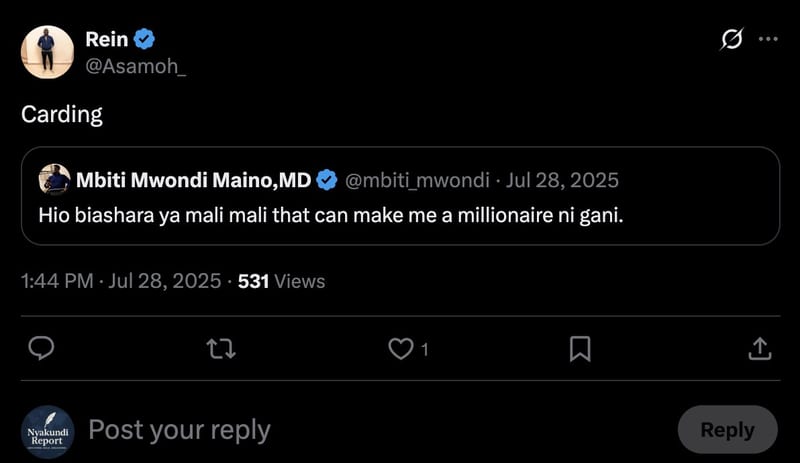
They categorically denied that he had participated in card fraud, fraudulent student loan applications or any other fraudulent conduct. The letter further argued that Nudih had failed to provide a complaint, criminal charge, judicial finding or other evidence supporting the accusations.
The lawyers demanded that Nudih comply within three days of October 26 by publishing an unequivocal retraction and apology on his X account, deleting the disputed posts and related publications, and admitting liability for defamation in writing. They warned that failure to comply would result in legal proceedings seeking general, aggravated and exemplary damages exceeding KSh200 million, together with interest and legal costs.
The demand stated
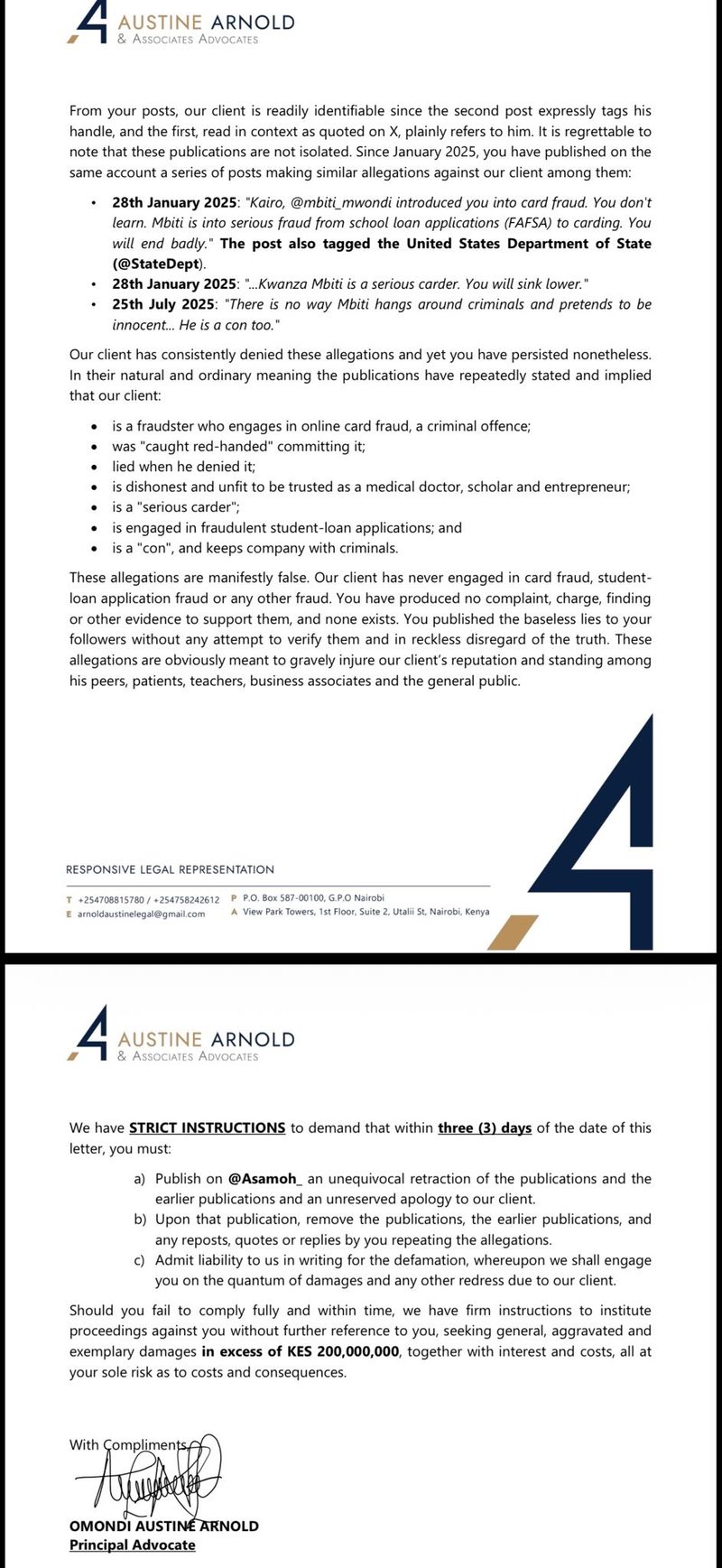
The letter then set out the requirements for a public retraction, deletion of the publications and written admission of liability.
Mwondi also publicly announced the legal action on X, informing Nudih that he had been served and would receive copies of the demand through email and WhatsApp. He indicated that his advocate would contact the commentator to obtain a physical address for further service. In the same communication, Mwondi claimed to have compiled a document containing 22 statements allegedly published about him over the previous four years, which he intended to incorporate into evidence.
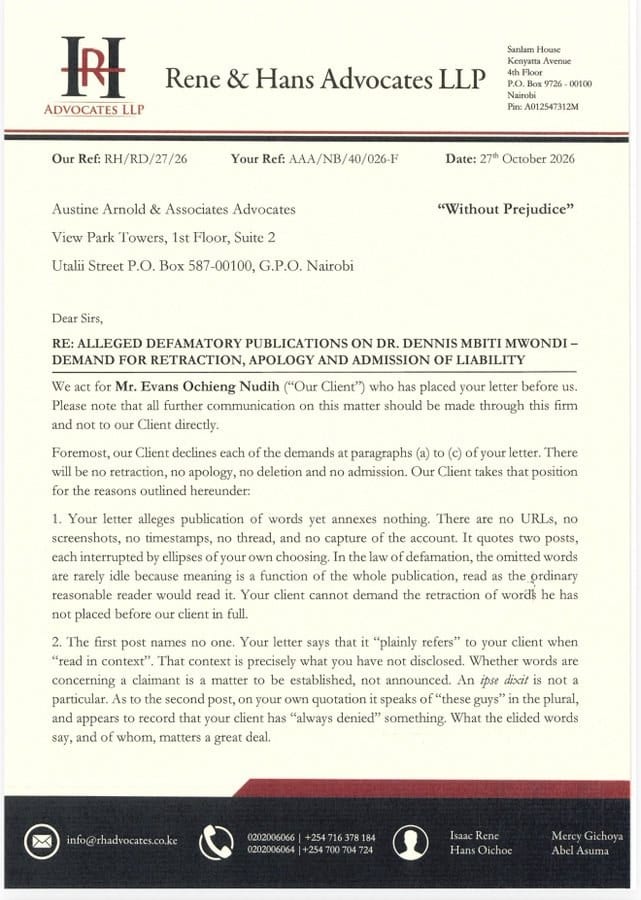
However, the dispute took another turn on October 27 when Nudih's lawyers, Rene & Hans Advocates LLP, issued a detailed response rejecting the demands. In a letter signed by advocate William Ochieng, the firm informed Austine Arnold & Associates that all further communication should be directed through the advocates rather than to their client personally. It also made clear that Nudih would not retract the publications, apologise, delete the posts or admit liability.
The response challenged the demand letter on several grounds, beginning with the absence of complete copies of the disputed publications. Nudih's lawyers argued that Mwondi's advocates had quoted selected passages without attaching screenshots, links, timestamps or complete records of the posts. They maintained that the meaning of a publication must be considered in its full context rather than determined from isolated extracts.
The lawyers also disputed the identification of Mwondi in the first October 26 post, pointing out that it did not expressly name him. Although the doctor's advocates argued that the reference was clear from its context, Nudih's legal team maintained that identification was a matter requiring proof. Regarding the second post, the response acknowledged that the wording quoted by Mwondi's lawyers contained his X handle but challenged the conclusions drawn from the selected passages.
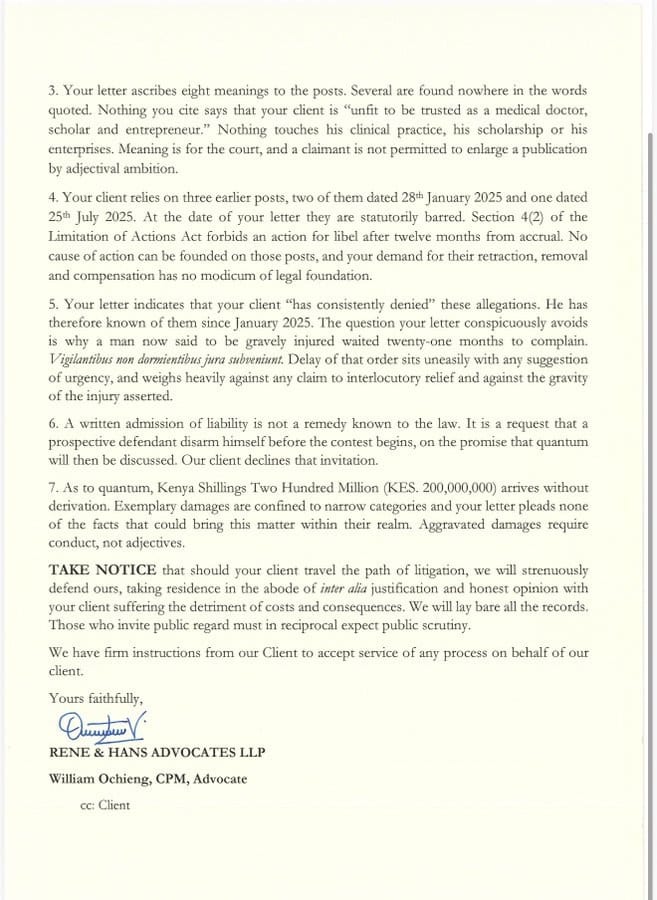
Another significant argument concerned the three earlier publications from 2025. Nudih's lawyers invoked Section 4(2) of Kenya's Limitation of Actions Act, which generally provides a 12-month limitation period for actions founded on libel or slander. They argued that the January and July 2025 posts could not independently support fresh defamation claims commenced after the statutory period had expired. Whether those publications could be relied upon for any other permissible evidentiary purpose would depend on the proceedings and the court's determination.
The response further questioned why Mwondi had waited until October 2026 to pursue legal action despite his advocates stating that he had consistently denied the accusations since January 2025. Nudih's lawyers argued that the delay was relevant to any request for urgent court intervention and the extent of the reputational harm being claimed. They also challenged the demand for a written admission of liability, describing it as an attempt to have their client concede the dispute before the legal issues had been examined.
The proposed KSh200 million damages claim was another point of contention. Rene & Hans Advocates argued that the amount had been presented without an explanation of how the alleged reputational harm justified such a figure. The firm noted that exemplary damages are not automatically available in defamation disputes and that any claim for aggravated damages must be supported by relevant facts and conduct.
In its concluding response, the firm warned that it would vigorously defend any proceedings and indicated that Nudih intended to rely on legal defences including justification and honest opinion. Those defences have not been tested in court, and the response did not provide documentary evidence establishing the underlying fraud accusations.
The lawyers stated
The dispute now centres on whether the statements published on X were defamatory, whether they referred to Mwondi in the manner claimed, and whether the publisher can establish an available defence if litigation proceeds.
Under Kenyan defamation law, a claimant generally must establish that the challenged statements were defamatory, referred to them and were published to another person. The court may then consider any applicable defences and the evidence presented by both parties.
For now, the legal confrontation and circus remains unresolved.
Last updated 3h