
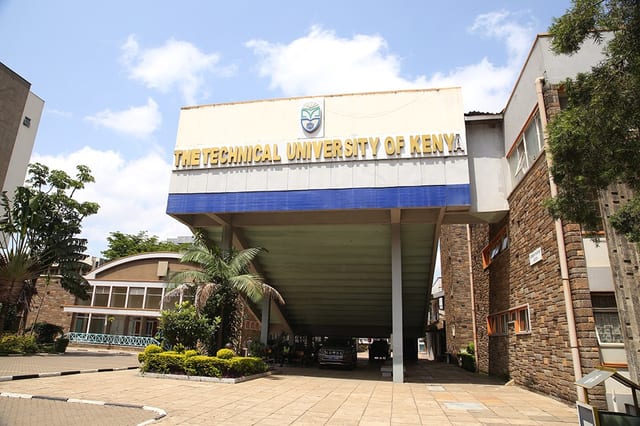
Graduates of the Technical University of Kenya (TUK) have raised concerns over the accreditation status of the institution’s Bachelor of Technology in Community and Public Health programme, saying they have been unable to obtain practising licences despite completing their studies. One of the affected graduates, Protus Mudome, says students only discovered during their studies that the programme had not been accredited by the Public Health Officers and Technicians Council (PHOTC). According to Mudome, efforts to have the university address the matter were unsuccessful, with students who pushed for answers allegedly facing threats of suspension.
The affected students proceeded to complete their studies and graduated in 2019, expecting to pursue careers in public health. However, years later, Mudome says many graduates remain unable to work as Public Health Officers because they cannot secure the required professional licences. The situation has left former students questioning why they were admitted and allowed to complete a programme whose accreditation status was allegedly unresolved, and why a solution has not been found years after graduation. The graduates are now calling on TUK, PHOTC and other relevant authorities to investigate the matter and establish a clear pathway that will allow those affected to use the qualifications they worked for
Morning Nyakundi, I am a graduate of the Technical University of Kenya (TUK), and I am appealing for help over the accreditation of the university’s Public Health programme and the situation of graduates affected by the matter. I was admitted to pursue a Bachelor of Technology in Community and Public Health at TUK, together with other students who believed we were enrolling in a recognised programme that would allow us to pursue careers in the public health profession after graduation. However, during our studies, we discovered that the programme had not been accredited by the Public Health Officers and Technicians Council (PHOTC). This immediately raised serious concerns because accreditation is critical for graduates seeking professional recognition and practising licences. We raised the matter with the university management and pushed for the programme to be accredited and for the necessary licensing arrangements to be put in place. Unfortunately, our efforts did not result in a lasting solution. Instead of receiving clear answers and a resolution, some of us were at one point threatened with suspension for continuing to raise concerns about the programme. Despite the uncertainty, we chose to continue with our studies. We eventually completed the programme and graduated in 2019, hoping that the accreditation issue would eventually be resolved and that we would be able to put our qualifications to use. Years later, many of us are still struggling. The biggest problem is that we cannot obtain the necessary practising licence to work as Public Health Officers. This has severely affected our ability to secure employment and build careers in the profession we trained for. We spent years studying, paid university fees and fulfilled the academic requirements of our programme, only to find ourselves facing a situation where our qualifications have not translated into the professional opportunities we expected. For graduates who have already left university, this has become more than an academic issue. It is about our livelihoods and our future. Many of us invested years of our lives preparing for careers in public health, only to encounter restrictions that were beyond our control. The question that remains is why students were admitted into the programme if there were unresolved accreditation issues and why the matter was not conclusively addressed before students completed their studies. We are now appealing to the Technical University of Kenya, the Public Health Officers and Technicians Council and other relevant authorities to intervene and provide a clear solution for everyone affected. We are not asking for special treatment. We are asking for accountability, clarity and a practical way forward for graduates who completed their studies believing they were pursuing a programme that would allow them to practise professionally. Our education should not become a dead end because of an accreditation issue that students did not create. We are calling on the relevant authorities to investigate what happened, establish responsibility and find a lasting solution for the affected 2019 graduates and others who may have been caught up in the same situation