
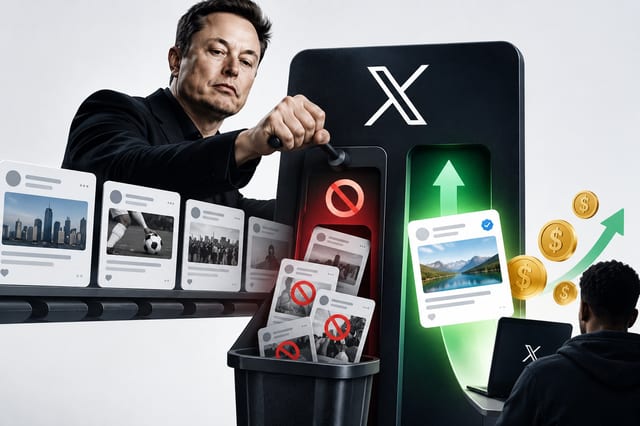
The new X revenue model is creating frustration among creators who build their accounts around news aggregation, with some saying they are being rejected under the platform’s “original content” rules despite putting significant work into finding, verifying and presenting information.
For these creators, aggregation is not simply copying another person’s post and publishing it again. They argue that serious aggregation involves searching through large volumes of information, identifying what is important, checking different posts, connecting developments and adding context so that audiences can understand a story without having to search through hundreds of separate accounts.
One creator explained the concern in detail:
The new X revenue model is becoming frustrating for creators who do serious aggregation, since accounts are being rejected under “original content” rules even when they spend hours finding useful posts, checking what matters, adding context and turning scattered information into something people can actually follow. They should recognise good aggregation as real editorial work, especially when the material comes from inside the X ecosystem itself, since the platform depends heavily on accounts that collect breaking updates, connect separate posts and help users make sense of fast moving stories without leaving X. If they are treating every aggregator like a lazy repost account, it risks killing one of the main reasons people stay on the platform for hours during major news events, elections, disasters, markets and public controversies. And if they kill good aggregation, X will eventually hurt itself, since people do not come here only to read isolated posts from hundreds of accounts, they come here because certain creators gather the noise and turn it into something useful. There has to be a clear difference between mindless copying and serious aggregation, or X may end up pushing out the same creators who keep users scrolling, reading and returning every day.”
A basic repost can involve taking another person's content and publishing it with little or no additional value. Aggregators, however, argue that their work often starts long before a post appears on the timeline.
A creator following a breaking story may have to monitor dozens or even hundreds of accounts, identify credible information, compare conflicting claims, locate original posts, determine what has changed and then present the information in a way that an audience can understand.
In breaking news, this process can take hours.
A major event may generate posts from eyewitnesses, government agencies, journalists, emergency responders, companies and ordinary users. The information can appear at different times and may contradict itself.
An account that gathers the developments into one coherent update can therefore become a single destination for people who do not have the time to follow every individual source.
This is particularly common during elections, major accidents, natural disasters, financial market movements, political controversies and other rapidly developing events.
Why creators say X benefits from aggregation 
Instead of users leaving the platform to search for information elsewhere, aggregation accounts can bring different pieces of a developing story together within X.
A user following a major breaking story may encounter the original post from one account, a photograph from another, an official statement from a government agency and an eyewitness account from another user.
An aggregator can connect those pieces and explain what they mean. That creates a different type of value from simply producing an original photograph, video or written report.
The concern among affected creators is that a system which treats all aggregation as low value could unintentionally penalise accounts that have built audiences around this type of work.
There is an obvious difference between copying content without adding anything and using multiple sources to produce a useful, contextualised account of a developing story. The challenge is creating a system that can recognise that difference. If the rules are too broad, creators who simply duplicate other people's work could benefit.
If they are too restrictive, legitimate aggregators could lose access to revenue even when they are providing a service that audiences clearly value.