
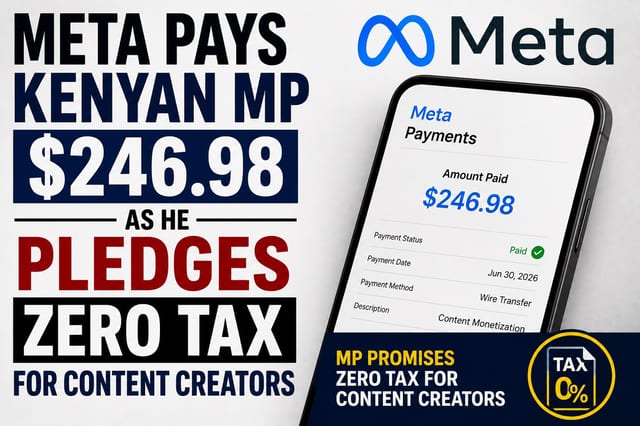
Linda Mwananchi MP has reignited the debate over taxation of Kenya’s digital economy after pledging to make content creation zero tax if his political camp takes power in 2027.
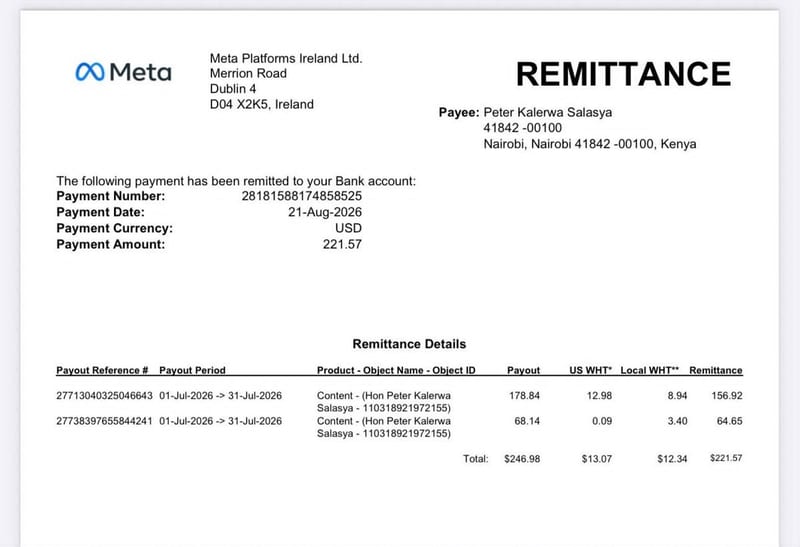
The pledge comes against the backdrop of a payment statement showing that Meta Platforms Ireland Ltd paid MP Peter Salasya $246.98 for content generated in July 2026. After $13.07 in US withholding tax and $12.34 in local withholding, the amount remitted to his account was $221.57.
The payment document gives Kenyans a glimpse into the money flowing from global digital platforms to local creators, while also providing an interesting backdrop to Salasya’s political promise to remove what he calls unnecessary taxes on young people earning through online work.
Mumias East MP Peter Salasya promised that Linda Mwananchi will make content creation tax free if the political outfit he supports takes power in 2027, arguing that young Kenyans earning a living through digital work should not be suffocated by what he describes as unnecessary taxation.
In a statement, Salasya said the youth agenda would be a priority under the next government, particularly through job creation, digital work and investment in Kenya’s growing creative economy.
“Tukichukua power next year, the youth agenda will be our priority. No young Kenyan making a living through content creation and online work should be suffocated by unnecessary taxes,” Salasya said.
He went further to promise that his government would make content creation zero tax, while actively courting international companies, investors and global digital platforms to establish operations in Kenya and create opportunities for young people.
Salasya said Kenya should position itself as a destination for technology companies and digital businesses by offering tax incentives to investors willing to create jobs and invest in the country's creative economy.
“We will actively approach international companies, investors and global digital platforms with one clear message: come to Kenya, create jobs for our young people, invest in our creative economy, and enjoy serious tax incentives,” he said.
His remarks come at a time when thousands of Kenyan creators are increasingly relying on platforms such as Facebook, YouTube, TikTok and other digital services as sources of income.
A remittance statement shared alongside the debate over digital earnings illustrates how international platform payments can already be reduced by various withholding deductions before money reaches a Kenyan creator's bank account.
Salasya's proposal is therefore likely to fuel a wider conversation about how Kenya taxes income generated through digital platforms and whether the country's tax policies are encouraging or discouraging young people from pursuing online work.
The MP also criticised the government's focus on the Affordable Housing programme, arguing that young people need direct economic opportunities rather than what he described as empty promises.
Wachana na hizi empty promises za Affordable Housing. Give the youth jobs. Give them opportunities. Give them a government that believes in their talent,” he said.
Salasya said the 2027 election should instead centre on jobs, opportunity and economic empowerment for young Kenyans, positioning digital work and content creation as part of the wider employment conversation.
His proposal now raises an important question for policymakers and creators alike: would removing taxes on content creation encourage more young Kenyans to enter the digital economy, or would the government need a broader overhaul of taxation and digital business policies to make online work more sustainable?