
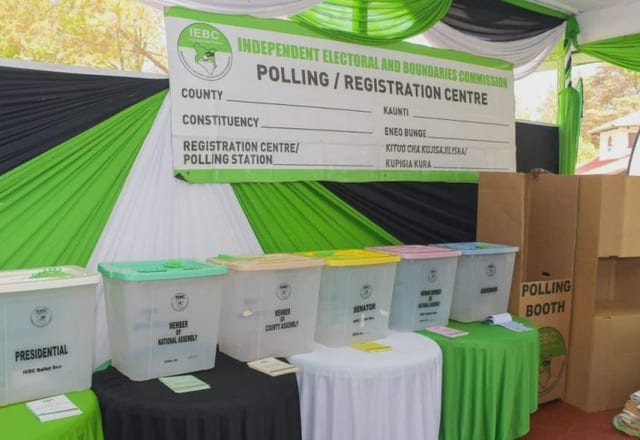
Kenya’s 2027 election calendar has been thrown into constitutional turmoil after the Malindi High Court ruled that holding the next presidential election in August 2027 would violate the Constitution.
In a landmark ruling delivered on Friday, August 7, 2026, Justice Mugure Thande declared that the next presidential election should be held in August 2026, not 2027, effectively putting the country’s electoral timetable under unprecedented legal scrutiny.
The judge held that the Independent Electoral and Boundaries Commission (IEBC) would contravene the Constitution by proceeding with a presidential election on August 10, 2027.
“A Declaration is hereby made that holding the next presidential election on any date other than the second Tuesday in August 2026 will violate and contravene” several constitutional provisions, Justice Thande ruled.
The court identified August 11, 2026, as the constitutionally correct date for the next presidential election, based on its interpretation of Article 136(2)(a).
Justice Thande rejected the argument that the Constitution automatically guarantees a sitting president a complete five-year term, instead finding that the constitutionally prescribed election date takes precedence.
“The Court thus finds that the correct interpretation of Article 136(2)(a) of the Constitution is that the second Tuesday in the fifth year with regard to the next presidential election must mean 11th August 2026,” the judge stated.
The decision creates a potentially explosive constitutional question: Should Kenya hold its next presidential election before the country reaches the date currently expected for the 2027 polls?
However, the ruling does not immediately send Kenyans to the ballot.
Justice Thande suspended the effect of the decision, meaning the declaration will not take immediate effect as the legal battle over the interpretation of the Constitution continues.
The ruling could nevertheless trigger a major constitutional and electoral showdown, placing the IEBC, Parliament, political parties and the Judiciary at the centre of a dispute over when Kenya's next presidential election must legally be held.
If upheld, the decision would fundamentally disrupt the country's established 2027 election timetable and force a dramatic rethink of preparations for the next General Election.
The case therefore presents one of the most consequential constitutional tests of Kenya's electoral framework in recent years, with its eventual outcome potentially determining whether Kenyans vote in 2026 or 2027.