
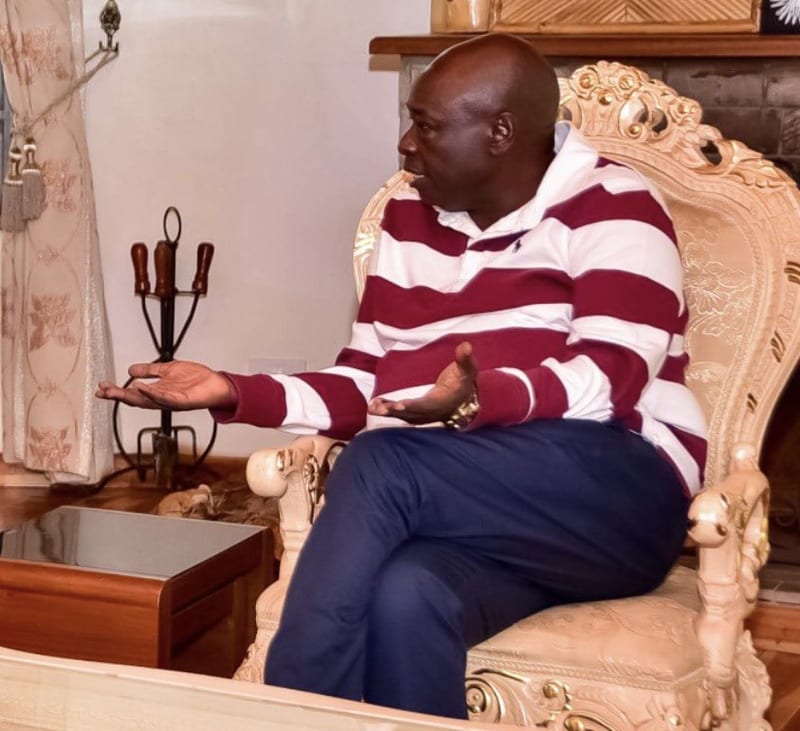
Kenya's legal and political landscape remains sharply divided following the High Court's landmark judgment on the impeachment of former Deputy President Rigathi Gachagua, with prominent lawyers, constitutional experts, and political commentators offering conflicting interpretations of what the ruling means for his political future.
While the court found that Gachagua's constitutional right to a fair hearing was violated during the impeachment process and awarded him KSh 50 million in damages, it stopped short of overturning the impeachment itself. The apparent contradiction has triggered widespread debate among legal scholars, with many questioning whether the judgment can withstand scrutiny at higher courts.
Supreme Court Now Holds the Key
Constitutional lawyer and commentator Peter Wanyama argues that many Kenyans are misreading the significance of the High Court ruling.
According to Wanyama, the Constitution provides a clear appellate path and Gachagua's fate will ultimately be determined by the Supreme Court rather than the High Court or the Court of Appeal.
He maintains that despite the setbacks suffered in the High Court, Gachagua remains legally eligible to contest future elections unless and until the Supreme Court exhausts the appellate process and upholds any decision that would disqualify him.
"The Constitution provides adequate safeguards, checks and balances regarding the fate of the impeached Deputy President. His fate lies in the Supreme Court," Wanyama stated.
His position suggests that celebrations by Gachagua's opponents and concerns among his supporters may both be premature because the legal battle is far from over.
Ahmednasir Claims Court Vindicated His Position
Senior Counsel Ahmednasir Abdullahi welcomed the judgment, arguing that it validated a position he had maintained since Gachagua's impeachment in 2024.
Ahmednasir pointed to Article 25(c) of the Constitution, which protects the right to a fair trial as one of Kenya's non-derogable rights.
According to him, any process that infringes on such a fundamental constitutional protection cannot stand on firm legal ground.
"I said it in 2024 when Rigathi Gachagua was impeached by the Senate. The High Court agreed with me today that indeed he was denied a fair trial," he argued.
The lawyer views the court's finding as confirmation that serious procedural defects occurred during the impeachment process.
Critics See Contradictions in the Judgment
Not everyone agrees.
Senior Counsel Eric Theuri emerged as one of the ruling's most vocal critics.
Theuri argues that the judgment is internally inconsistent because the court simultaneously found that Gachagua's rights had been violated, awarded substantial damages, yet left intact the impeachment process that arose from those violations.
According to Theuri, the Constitution is explicit that actions taken in violation of constitutional rights are void.
He questions how a court can conclude that a constitutional violation occurred while still allowing the resulting impeachment to stand.
"The effect of impeachment is that the person cannot hold public office. So how does a decision in violation of rights operate as a bar to running for office?" he asked.
His criticism has fueled allegations that the court attempted to strike a political compromise rather than apply constitutional principles consistently.
Willis Otieno Highlights the Central Constitutional Dilemma
Constitutional lawyer Willis Evans Otieno believes the controversy stems from a difficult legal balancing act.
According to Otieno, the court was confronted with two competing constitutional questions.
On one hand, the violation of Gachagua's rights was serious enough to justify a KSh 50 million award. On the other hand, the judges may have concluded that the procedural violation affected Gachagua personally without necessarily invalidating the institutional decision made by the Senate.
This distinction between personal injury and institutional validity now sits at the center of the legal debate.
"The difficult legal question is where to draw the line," Otieno observed.
His analysis reflects the complexity facing appellate courts that may soon be asked to revisit the matter.
Ombeta Questions Transparency
Prominent criminal lawyer Cliff Ombeta also expressed reservations about the judgment.
While not defending Gachagua politically, Ombeta argued that the reasoning behind the ruling appears unclear and potentially contradictory.
His comments echo broader concerns among legal practitioners who believe the judgment leaves critical constitutional questions unanswered.
Article 25 Versus Article 145
Another issue generating heated debate revolves around the relationship between Article 25 and Article 145 of the Constitution.
Legal commentator Eric Muriuki questioned how constitutional provisions concerning impeachment finality can supersede rights that the Constitution itself describes as non-derogable.
Article 25 elevates certain rights, including the right to a fair hearing, above ordinary constitutional limitations.
This has led many observers to ask whether any constitutional process, including impeachment, can survive if it is proven to have violated one of these protected rights.
The question is likely to become a major issue if the matter proceeds to the Supreme Court.
Miguna Raises Questions About the Judgment Itself
Lawyer and political activist Miguna Miguna focused less on the substance of the ruling and more on how it was delivered.
Miguna questioned inconsistencies in the reading of the judgment and suggested that confusion over wording in such a significant constitutional case raises concerns about judicial craftsmanship and transparency.
He also criticized what he described as the lengthy practice of judges reading extensive submissions and objected to the use of political honorifics in court proceedings, arguing that all litigants should be treated equally regardless of their former office.
What Happens Next?
The ruling has produced no clear consensus.
Supporters of Gachagua see the judgment as recognition that his constitutional rights were violated.
Critics argue that the court's findings and remedies are legally incompatible and vulnerable to reversal on appeal.
What appears certain is that the case is far from over. As appeals move through Kenya's judicial system, attention is increasingly shifting toward the Supreme Court, where a final determination could have significant implications not only for Gachagua's political future but also for how constitutional rights interact with impeachment proceedings in Kenya.
The ultimate question remains unresolved: Can an impeachment process survive judicial scrutiny after a court has found that the affected individual's right to a fair hearing was violated?
The answer may shape Kenyan constitutional law for years to come.