Current NSSF Contribution Rates In Kenya: Full Guide For Employers And Workers
63638f39139f63861690443d_NHIF
Understanding NSSF Contribution Rates in Kenya is essential for every employer and employee in 2026. The National Social Security Fund has released the Year 4 rates under the NSSF Act, bringing higher contributions and broader social protection. These changes directly affect your monthly deductions and long-term retirement benefits. If you earn a salary or run a business, you must know how much to contribute, when to remit, and how the tier system works to stay compliant and avoid penalties. NSSF contributions in Kenya ensure consistent retirement savings through shared employer and employee payments, strengthening financial security and long-term social protection.
NSSF Contribution Rates In Kenya Explained For 2026
The current system uses a two-tier contribution model. Both the employer and employee contribute 6% each, based on defined earning limits.
Tier 1 applies to earnings up to Ksh 9,000
Tier 2 applies to earnings between Ksh 9,001 and Ksh 108,000
This structure ensures that workers across different income levels contribute fairly while building retirement savings.
Breakdown of NSSF Contribution Rates In Kenya
Here is a clear table showing the official Year 4 contribution rates for 2026:
Category
Amount (Ksh)
Lower Earnings Limit (Tier 1)
9,000
Tier 1 Employee Contribution
540
Tier 1 Employer Contribution
540
Total Tier 1 Contribution
1,080
Upper Earnings Limit
108,000
Pensionable Earnings (Tier 2)
99,000
Tier 2 Employee Contribution
5,940
Tier 2 Employer Contribution
5,940
Total Tier 2 Contribution
11,880
Maximum Total Monthly Contribution
12,960
This means the maximum monthly contribution per employee is Ksh 12,960, shared equally between employer and employee.
How the Tier System Works
The tier system splits your salary into two parts:
The first Ksh 9,000 falls under Tier 1
The remaining amount up to Ksh 108,000 falls under Tier 2
For example:
If you earn Ksh 50,000, you contribute to both Tier 1 and Tier 2
If you earn Ksh 9,000 or less, only Tier 1 applies
If you earn above Ksh 108,000, contributions are capped at the maximum
This structure ensures predictability while increasing retirement savings over time.
Key Compliance Rules Every Employer Must Follow
Employers must strictly follow NSSF regulations to avoid penalties and ensure employees benefit fully.
Remittance Deadline And Legal Requirements
Employers must remit contributions by the 9th day of the following month. Late payments attract penalties and may lead to legal consequences.
Key obligations include:
Deduct employee contributions accurately
Match contributions as the employer
Submit payments on time
Maintain proper payroll records
Failure to comply can result in fines and enforcement action.
Why NSSF Contribution Rates In Kenya Matter
These contributions are not just deductions. They play a critical role in financial security.
Benefits include:
Retirement income security
Invalidity and survivor benefits
Long-term savings discipline
Social protection for dependants
Higher contribution rates mean better benefits in the future, although they increase monthly deductions today.
NSSF Kenya Contacts And Support
If you need clarification or assistance, you can contact the NSSF directly:
Reaching out helps you stay compliant and resolve issues quickly.
Final Thoughts On NSSF Contribution Rates In Kenya
The updated NSSF Contribution Rates In Kenya reflect a shift toward stronger retirement planning. Employers must stay disciplined with remittances, while employees should understand how deductions support their future.
Do not ignore these changes. Take time to review your payslip, confirm contributions, and plan your finances wisely because consistent compliance today builds financial stability tomorrow.
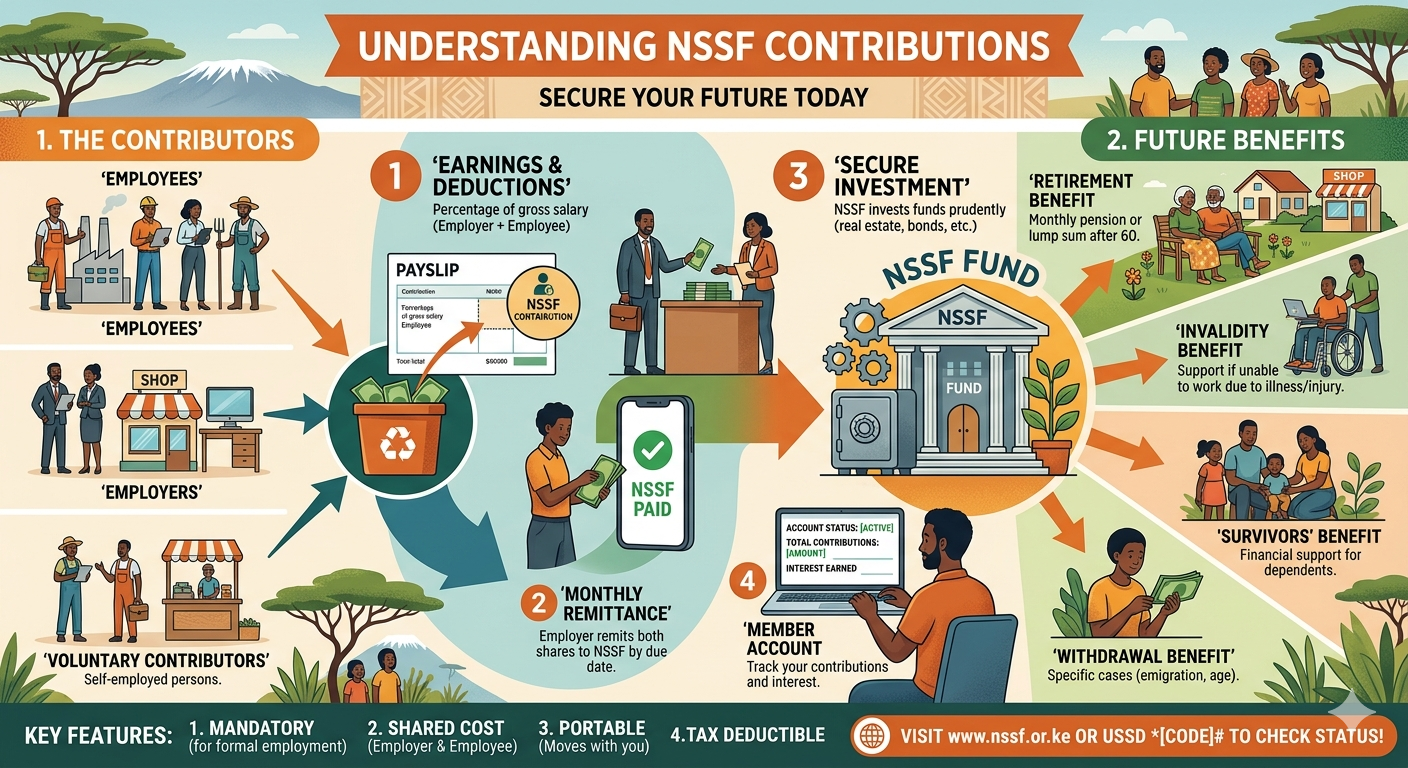 NSSF contributions in Kenya ensure consistent retirement savings through shared employer and employee payments, strengthening financial security and long-term social protection.
Reading is free. Sign in to comment.