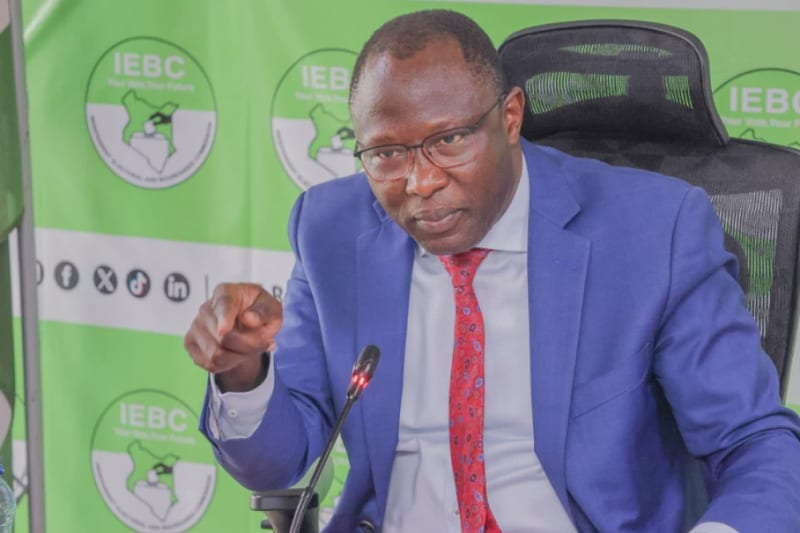
The Independent Electoral and Boundaries Commission (IEBC) has rejected reports claiming it cleared former Deputy President Rigathi Gachagua to contest the 2027 presidential election, exposing a constitutional question that could derail his political ambitions before voters even get an opportunity to cast their ballots.
In a statement signed by IEBC Chairperson Erastus Edung Ethekon, the commission said it had neither cleared Gachagua nor made any determination regarding his eligibility to contest the presidency.
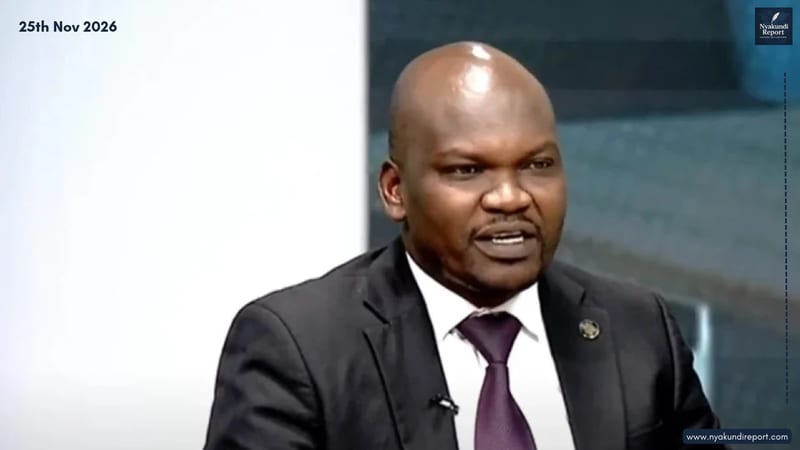
The clarification followed a television report subsequently circulated on social media, suggesting that remarks by IEBC Director of Legal Services Chrispine Owiye amounted to official confirmation that Gachagua was eligible to run.
But the commission has now distanced itself from that interpretation, accusing media outlets of misrepresenting Owiye's presentation during an engagement with political reporters in Nairobi on Tuesday, November 24, 2026.
IEBC explained that Owiye was discussing constitutional provisions governing election qualifications and disqualifications under Articles 99 and 193, including the requirement that certain disqualifications cannot take effect until appeal and review processes have been exhausted.
Crucially, the commission said his presentation did not address impeachment, removal from office under Article 75 or the eligibility of an impeached individual to contest an election.
That distinction is central to Gachagua's political future. His impeachment was not an ordinary electoral disqualification. It involved a Senate finding that he had violated constitutional standards governing State officers, raising the separate question of whether Article 75 bars him from holding another State office.
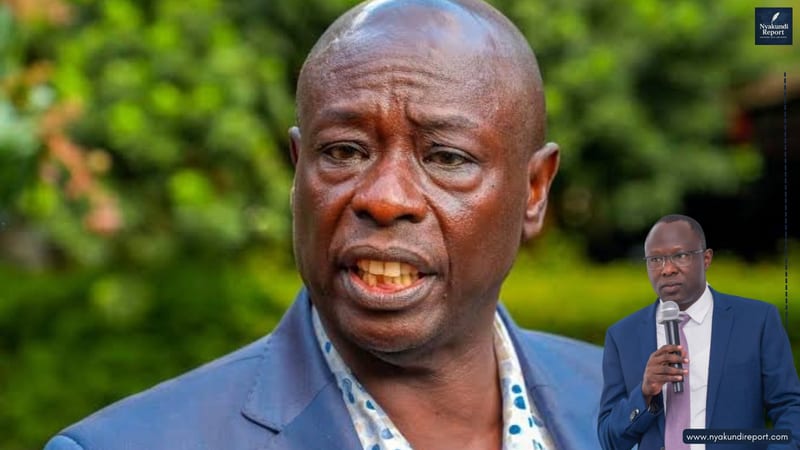
Article 75 Presents a Constitutional Roadblock to Gachagua's Presidential Bid 
Article 75 of the Constitution establishes standards of conduct for State officers and provides consequences for those who violate them.
Under Article 75(1), State officers must behave, whether in public or private life, in a manner that avoids conflicts between personal interests and public duties, compromises public interests for personal benefit or demeans their offices.
Article 75(2) provides for dismissal or other removal from office where a State officer contravenes the specified constitutional provisions through the applicable disciplinary procedure.
However, Article 75(3) contains the provision that makes Gachagua's situation particularly consequential.
It states that a person who has been dismissed or otherwise removed from office for contravening the provisions in Article 75(2) is disqualified from holding any other State office.
The presidency is a State office. Consequently, if Gachagua's removal satisfies the constitutional conditions under Article 75(3), the consequences would extend beyond his former position as Deputy President.
This is not simply a question of whether he can secure a political party's presidential ticket, mobilise supporters or collect nomination signatures. It concerns whether the Constitution permits him to occupy another State office following his removal.
The Senate's October 2024 impeachment proceedings make the question more significant. Senators upheld five charges against Gachagua, including gross violation of Article 75(1)(c), which requires State officers to avoid conduct that demeans their offices.
The Senate subsequently resolved to remove him under Articles 145 and 150 of the Constitution.
However, a critical legal distinction remains. Article 75(3) refers to removal under the disciplinary procedure contemplated in Article 75(2). Whether impeachment under Articles 145 and 150 satisfies that requirement, and consequently triggers the automatic disqualification, requires authoritative legal interpretation.
It would therefore be premature to declare that Gachagua is conclusively barred without resolving that constitutional question.
Why IEBC Cannot Ignore Articles 99 and 137 
The commission also pointed to Article 137, which establishes the constitutional qualifications for presidential candidates.
These include Kenyan citizenship by birth, qualification to stand for election as a Member of Parliament, nomination by a political party or an independent candidature, and support from at least 2,000 registered voters in a majority of counties.
Article 137 must, however, be read alongside other constitutional provisions governing eligibility.
Article 99(2)(h) provides for the disqualification of a person found to have misused State office or contravened Chapter Six of the Constitution.
Article 99(3) provides that a person is not disqualified under that provision until all possibilities of appeal or review have been exhausted.
This is the provision that informed Owiye's presentation and the commission's subsequent clarification.
However, the appeal protections under Article 99 cannot simply be presented as proof that every impeached individual remains eligible. Article 75(3) creates a separate constitutional consequence whose application must also be considered.
IEBC must therefore examine the relevant constitutional provisions together rather than treating presidential qualifications under Article 137 as an isolated checklist.
IEBC Says Gachagua Has Not Been Cleared 
Ethekon insisted that any determination regarding Gachagua's eligibility would be made at the appropriate stage of the electoral process in accordance with the Constitution and applicable laws.
The commission also confirmed that registration of candidates for the 2027 General Election has not commenced.
IEBC regretted what it described as the misrepresentation of facts and urged media organisations to exercise accuracy, fairness and due diligence when reporting sensitive constitutional and electoral matters.
The clarification leaves Gachagua's supporters without the official electoral endorsement they had suggested, while placing renewed attention on the legal consequences of his impeachment.
The central question is no longer whether Gachagua has the political support to pursue the presidency. It is whether his removal from the Deputy President's office triggers Article 75(3) and prevents him from holding another State office.
Until that question is authoritatively determined, claims that IEBC has cleared him are unfounded. The commission has explicitly denied making such a decision.