
The Ethics and Anti-Corruption Commission (EACC) has admitted it cannot directly stop politicians accused of corruption and ethical violations from contesting elections, placing the responsibility squarely on the Independent Electoral and Boundaries Commission (IEBC) as Kenya heads towards the 2027 General Election.
EACC Chief Executive Officer Abdi A. Mohamud said the commission has no constitutional mandate to disqualify individuals seeking elective positions, despite its responsibility to investigate corruption, assess integrity and recommend action against candidates who fail ethical requirements.
His clarification raises fresh questions about how effectively Chapter Six of the Constitution will be enforced in the 2027 elections, particularly as politicians facing corruption allegations, integrity concerns and questions over their leadership records prepare to seek elective office.
Speaking during a workshop for media practitioners on integrity in leadership and elections, Mohamud said EACC had faced public criticism from Kenyans who expected the commission to directly bar individuals considered ethically unsuitable from contesting elections.
He explained that the commission's responsibility was to conduct integrity assessments and submit recommendations to IEBC, which has the constitutional mandate to determine eligibility and register candidates.
The CEO disclosed that EACC receives more than 20,000 self-declaration forms from aspiring candidates during election years and works with IEBC to establish criteria for verifying their integrity.
He added that the commission had submitted reports containing recommendations on candidates it considered unsuitable to contest the 2017 and 2022 General Elections.
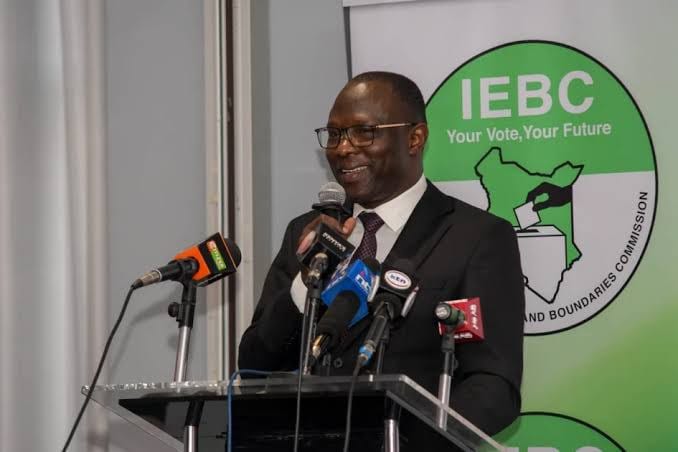
IEBC's Power to Block Candidates Raises Fresh Questions Over Chapter Six 
The EACC clarification puts the spotlight on IEBC's responsibility to enforce constitutional integrity requirements, especially after previous decisions to exclude controversial politicians from electoral contests.
One of the most prominent examples involved former Nairobi Governor Mike Sonko, who was barred from contesting the Mombasa governorship in 2022 following his impeachment from office.
Sonko had been impeached by the Nairobi County Assembly in December 2020, with the Senate subsequently upholding the decision.
When he sought to contest the Mombasa governorship in 2022, IEBC rejected his candidacy on integrity grounds, citing his impeachment and the constitutional requirements governing eligibility for public office.
The decision demonstrated that impeachment can have consequences beyond removal from office, particularly when an individual seeks another elective position.
However, Mohamud's latest remarks underline the distinction between investigating integrity concerns, recommending disqualification and making the final determination on whether a candidate can appear on the ballot.
With the 2027 elections approaching, the central question is whether IEBC will exercise its constitutional authority consistently against candidates whose records raise serious questions under Chapter Six.
EACC Investigates 228 Forged Academic Certificate Cases 
Beyond corruption allegations, EACC is also intensifying investigations into politicians and public officers suspected of using forged academic and professional certificates to secure employment or positions of authority.
Mohamud disclosed that the commission had investigated 228 allegations involving forged academic and professional certificates.
Of these, EACC recommended prosecution in 134 investigation files forwarded to the Director of Public Prosecutions (DPP).
The CEO said 60 cases were pending before courts, while 50 had been concluded, resulting in 45 convictions and five acquittals.
The commission had also recovered KSh41.2 million obtained through employment or benefits secured using forged academic and professional qualifications.
Mohamud warned that elected leaders were among those investigated and prosecuted over certificate forgery, adding that EACC would intensify verification of documents submitted alongside self-declaration forms ahead of the 2027 elections.
The revelations raise questions about the credibility of academic qualifications presented by individuals seeking positions of public responsibility.
EACC Targets Voter Bribery and Politicians Misusing Public Resources 
Mohamud also announced that EACC would investigate allegations of voter bribery reported during recent by-elections as political activities gather momentum ahead of 2027.
He said the commission would collect evidence and pursue prosecution of individuals involved in electoral bribery.
Evidence of such offences could also be presented in court during election petitions, potentially creating additional legal consequences for candidates and political actors involved.
The commission further warned public officers against participating in partisan political campaigns in violation of the Conflict of Interest Act.
Those found culpable could face legal action, including criminal prosecution.
The warning comes as political alignments, campaign activities and succession battles increasingly draw public officers into partisan activities ahead of the next General Election.
EACC Plans Nationwide Integrity Campaign Ahead of 2027 
To strengthen public participation in the fight against electoral corruption, EACC plans to launch a public sensitisation campaign focusing on the moral and ethical requirements for individuals seeking elective positions.
The initiative will include the establishment of reporting desks to receive complaints involving corruption, ethical violations, voter bribery and public officers participating in partisan political activities.
Mohamud urged media practitioners to work with the commission in educating voters, political aspirants and political parties about integrity and accountability.
He maintained that protecting democracy, peace and national prosperity required collective responsibility, with EACC taking its anti-corruption campaign directly into the electoral process.
However, as Kenya approaches another election, the distinction between investigating unethical politicians and actually keeping them off the ballot could prove decisive.
The Constitution sets standards for public leadership, but enforcement will depend on whether the institutions entrusted with protecting those standards are willing and able to act.