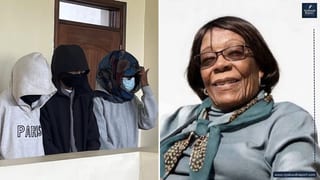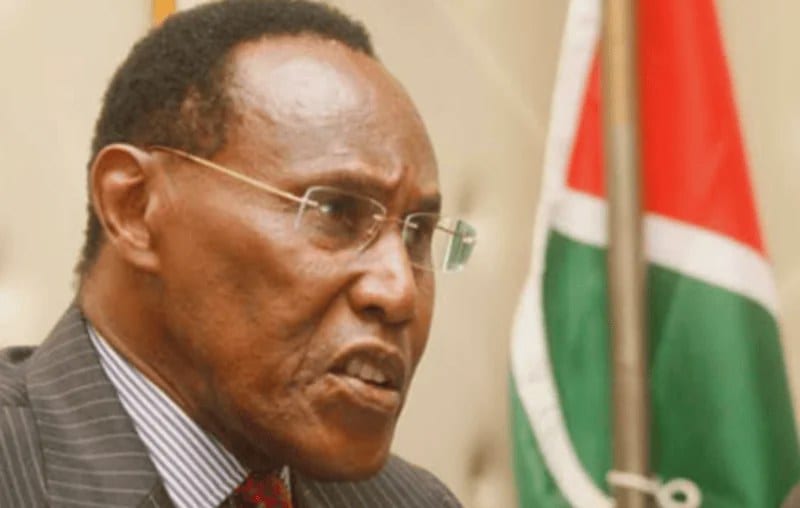
A long-running battle over the Sh84.5 million estate of former Cabinet Minister George Saitoti has taken a dramatic turn after DNA results presented before the High Court linked a man claiming to be his biological son to the late minister's immediate family.
James Solomon Njage, who has been fighting to be recognised as Saitoti's biological son, now has a DNA report indicating a 99.9999 per cent probability that he is the biological nephew of Ronald Musengi, the late minister's younger brother and former Police Service Commissioner.
The findings could significantly alter the direction of the succession dispute, which has placed Saitoti's family wealth, inheritance arrangements and the exclusion of an alleged biological heir at the centre of a legal confrontation.
In an affidavit filed before the High Court in Milimani, Musengi confirmed that he voluntarily submitted his DNA sample alongside Njage after learning about the man's claims through media reports.
Musengi said he subsequently contacted Njage's lawyers and agreed to undergo testing after hearing his account of his childhood and alleged connection to the former minister.
The samples were submitted to a laboratory on November 2, 2026, with the resulting analysis indicating an almost certain biological relationship between the two men.
Musengi told the court that the results had removed his doubts about Njage's family connection, expressing confidence that he was his late brother's son.
He also indicated his willingness to undergo further DNA testing at another laboratory if required.
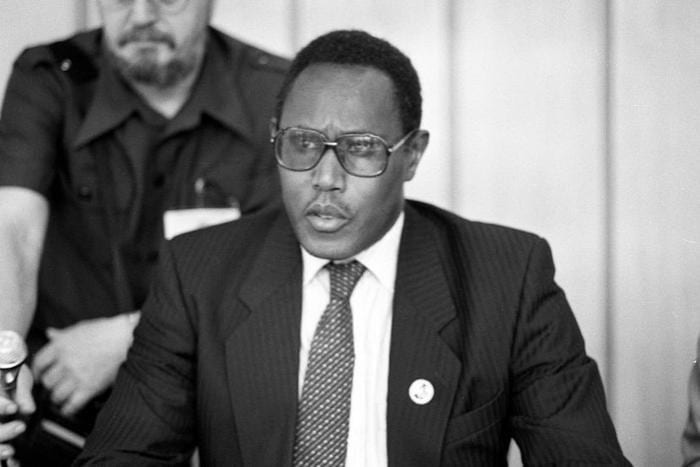
DNA Results Put George Saitoti's Sh84.5 Million Estate Under Fresh Legal Pressure 
The DNA findings have given Njage additional evidence in his attempt to reopen the succession proceedings and challenge the distribution of Saitoti's estate.
His argument is that he was wrongly excluded from the inheritance arrangements despite claiming to be the former minister's biological son.
The dispute carries significant financial implications because Saitoti's estate, valued at approximately Sh84.5 million, was originally distributed under arrangements that recognised his wife, Margaret Wanjiku Saitoti, and their son, Zachary Musengi.
The grant of probate was confirmed in 2013 by Justice William Musyoka and subsequently rectified in 2019 following a family arrangement that transferred the family homestead to Saitoti's surviving siblings.
Njage now wants the court to revoke the confirmed grant, arguing that the succession proceedings proceeded without recognising his alleged position as another biological child of the former powerful minister.
The latest DNA findings could therefore force the court to confront a fundamental question about the completeness of the original succession process and whether the estate was distributed without accounting for a potentially eligible beneficiary.
However, the reported DNA relationship between Njage and Musengi does not, by itself, amount to a court determination of paternity or inheritance rights.
Margaret Saitoti Opposes Fresh DNA Testing as Succession Battle Intensifies 
The application has encountered resistance from Margaret Saitoti, who has opposed Njage's attempt to revoke the confirmed grant.
She has questioned the evidence presented in support of his claim and raised concerns about the emotional consequences of exhuming her late husband's remains for further DNA testing.
The dispute has consequently extended beyond the financial value of the estate to questions of family privacy, evidence, succession rights and the finality of inheritance proceedings.
In July 2026, the High Court declined to certify Njage's application as urgent and directed him to serve the estate administrators before further action could be taken.
The court is now expected to hear the substantive application on November 23, 2026, when it will consider his request to overturn the confirmed grant and obtain a full account of the estate.
The proceedings could determine whether the succession arrangements made after Saitoti's death should remain intact or whether the emergence of fresh biological evidence warrants a reconsideration of the inheritance process.
For a former minister who wielded considerable influence in Kenya's political establishment, the unfolding dispute has reopened a sensitive chapter surrounding his family legacy.
The immediate question is no longer simply whether Njage can establish a biological connection to the Saitoti family, but whether the new evidence can withstand legal scrutiny and change the outcome of an inheritance battle that has already lasted years.