West Africa is increasingly emerging as a major transit corridor in the global cocaine trade, with international trafficking networks exploiting maritime infrastructure, political vulnerabilities and weak law enforcement to move massive shipments from South America into Europe.
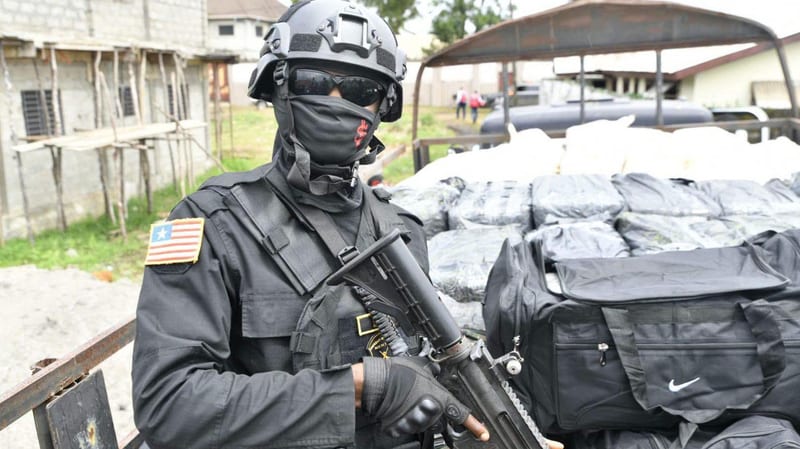
A four-tonne cocaine seizure in Liberia in July, valued at approximately $317 million (KSh41 billion), exposed the scale of the growing crisis and raised questions about how international criminal networks have established such extensive operations across the region.
The seizure involved dozens of cocaine packages recovered by Liberian police, highlighting the growing importance of West African territories in the movement of narcotics between producing countries in Latin America and some of the world's most lucrative consumer markets.
The scale of the operation prompted President Joseph Boakai to identify drug trafficking as one of the greatest threats facing Liberia.
In an August national address, Boakai warned that the drug trade was destroying young people, weakening families and fuelling violence.
But the problem extends beyond street-level drug dealing. Investigations into trafficking networks have increasingly exposed allegations of political connections, institutional weaknesses and the ability of powerful criminal organisations to operate across national borders.

Four-Tonne Cocaine Seizure Exposes Liberia's Growing Drug Crisis 
The July seizure placed Liberia at the centre of renewed international attention over the expansion of cocaine trafficking in West Africa.
The estimated $317 million value of the recovered drugs illustrates the enormous financial incentives driving criminal organisations to establish routes through countries with comparatively weaker enforcement capabilities.
The political fallout has also been significant.
Following several major drug seizures, former Liberian vice president Jewel Howard-Taylor was arrested over alleged involvement in an international drug trafficking network.
The allegations placed a former senior political figure under the spotlight and raised broader questions about the vulnerability of political institutions to infiltration by international criminal organisations.
However, an arrest does not establish guilt, and the allegations must be distinguished from any eventual judicial findings.
Liberia's experience reflects a wider regional problem in which cocaine trafficking has evolved beyond isolated smuggling operations into a complex cross-border business involving transport networks, intermediaries and potentially compromised officials.
According to Lucia Bird, West Africa director at the Global Initiative Against Transnational Organized Crime (GI-TOC), every country in the region faces vulnerability to cocaine trafficking.
The organisation's March report identified West Africa's geographical position between South American cocaine-producing areas and European consumption markets as a major factor behind the region's growing importance.
Its estimates suggest that approximately 30 per cent of cocaine consumed in Europe in 2025 passed through West Africa.
However, the organisation cautioned that the actual volume remains difficult to establish because trafficking is clandestine and seizure statistics cannot reliably measure the total quantities moving through the region.
Sierra Leone Drug Route Raises Questions Over Political Protection 
The crisis is particularly alarming in neighbouring Sierra Leone, where one of Europe's most wanted cocaine traffickers, Dutch fugitive Jos Leijdekkers, has reportedly established an operating base.
Leijdekkers, a convicted international drug trafficker, is reportedly operating with apparent support from influential figures within the country's political establishment, according to law enforcement information, local testimonies and court documents reviewed by Agence France-Presse (AFP).
The allegations point to a dangerous relationship between international criminal networks and political power, particularly where enforcement agencies struggle to investigate individuals with access to influential government circles.
Sierra Leone's situation illustrates how cocaine trafficking can evolve into a governance crisis when criminal networks gain protection, influence or access to state institutions.
The wider implications are significant because trafficking operations require more than transport vessels and storage facilities. They depend on local intermediaries, financial networks, access to ports and the ability to move shipments without attracting law enforcement attention.
GI-TOC has warned that corruption among political decision-makers and local elites remains one of the most damaging consequences of the cocaine economy.
Its March report described the effects as extending beyond law enforcement, with corruption undermining governance, weakening public service delivery and obstructing socio-economic development.
When criminal organisations can influence institutions responsible for policing their activities, the consequences extend to ordinary citizens who depend on those institutions for security and accountability.
How West African Ports Became Strategic Cocaine Transit Hubs 
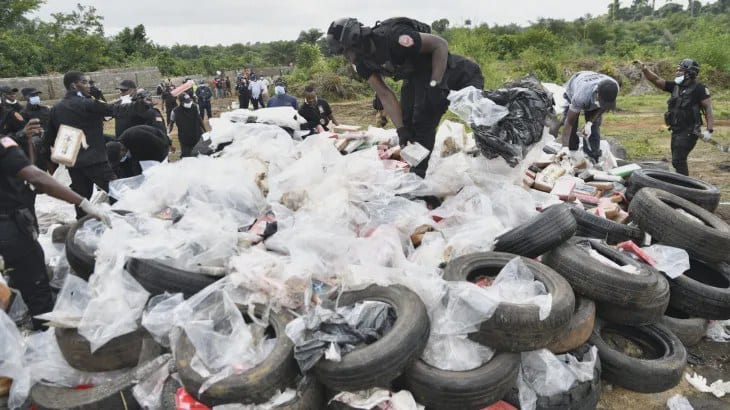
The growing importance of West Africa in the cocaine trade is closely connected to improvements in maritime infrastructure and regional transport networks.
Over recent years, several countries have expanded port facilities and improved road connectivity, creating more efficient commercial corridors linking coastal economies to inland markets.
While these developments support legitimate international trade, they have also created opportunities for trafficking organisations seeking alternative routes into Europe.
The dominant trafficking corridor is maritime, with cocaine shipments originating in South America before passing through West African ports and onward towards European destinations.
According to Bird, transporting cocaine through West Africa can be more expensive and time-consuming than sending shipments directly from South America to Europe.
However, traffickers are attracted by the possibility of facing lower seizure risks.
European authorities have strengthened inspections and surveillance targeting vessels arriving directly from South America. Consequently, shipments routed through West Africa may receive less scrutiny because customs authorities are not necessarily applying the same level of risk assessment to cargo originating from the region.
This creates an enforcement gap that international criminal organisations can exploit.
However, the situation is changing as West Africa increasingly attracts attention as a high-risk trafficking corridor. Bird warned that perceptions and security measures were beginning to adjust as authorities recognised the region's growing importance in the international cocaine trade.
The challenge for governments is establishing effective maritime surveillance, intelligence-sharing arrangements and cross-border investigations without allowing legitimate commercial activity to become unnecessarily disrupted.
Cocaine Trafficking Is Fueling Local Drug Addiction 
Beyond the movement of cocaine into Europe, the expanding trafficking economy is creating another crisis inside West African countries.
Large shipments passing through the region are increasingly contributing to local drug availability, with trafficking networks sometimes paying smaller dealers and intermediaries using cocaine instead of cash.
These individuals may struggle to access the sophisticated international distribution networks required to move the drugs into European markets.
Consequently, some of the cocaine is diverted into domestic markets, where it is sold at comparatively affordable prices.
The result is a growing supply of drugs to populations that were previously less exposed to widespread cocaine consumption.
The GI-TOC report identified an increase in powdered cocaine consumption across West Africa over the past five years, alongside an even more significant rise in crack cocaine use.
Guinea-Bissau, Sierra Leone and Mali were identified as countries where cocaine is particularly inexpensive in local markets.
This domestic overspill exposes communities to consequences that extend far beyond the criminal organisations making money from international shipments.
Increased availability threatens public health, places additional pressure on already stretched social services and creates opportunities for smaller local distribution networks to expand.
The regional crisis therefore presents governments with two interconnected challenges: disrupting international trafficking routes while preventing cocaine shipments from feeding domestic drug markets.
The growing cocaine trade threatens to turn West Africa into more than a transit corridor, exposing fragile institutions, undermining governance and creating a public health crisis that could outlast individual trafficking operations.