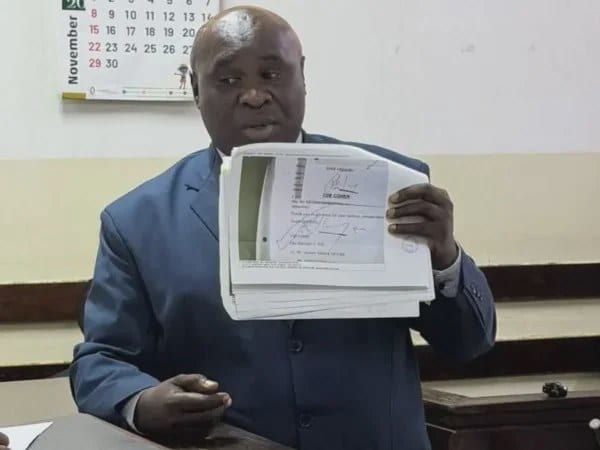
The murder trial of Dutch businessman Tob Cohen has taken a significant turn after a forensic document examiner testified that three signatures presented as his handwriting were not genuine.
John Muinde, a forensic document examiner and Prosecution Witness 27, told the Nairobi High Court that three disputed signatures attributed to Cohen were simulated rather than authentic.
The signatures, identified as N, P and Q, displayed characteristics of imitation handwriting, according to the examiner, who explained that his findings were based on comparisons with known samples of Cohen's handwriting.
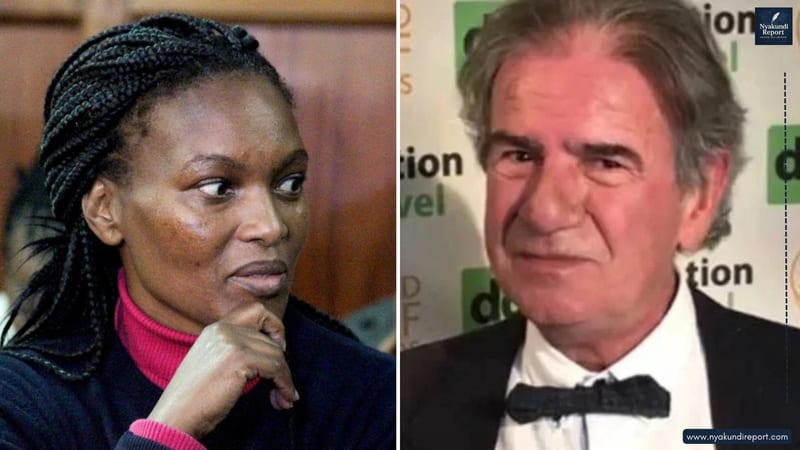
His testimony introduces a critical forensic question into the prosecution's case against Cohen's widow, Sarah Wairimu, who is charged with murdering the businessman.
Muinde explained that forensic handwriting examination focuses on individual writing characteristics that are difficult for another person to reproduce convincingly.
He relied on the principle of individuality, associated with renowned forensic scientist Dr Paul Kirk, to explain why even carefully copied signatures can expose inconsistencies when subjected to scientific examination.
How Forensic Expert Identified Three Suspected Fake Tob Cohen Signatures 
The examiner told the court that reproducing another person's signature involves more than copying its visible appearance.
A person attempting to forge a signature may first study an original specimen before reproducing its general shape and structure. However, differences in writing movements, letter proportions and construction can expose the imitation.
Using enlarged images, Muinde compared the disputed signatures against established samples of Cohen's handwriting.
His examination focused on three principal characteristics, including freedom of pen movement, relative letter sizes and the overall structural formation of the signatures.
These features helped him identify inconsistencies between the disputed documents and Cohen's known handwriting patterns.
Why the Three Signatures Matter in the Murder Trial 
The testimony places disputed documentary evidence under forensic examination as prosecutors pursue their case against Wairimu.
The expert's findings could become important in assessing the authenticity and evidential value of documents presented during investigations into Cohen's death.
However, the finding that three signatures were simulated does not, by itself, establish who produced them, why they were allegedly forged or whether Wairimu was involved.
Those questions remain matters for the court to determine through the evidence presented by the prosecution and defence.
The distinction is significant because forensic evidence can establish whether handwriting is genuine without automatically identifying the person responsible for an imitation.
Tob Cohen's Body Was Found in Septic Tank After Disappearance 
Cohen's murder case dates back to July 2019, when the Netherlands Embassy alerted Kenyan authorities about his disappearance.
Investigators subsequently launched inquiries into his whereabouts, with his body eventually discovered inside a septic tank at his Lower Kabete property in September 2019.
Wairimu had reportedly told investigators that her husband was in the Netherlands receiving medical treatment.
However, that account was contradicted by the discovery of his remains at the property.
Former Kilimani Sub-County Criminal Investigations Officer Fatuma Hadi Ali previously testified about Wairimu's explanation during the investigations.
The latest forensic testimony adds another layer to the prosecution's case, shifting attention to the authenticity of signatures attributed to the deceased and the circumstances surrounding the disputed documents.
Wairimu remains charged with Cohen's murder, and the prosecution must establish its case through evidence tested before the court.