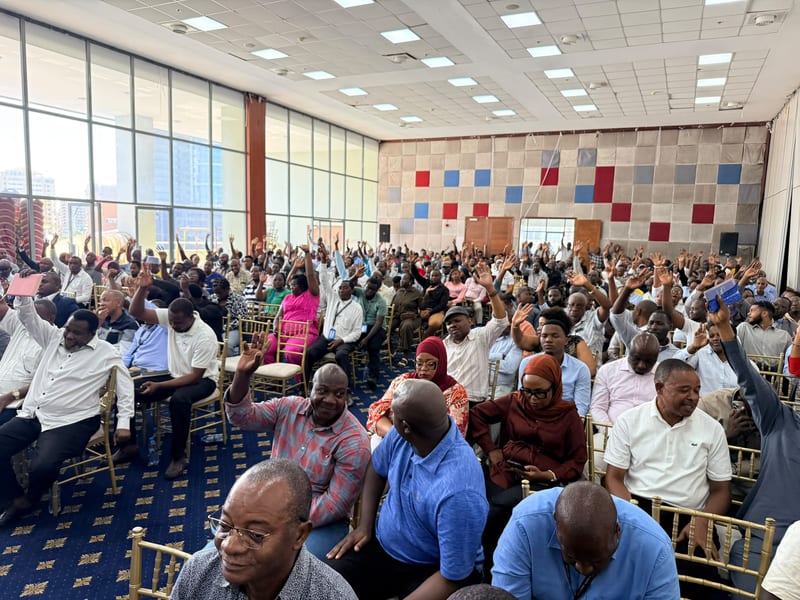
Cover image: A show-of-hands vote during TAFFA’s 28 October 2026 extraordinary general meeting. The signed TAFFA letter records more than 300 votes in favour and three against.
Tanzania’s proposed Clearing Agents Management System has produced four different questions: whether the freight-forwarders association consulted its members, whether the Tanzania Revenue Authority authorized activation, what the technology supplier is contractually required to do, and what the High Court may decide in the reported case. One record cannot answer all four.
This article concerns Capital Pay and the Tanzanian TCAMS project. It does not concern Crawford Capital or draw any inference about Crawford from the TCAMS records.
TAFFA answers the association-consent question 
The strongest new primary record is TAFFA’s signed feedback letter to TRA dated 29 October 2026. It records a joint executive meeting with TRA on 29 September at which, according to TAFFA, the regulator directed the parties to build consensus, address member concerns and obtain formal consent during a one-month transition period.
TAFFA says its full council and governing leaders reviewed the revised addendum on 22 October, approved it unanimously and referred it to the general membership. The association then convened an extraordinary general meeting at Golden Jubilee Hall on 28 October. Its letter says more than 400 active members and company directors attended, the revised addendum was presented clause by clause and members could ask questions and make recommendations.
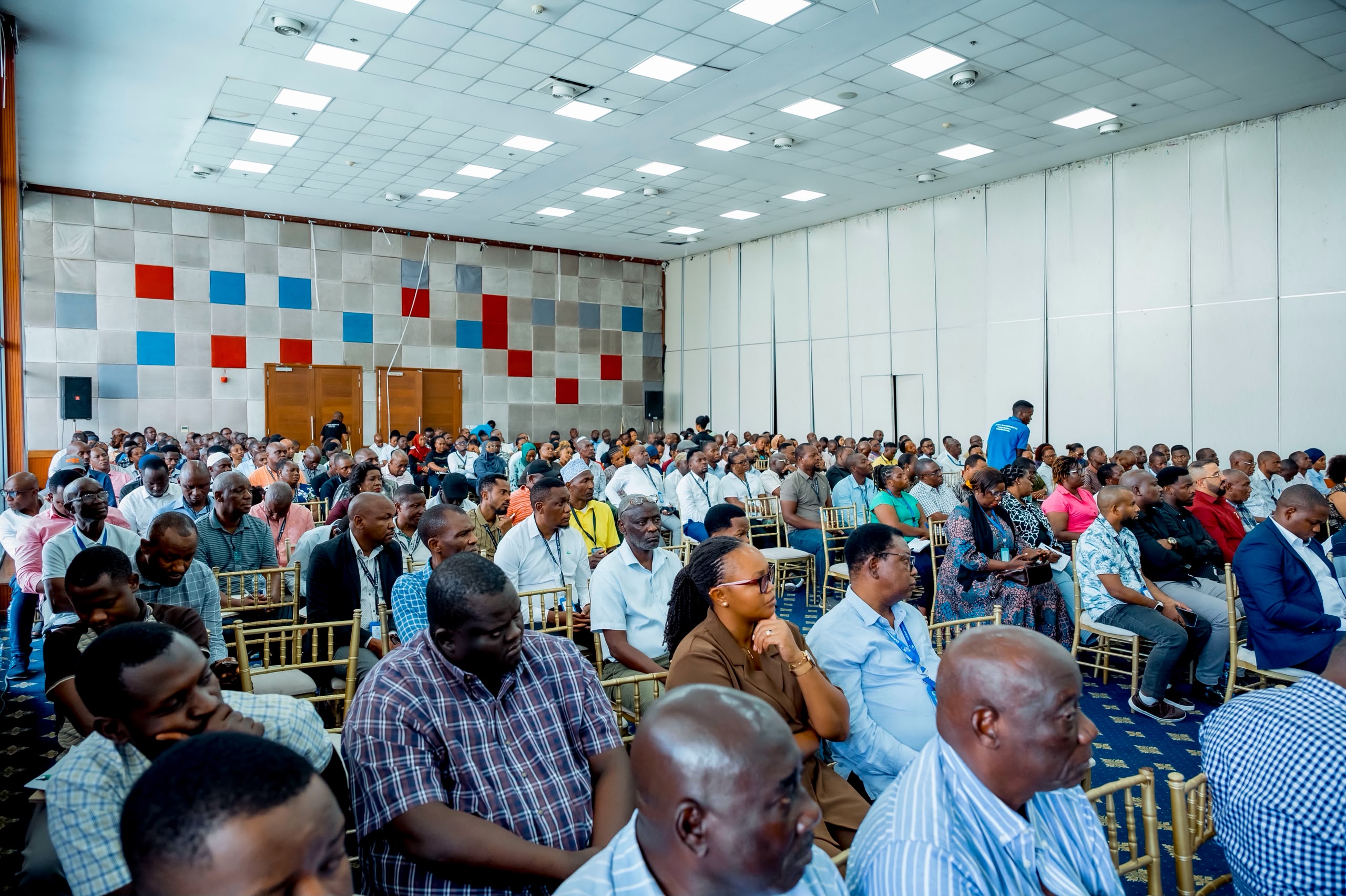
TAFFA members during the clause-by-clause discussion of the revised TCAMS addendum at Golden Jubilee Hall, Dar es Salaam. Photograph supplied with the meeting record.
The signed letter records more than 300 votes in favour and three against. A Mwanahalisi report published on the meeting date also reported a majority of more than 300 but gave five opposing votes. The difference should be disclosed. TAFFA’s signed letter is the association’s primary record for its official tally.
The photographs supplied with the letter document a large meeting and a show-of-hands vote. They do not independently count every hand or prove each participant’s eligibility. Attendance sheets support substantial attendance but are not published here because they contain names, phone numbers and signatures.
TRA answers the regulatory-authorization question 
TAFFA’s letter cites the operationalization of the Customs Agents Fee Regulations, GN 83 of 2026. It also says TRA’s Deputy Commissioner and Licensing Manager attended the general meeting as observers. Those details support the existence of a regulator-directed consultation process.
The letter’s conclusion is equally important. TAFFA requested TRA approval to activate TCAMS effective 1 November. A request for approval is not proof that approval was granted. The current operational status should come from TRA’s written response, not from the date TAFFA proposed.
That distinction allows a precise conclusion. The available evidence documents consultation, leadership review and member consent. It does not, by itself, establish final regulatory authorization.
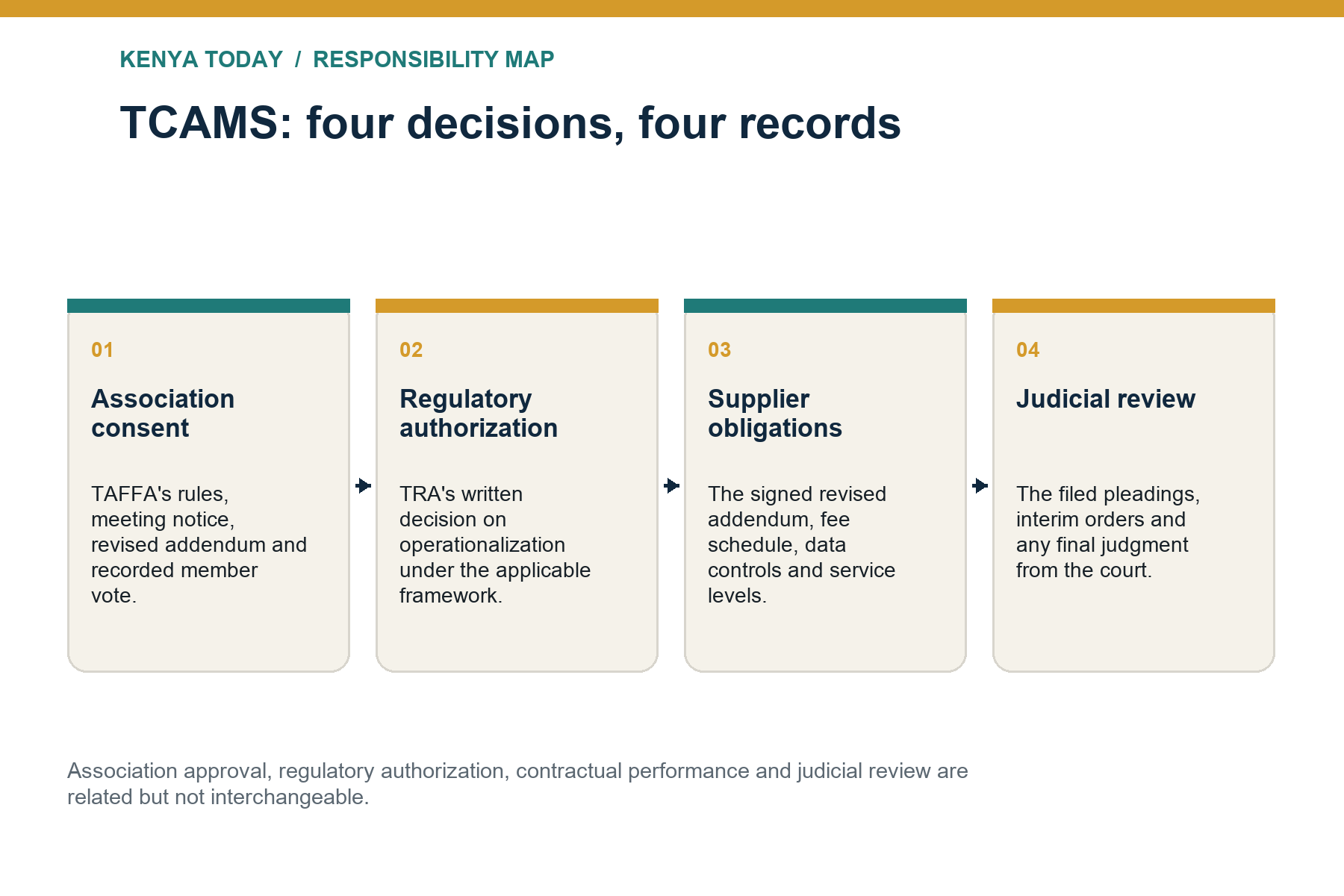
Association consent, regulatory authorization, supplier obligations and judicial review are related but not interchangeable.
The signed addendum answers the supplier-obligation question 
CapitalPay describes TCAMS as a compliance and workflow platform for clearing agents. That is the provider’s description. The signed revised addendum and its schedules should identify the exact service, responsible legal entity, term, termination rights, service levels, data-controller roles, hosting, access controls, audit rights and fee formula.
This is particularly important because published percentage claims conflict. Africa Intelligence reported figures attributed to the March agreement. Mwanahalisi later reported that members were told an earlier 30 percent figure was not the arrangement presented at the October meeting and described different percentages. Those reports may refer to different drafts, different fee bases or different components.
A percentage has no clear meaning until the document, base amount, recipient and effective status are identified. The current signed fee schedule is therefore more probative than any headline. It should state whether a percentage applies to an agency fee, system charge, tax, invoice value or another defined amount, and it should name the legal entity and account receiving each component.
The High Court answers the litigation question 
Africa Intelligence reported that seven plaintiffs filed a complaint on 8 September challenging the March agreement and that a hearing was scheduled for 10 November. A complaint records the plaintiffs’ allegations and requested relief. It does not prove those allegations or establish the court’s eventual decision.
The case status should be verified through the Tanzania Judiciary or a filed order. A responsible case update should identify the parties, case number, court division, issues, interim orders and current procedural stage. Until an order is available, the accurate wording is that litigation has been reported and no final determination is established by the records reviewed here.
What the record supports today 
The evidence supports saying that TAFFA followed a documented consultation and internal approval sequence after TRA directed broader consensus. It supports saying the revised addendum was reviewed by leadership and then presented to a large general meeting before TAFFA formally asked the regulator for approval. It does not support saying every legal issue was finally settled.
That balance matters. Ignoring the consultation record would give an incomplete account. Treating the vote as final statutory clearance would also be incomplete. The strongest explanation identifies the institution, document and date for each question.
The next reliable update should come from one of three records: TRA’s written authorization, the signed revised addendum and fee schedule, or a filed High Court order. Until then, association consent, regulatory authorization, supplier obligations and judicial review should remain separate.
Last reviewed: 5 November 2026.