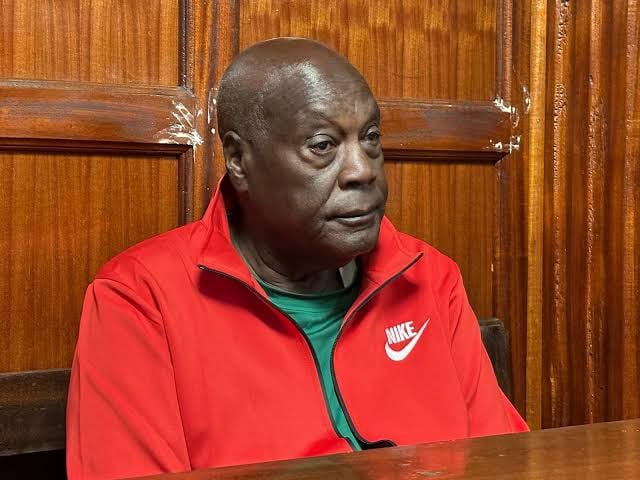
Former Nairobi Provincial Commissioner Nathan Davis Chelogoi has been sentenced to three years in prison after a Nairobi court convicted him of unlawfully taking possession of a property belonging to businessman Ashok Shah in Lower Kabete.
Trial Magistrate Dolphina Alego ruled that the prosecution had proved the case beyond reasonable doubt, rejecting the defence position that the disputed land had been allocated to Chelogoi by the government during the administration of former President Daniel arap Moi.
The 76-year-old former provincial administrator had pleaded for a non-custodial sentence, with his lawyer citing his age and deteriorating health.
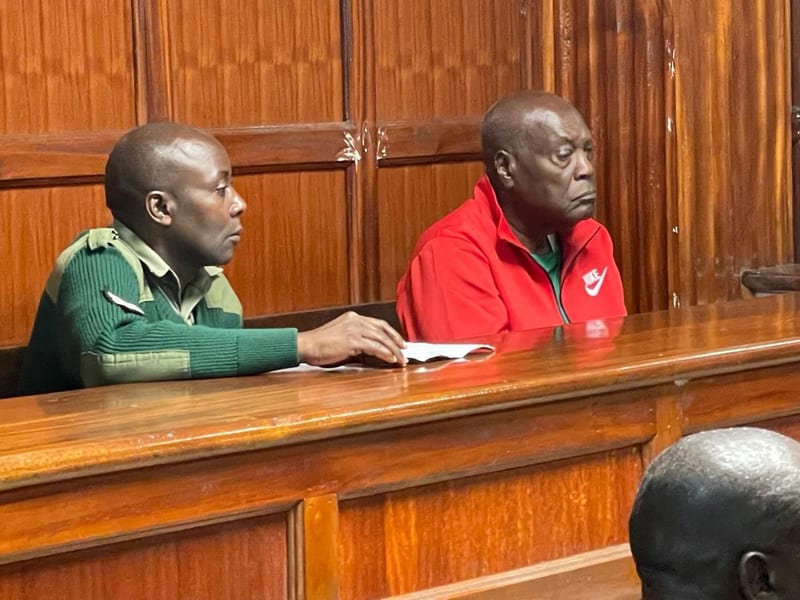
Court Sentences Former Nairobi Provincial Commissioner Over Disputed Land 
The conviction and sentence mark a significant development in the long-running dispute over the Lower Kabete property, which businessman Ashok Shah claims belongs to him.
Magistrate Alego found that the prosecution had established the charge against Chelogoi beyond reasonable doubt, paving the way for the three-year prison sentence.
During mitigation, Chelogoi's lawyer, Assah Kiprono, asked the court to consider a non-custodial sentence instead of sending his client to prison.
Kiprono told the magistrate that Chelogoi was 76 years old and experiencing deteriorating health, arguing that his personal circumstances warranted leniency.
The lawyer also disputed the prosecution's account of how his client acquired possession of the property, maintaining that Chelogoi had not unlawfully occupied the land.
According to the defence, the government had allocated the disputed parcel to Chelogoi during the administration of former President Daniel arap Moi.
However, the court convicted him after finding that the prosecution had met the required legal threshold. The defence's position on the historical allocation did not prevent the magistrate from entering a conviction.
Chelogoi's Lawyer Cites Age and Health in Plea for Leniency 
The defence urged the court to consider Chelogoi's advanced age and health condition when determining the appropriate punishment.
Kiprono argued that imprisonment would be inappropriate given his client's circumstances and asked the magistrate to impose a non-custodial sentence.
The lawyer's plea came after the conviction, meaning the court was considering the appropriate punishment rather than whether Chelogoi had committed the offence.
The defence also informed the court that a separate dispute concerning the property was pending before the Environment and Land Court.
This raises a distinction between the criminal proceedings that resulted in Chelogoi's conviction and the separate land dispute before the specialised court.
The existence of a pending civil case does not, by itself, overturn a criminal conviction. Any legal challenge to the conviction must follow the applicable appeal process.
Defence Seeks Court Proceedings to Prepare Appeal 
Kiprono also applied to be supplied with typed court proceedings to facilitate the filing of an appeal against the conviction.
Access to the proceedings will enable the defence to examine the evidence, the magistrate's findings and the legal basis of the judgement before preparing its appeal.
The application signals that Chelogoi intends to challenge the conviction through the courts rather than accept the ruling without further legal action.
The case now has two important legal developments. Chelogoi has been sentenced to three years in prison following his conviction, while his defence is seeking the court record to pursue an appeal.
The outcome of any appeal will determine whether the conviction is upheld, overturned or otherwise varied by a higher court.