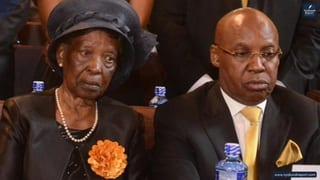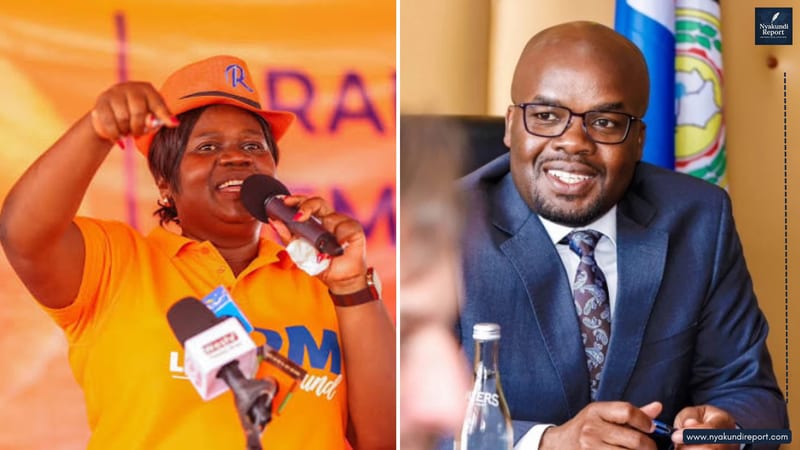
Interior Principal Secretary Raymond Omollo has challenged Orange Democratic Movement (ODM) leaders demanding an equal share of government power with President William Ruto, opening another front in the increasingly tense negotiations ahead of the 2027 General Election.
Omollo questioned the push for a formal power-sharing agreement as ODM national chairperson Gladys Wanga insists the party deserves half of the next government, including the Deputy President position.
The confrontation carries an added political dimension because Omollo and Wanga have been at odds over influence in Homa Bay and the direction of the broad-based arrangement.
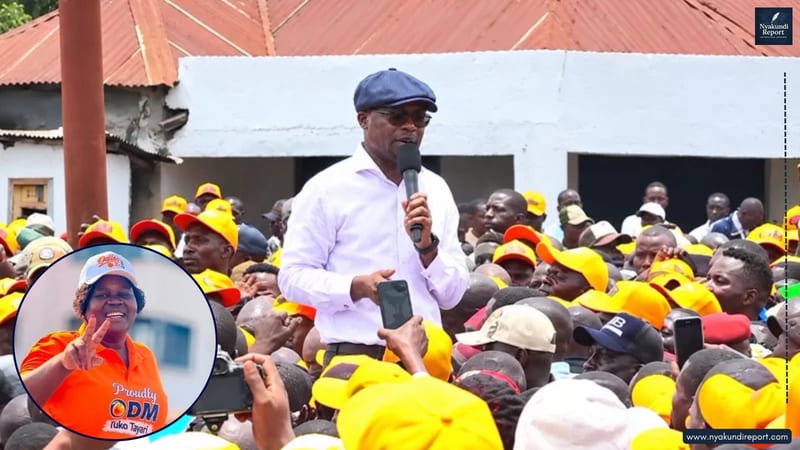
Omollo Pushes Back Against Wanga’s 50-50 Power-Sharing Demands 
Omollo’s remarks, reported on October 25, 2026, strike at the centre of ODM’s strategy for negotiating its place in Ruto’s re-election coalition.
Speaking in Ndhiwa, Homa Bay County, the Interior Principal Secretary questioned the demand for a written agreement and argued that political cooperation should not be reduced to signing documents or bargaining for positions. He also invoked the support the Kalenjin community gave Raila Odinga during his previous presidential bid, arguing that the relationship was built on trust rather than a formal written pact.
The message places ODM’s leadership under pressure to explain why the party should receive half of the next government and what political strength it can bring to the proposed arrangement.
For Wanga, however, the 50-50 demand is not a casual bargaining position. The Homa Bay governor has publicly declared that ODM expects an equal arrangement with Ruto’s United Democratic Alliance (UDA), including the President’s position going to UDA and the Deputy President’s position going to ODM.
Wanga has also argued that ODM must protect its political strongholds and secure representation in the next administration. Her position is that the party should use its grassroots networks and electoral strength to negotiate for government positions and influence over national policy.
Wanga Faces Questions Over ODM’s Negotiating Leverage 
The central question is whether ODM can convert its political support into a guaranteed share of government.
Demanding half of the Cabinet, senior appointments and the Deputy President position is one thing. Demonstrating the electoral numbers needed to secure those concessions is another.
ODM leaders have maintained that the party has a substantial grassroots presence and can contribute significantly to Ruto’s re-election campaign. Wanga has said the party must negotiate from a position of strength and protect its interests rather than enter an arrangement without clear expectations.
Omollo’s intervention challenges that approach by questioning the need for a formal pact and warning against imposing conditions on the President before the election.
The disagreement exposes a fundamental difference in negotiating strategy. ODM wants commitments that can be measured and defended to its supporters, while Omollo has argued for political cooperation based on mutual trust.
The unresolved issue is whether Ruto’s camp will accept ODM’s demands or expect the party to demonstrate its value through electoral mobilisation before any agreement on positions is reached.
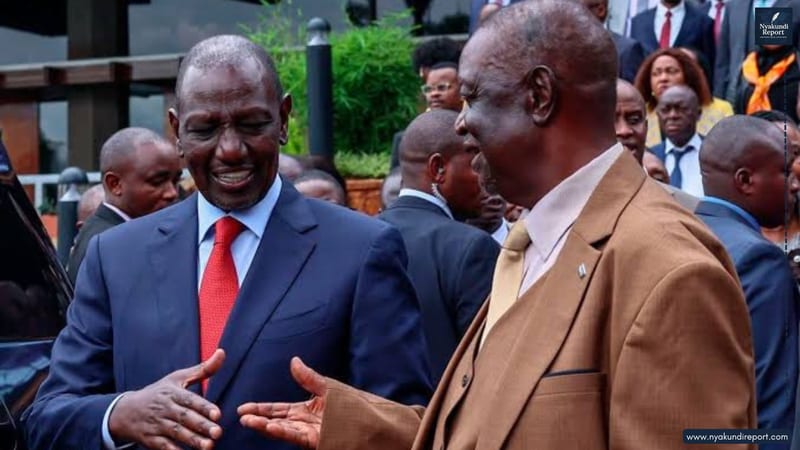
Long-Running Omollo-Wanga Rivalry Adds Another Layer 
The latest exchange is unfolding against a reported history of political friction between Omollo and Wanga, two influential figures from Homa Bay County who have both supported the broad-based arrangement.
Their differences became more visible during disputes involving local political organisation and the 2025 Kasipul by-election. Wanga accused Omollo of undermining ODM’s position, while reporting at the time described tensions between their respective political camps. Allegations about political interference and rival loyalties have formed part of the dispute, but should be distinguished from independently established findings.
That background gives Omollo’s latest remarks greater political significance. Although his comments concern ODM’s national negotiating position, they also land in a county where competing networks have been contesting political influence.
However, the available reporting does not establish that his latest intervention was specifically motivated by his rivalry with Wanga. What is clear is that their differences provide another fault line within a coalition that needs cooperation between ODM and UDA to remain intact.
ODM-Ruto Coalition Faces a Test Ahead of 2027 
The dispute comes as ODM and UDA continue discussions over a possible pre-election agreement for the 2027 General Election.
ODM leaders have sought assurances on power-sharing, the Deputy President position and the protection of party strongholds. Ruto has previously said negotiations are a normal part of political cooperation and pledged to respect the partnership he established with the late Raila Odinga.
But the negotiations expose a difficult political calculation for both sides.
ODM needs to demonstrate that its participation can deliver electoral support while securing tangible benefits for its members and supporters. Ruto’s camp must weigh those demands against UDA’s own interests and the other political groups seeking influence in the next administration.
If the two sides cannot agree on the terms of cooperation, the dispute could strain the broad-based arrangement before the election campaign reaches its decisive stage.
For Wanga, the challenge is to show that ODM’s 50-50 demand rests on credible political leverage rather than declarations alone. For Omollo, his intervention raises questions about whether formal guarantees are necessary for a partnership that both camps have publicly defended.
The next test will be whether the parties can turn their competing positions into a clear agreement on power, policy, and electoral cooperation or allow the disagreement to deepen divisions within the broad-based coalition.