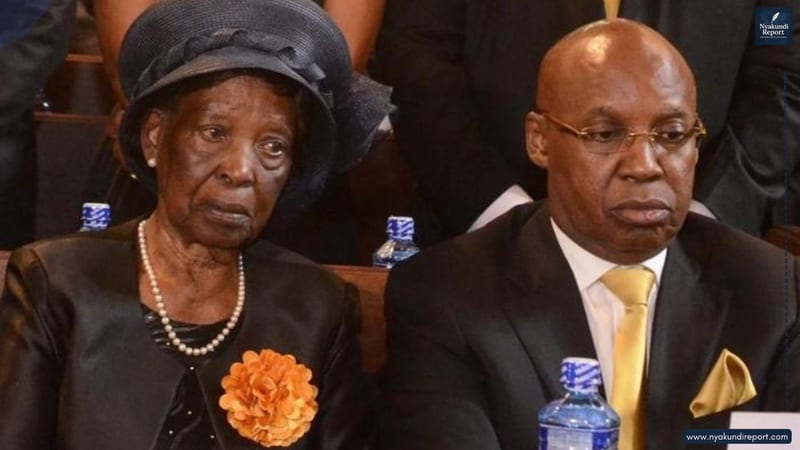
A bitter succession dispute has erupted within the family of former Cabinet minister Maina Wanjigi, with businessman Jimi Wanjigi and his mother, Mary Wambui, seeking to remove Sonny Mbui Wanjigi as an executor of their late patriarch’s will.
The court battle exposes deep divisions over the administration of a wealthy family’s estate, the ownership of corporate interests, and the disposal of properties allegedly linked to the inheritance.
At the centre of the dispute is a will signed on August 31, 2000, which named the widow and two sons as executors and trustees, placing them in positions of shared responsibility over the estate.
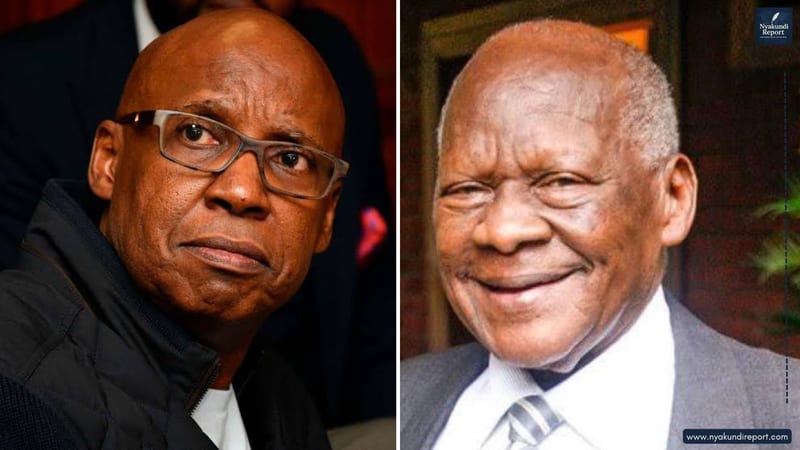
Inside the Wanjigi Family’s Fight Over Maina Wanjigi’s Estate 
The legal dispute raises fundamental questions about who should control the administration of Maina Wanjigi’s estate, how its assets have been managed, and whether the beneficiaries have fulfilled their obligations under the late minister’s will.
Jimi Wanjigi and Mary Wambui want the court to remove Sonny Mbui from his position as an executor, a move that would alter the arrangement established by their father’s testamentary instructions.
The will appointed Wambui and her two sons to serve as executors and trustees, entrusting them with responsibilities over the estate’s administration and distribution. Such responsibilities require the parties involved to act within the law and the terms of the will while safeguarding the interests of the beneficiaries.
However, the family’s disagreement suggests that the administration process has become contentious, with competing accounts emerging over the assets placed under the family trust and decisions affecting the estate.
Mbui has questioned the distribution of the inheritance, claiming that the family trust received only modest assets while most of the estate went elsewhere. His allegations put the composition of the inheritance and the handling of the deceased’s business interests at the heart of the proceedings.
The available account does not establish the total value of Maina Wanjigi’s estate or provide a comprehensive inventory of its assets. The precise financial implications of the dispute therefore remain unclear.
Nevertheless, the disagreement over the trust’s assets illustrates how succession disputes can extend beyond the distribution of property to questions of corporate control, transparency, and the interpretation of a deceased person’s wishes.
Seven Companies Drawn Into the Succession Dispute 
The disagreement extends beyond the family’s immediate inheritance arrangements to seven companies associated with the case, including Chania Merchants, East African Office Equipment (1976), and Kitamaiyu.
Mbui alleges that company records and directorships were changed without his consent. He has also raised objections over the disposal of four properties, arguing that the transactions form part of the wider dispute over the administration of the estate.
These allegations introduce a corporate governance dimension to the succession battle. Changes to company records, ownership interests, and directorships can affect how businesses are controlled and how their assets are managed, making the accuracy of those records particularly important when family companies intersect with inheritance proceedings.
However, the allegations remain contested. The available information does not establish which specific records were changed, who authorized the changes, or whether a court has determined that any transaction was unlawful.
Wambui has rejected Mbui’s account of the four properties, maintaining that they were sold while her husband was still alive. Her position challenges the suggestion that the disputed disposals were necessarily decisions made during the administration of his estate.
She has also argued that Mbui participated in administering the estate before raising objections. That assertion introduces another point of contention: whether his earlier involvement is relevant to his present objections and what records exist to establish the circumstances surrounding the disputed decisions.
Resolving these questions will require evidence concerning the properties, company records, transactions, and the responsibilities assigned to each executor.
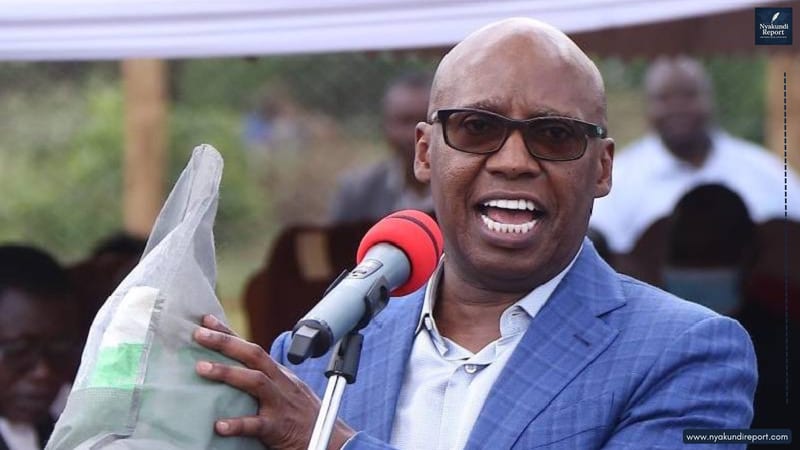
Court Allows Estate Administration to Continue 
Justice Hilary Chemitei has allowed the family to proceed with administering and distributing the estate, providing a path for the succession process to continue despite the disagreement.
The decision is significant because the dispute over Mbui’s role has not prevented the family from moving forward with the administration and distribution process.
Wambui has indicated that continued delays could prompt her to ask the deputy registrar to sign transfer documents on Mbui’s behalf. Such a move would be aimed at advancing the transfer process despite the disagreement among the executors.
The proposal highlights the practical difficulties that can arise when people entrusted with jointly administering an estate disagree over the steps required to complete the process.
However, the available account does not establish whether Wambui has made a formal application for the deputy registrar to sign the documents or whether such an application has been granted. The legal basis and scope of any proposed intervention would depend on the relevant court orders and applicable procedures.
The dispute has also reportedly reached the police, although the available report provides no details about the circumstances, the nature of any complaint, or whether an investigation has resulted in formal action. The police aspect should therefore be distinguished from the civil succession proceedings, and no wrongdoing can be inferred from the report alone.
Neither the estate’s total value nor a hearing date for the dispute was disclosed in the available account.
Questions Over Transparency and Family Wealth 
The Wanjigi family dispute reflects the challenges that can emerge when inheritance arrangements involve multiple executors, private companies, and valuable property interests.
The central issues are whether the estate has been administered in accordance with the will, whether the disputed corporate changes and property transactions were properly authorized, and whether the beneficiaries have received the assets to which they are entitled.
Jimi Wanjigi, a businessman who wants to contest the presidency in Kenya’s 2027 General Election, is now involved in a legal dispute concerning the administration of his father’s estate alongside his mother.
The case adds to a broader pattern of succession disputes involving wealthy Kenyan families, where disagreements over property, business interests, and the interpretation of wills can persist long after a patriarch or matriarch dies.