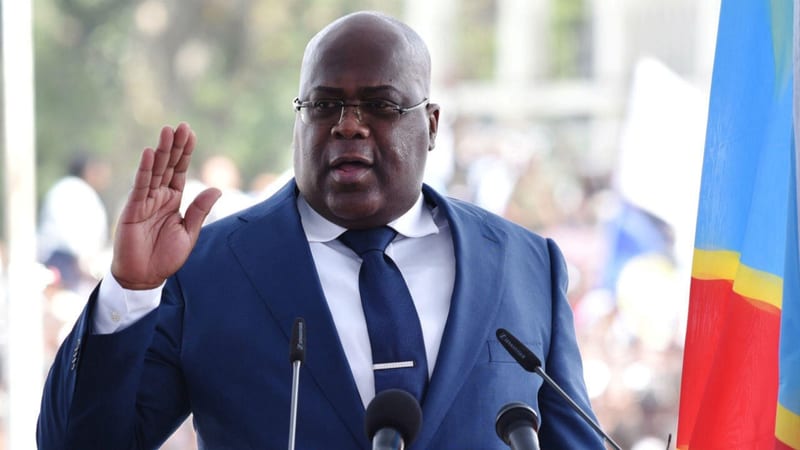
A $17.6 million transfer from a bank account linked to the Democratic Republic of Congo government to a Texas-based security and defence company has triggered a White House investigation involving two associates of US President Donald Trump.
According to The New York Times, the payment was made in May 2025 to TX-AT, a company operating in the security and defence sector. The transaction has become central to a dispute involving Richard Grenell, a former president of the Kennedy Center, and Alina Habba Mildon, a former personal attorney to Trump.
At the centre of the investigation is a basic but potentially explosive question. Who was behind the $17.6 million transfer, what was it intended to purchase, and why was money linked to a Congolese government account sent to a private American defence company?
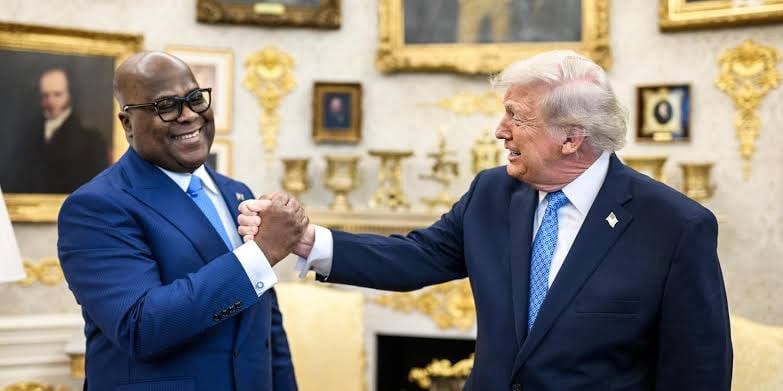
$17.6 Million Transfer Raises Questions Over Congolese Government Funds 
The investigation has drawn scrutiny because the money was initially presented as originating from Turhan Mildon, a Turkish businessman with extensive connections in DR Congo.
Habba Mildon has accused Grenell of involvement in a financial arrangement under which $5.6 million was allegedly supposed to reach the Kennedy Center but was never paid to the institution. Grenell has rejected the allegations and denied receiving money from Turhan Mildon or requesting that funds intended for the Kennedy Center be redirected.
The emergence of the $17.6 million transaction has complicated the dispute because The New York Times reported that the payment originated from a bank account affiliated with the Congolese government.
Investigation Must Establish Where the Money Came From 
The origin of the funds is now one of the most important questions facing investigators.
A payment from an account affiliated with a foreign government does not automatically establish that the money came directly from the state's budget. It also does not, by itself, prove that the transaction was unlawful or connected to a government contract.
However, the government connection gives the payment greater significance, particularly because the recipient operates in the sensitive security and defence industry.
Investigators are expected to determine the ownership and control of the account, identify the source of the funds, and establish the contractual or commercial reason for the transfer.
The investigation will also need to establish whether the payment was connected to any Congolese government procurement, private business arrangement, or other financial commitment.
Turhan Mildon's DR Congo Role Adds Another Layer 
Turhan Mildon's relationship with Kinshasa has placed the transaction under additional scrutiny.
Mildon has acknowledged serving as an adviser to Congolese President Félix Tshisekedi and holding a Congolese diplomatic passport. He also heads Milvest, a company that has obtained public contracts in DR Congo, including work on the Kinshasa Financial Center.
Those connections do not prove that the $17.6 million originated from the Congolese state or that it was connected to Milvest's contracts.
They do, however, make the money trail particularly important.
Investigators will have to determine whether the account was being used for a government transaction, a private commercial arrangement, or a payment involving entities connected to Mildon's business interests.
The distinction matters because public funds, diplomatic relationships, and private defence companies raise very different legal and accountability questions.
Why Was the Money Sent to TX-AT? 
The recipient of the money, TX-AT, specialises in security and defence services, adding another unanswered question to the investigation.
Grenell has acknowledged providing consulting services to the company in 2024 but said he had no connection to it when the May 2025 transfer occurred.
He has also denied involvement in the transaction.
The precise commercial arrangement behind the $17.6 million payment remains unclear. Neither the company nor Congolese officials had responded to The New York Times requests for comment at the time of its report.
That leaves investigators with a potentially significant financial trail but an incomplete explanation of the transaction.
The White House investigation therefore faces more than a dispute between Trump associates. It must establish whether the payment was a legitimate commercial transaction, determine whether the funds were public or private, and identify the parties who authorized and benefited from the transfer.
Until those questions are answered, the $17.6 million payment remains an unexplained financial link between Kinshasa, a US defense company, and individuals operating within Trump's political orbit.
The most important issue is not simply who received the money. It is who controlled it, why it moved, and what was expected in return.