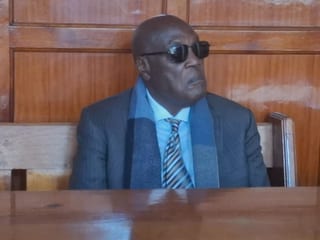
The Shakahola tragedy has exposed not only the devastating consequences of Paul Mackenzie’s religious teachings but also disturbing accounts of what life was like inside the movement for children who grew up under its influence.
Dan Mackenzie, the 24-year-old son of the self-proclaimed preacher, has described a childhood marked by forced fasting, physical abuse, and strict religious control, offering a deeply personal account of the environment that preceded one of Kenya’s worst mass-death cases.
Dan spoke after the High Court on Monday, October 19, convicted his father, and 28 co-accused of 191 counts of murder linked to the deaths of 190 children and one adult.
The judgment by Justice Diana Kavedza-Mochache at the Mombasa Law Courts brought a major legal milestone in the Shakahola case, but Dan’s testimony also raises questions about the treatment of children within Mackenzie’s religious movement.
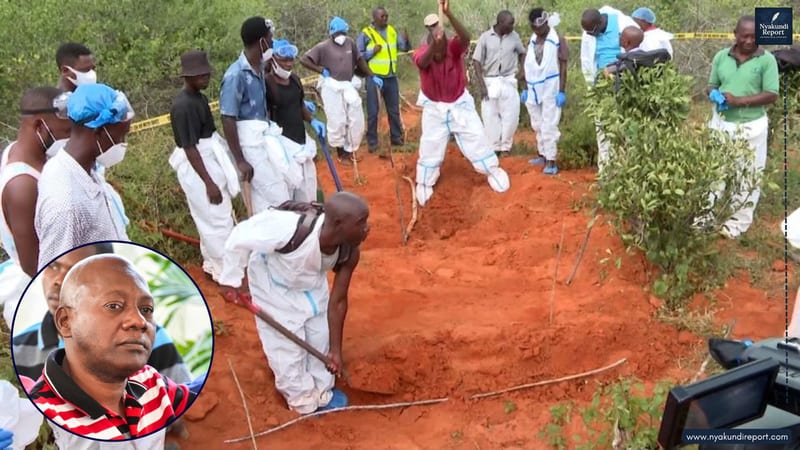
Inside the childhood of Paul Mackenzie’s son 
Dan said his experiences inside the church left him viewing himself as another victim of the movement rather than simply the son of its leader.
Forced fasting and punishment 
According to Dan, religious practices imposed on children went beyond ordinary discipline and became a source of physical suffering.
He recalled being forced to fast for an entire week when he was only 12 years old.
“I was forced when I was young, when I was 12, to fast for a whole week,” Dan said while recounting his experiences to the media.
He also described an incident in which he was allegedly beaten for nearly three hours after resisting instructions to attend a church service.
Dan said he was stripped naked during the incident and beaten by church members.
His account did not establish that his father personally participated in the alleged beating. That distinction is important, particularly following the court’s murder convictions against Mackenzie and his co-accused.
Nevertheless, Dan’s allegations provide a disturbing glimpse into the experiences of children raised within the movement and the level of control he says church members exercised over them.
A family fractured by religious extremism 
Dan said his relationship with his father eventually deteriorated, with Mackenzie telling him that he was on his own.
He subsequently left school in Class Seven and began working as a motorcycle taxi rider in Malindi.
His account paints a picture of a young man forced to navigate adulthood after breaking away from the religious environment in which he had been raised.
The rupture between father and son became even more pronounced after Dan rejected the movement’s teachings. He said he later spoke to Mackenzie, who accused him of betrayal.
Dan said he did not understand why his father regarded him as a betrayer and had nothing further to say to him.
The relationship illustrates the personal cost of ideological control within families, where disagreement with a religious leader can become a rejection of the family itself.
Five siblings rescued from the movement 
Dan also revealed that five of his younger siblings, including three sisters and two brothers, had been rescued from the movement and were staying at a rescue centre.
He expressed hope that they would eventually rebuild their lives.
The revelation is significant because it demonstrates that the consequences of the Shakahola tragedy extend beyond the victims whose deaths formed the basis of the criminal case.
Children who survived the movement may still face the psychological and social consequences of growing up under an environment that Dan describes as abusive and deeply troubling.
For Dan, however, the High Court ruling provided a measure of relief.
He said he believed justice had been served for the victims and their families following the conviction of his father and the other accused persons.
The case now moves to the sentencing stage. Mackenzie and his 28 co-accused are scheduled to appear before the court on November 6, 2026.
The convictions may have answered the question of criminal responsibility for the deaths before the court, but Dan’s account highlights another unresolved dimension of Shakahola: what happened to the children who lived inside the movement, survived its teachings, and emerged carrying memories of fear, punishment, and broken families.