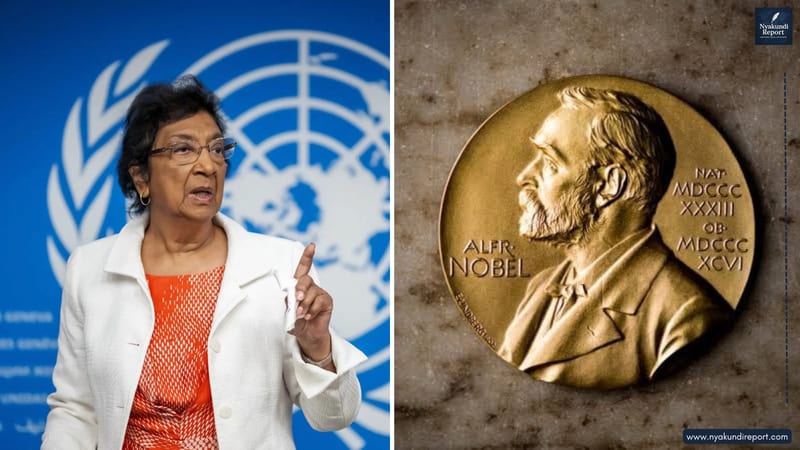
South African jurist Navi Pillay has won the 2026 Nobel Peace Prize in recognition of her decades-long efforts to advance human rights, strengthen international law and ensure accountability for war crimes, crimes against humanity and genocide.
The Norwegian Nobel Committee announced the award on Friday, October 9, praising Pillay’s contribution to international justice through her work as a lawyer, judge, and former United Nations human rights chief.
The 85-year-old, who began her career challenging apartheid in South Africa, dedicated the prize to survivors of international crimes, while her work on the Israeli-Palestinian conflict has drawn criticism from Israel.
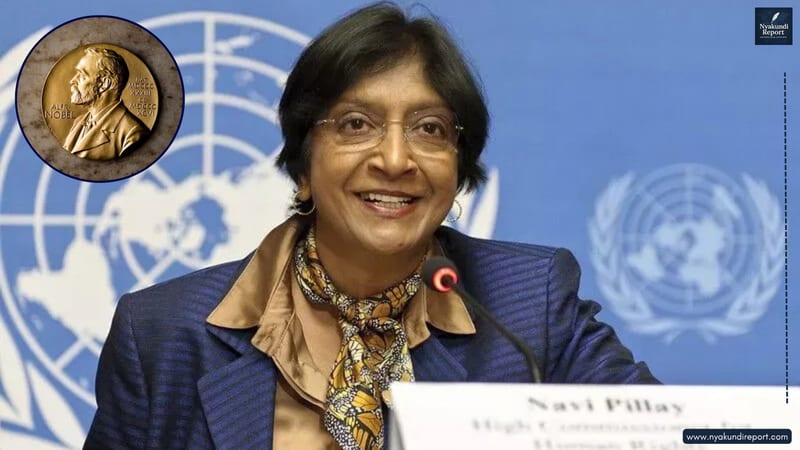
Who Is Navi Pillay and Why Has She Won the Nobel Peace Prize? 
Pillay was born in Durban, South Africa, into a family of Indian Tamil origin during the apartheid era, when racial segregation and discrimination shaped the country's legal and political systems.
She established her own law practice in 1967, becoming the first non-white woman in South Africa to do so. Her early legal career involved defending anti-apartheid activists and challenging discriminatory practices under the apartheid government.
Her commitment to justice later took her into the international legal system, where she helped prosecute some of the most serious crimes committed during armed conflicts.
In 1995, Pillay was appointed to South Africa's High Court. Four years later, she became a judge at the International Criminal Tribunal for Rwanda, eventually serving as its president.
During her work at the tribunal, she contributed to important legal developments concerning sexual violence and genocide. The tribunal established that rape and sexual violence could constitute crimes against humanity and, under the appropriate circumstances, acts of genocide.
Pillay later served as a judge at the International Criminal Court and became the United Nations High Commissioner for Human Rights, a position she held from 2008 to 2014.
The Nobel Committee said her work demonstrated how international legal mechanisms could help prevent violence, prosecute perpetrators and strengthen accountability for serious human rights violations.
Pillay's Work on Gaza Draws Criticism From Israel 
In addition to her work on apartheid and the Rwandan genocide, Pillay has played a prominent role in international scrutiny of the Israeli-Palestinian conflict.
Between 2021 and 2025, she chaired the United Nations Independent International Commission of Inquiry on the Occupied Palestinian Territory, including East Jerusalem, and Israel.
The commission concluded that Israel had committed genocide in Gaza, a finding that Israel strongly rejected.
Israel criticised the decision to award Pillay the Nobel Peace Prize, arguing that the recognition legitimised what it described as anti-Israel hatred and prejudice.
The controversy highlights the divisions surrounding international accountability efforts and the interpretation of human rights law in the conflict.
Pillay's supporters, meanwhile, have emphasised her broader record in advancing international justice, including her work on apartheid-era discrimination, the Rwandan genocide and the prosecution of serious international crimes.
Her Nobel Peace Prize recognises her wider contribution to international law rather than a single investigation or conflict.
Pillay Dedicates Award to Survivors of International Crimes 
Pillay said she was still reeling with surprise after learning that she had won the Nobel Peace Prize.
She was attending a meeting in Nuremberg, Germany, when she was informed of the award. Initially, she joked that the announcement must have been a prank before addressing colleagues who congratulated her.
She later dedicated the prize to survivors of international crimes, highlighting the victims whose experiences have shaped her decades of legal work.
Pillay also joked that she might share the award with United States President Donald Trump if those around her applauded a little more.
The remark came after the 2025 Nobel Peace Prize laureate, Venezuelan opposition leader María Corina Machado, gave her medal to Trump, drawing international attention to the relationship between Nobel recognition and political influence.
Pillay's award attracted praise from South African President Cyril Ramaphosa, who described her as a pioneering defence attorney for anti-apartheid activists.
United Nations High Commissioner for Human Rights Volker Türk also welcomed the recognition, describing it as a collective victory for human rights and justice advocates.
Pillay continues to serve as an ad hoc judge at the International Court of Justice in proceedings concerning allegations of genocide against Myanmar.
Her recognition comes amid growing international debate over the effectiveness of global legal institutions and their ability to hold powerful states and individuals accountable.